
Lies My Doctor Told Me

Medical Myths that can Harm your Health

Author: Ken. D. Berry, M.D.
Publisher: The Berry Clinic, 2017
Pages: 495

We should all be concerned about our health. The older we get the more important it is to look after ourselves, by eating correctly, getting enough fresh air and exercise, and treating illnesses that arise.

However, how much can you trust the information that you read, whether it is in books, online or from an “expert”, such as a doctor? The author feels that medical doctors are too busy and too stressed to be able to keep up with the newest research and they tend to make do with the knowledge that they got in medical school.

In addition, untrue or even false research gets repeated and repeated as if it was a true fact and even when new research proves that it is false, the new knowledge does not get out to the general public, the media and the medical experts. False information is allowed to spread freely and many people make choices based on false information. In addition, much research is funded by businesses that want to make money off the results of the research, such as medication to treat “diseases” even though no medication often would be better for the patient/client.

Much of what I have read in this book is well-known information to me, but not all of it. You need to realize that this is one author’s interpretation of the medical research and in areas that concern your own diet and health, you should probably do more research yourself. This book is also ten years old, so more research should be available for those who want to find out more. The Internet has a lot of information that one can look at.

I found the book easy to read, though I can only digest one or two chapters at a time, as I then need time to think about the topics and make decisions about what needs to be changed, or not changed, what I would like to read more about and what I’ve already learned about before. Each chapter makes suggestions of other books that could be read on the topic.

The first two chapters of the book give background information about doctors in general and the author in particular. The chapters which follow each take a “lie”, an untruth, and show why it is not true and what is the true information. I will write the “lie” as it is given and then the “truth” as the author wants us to understand it. Some of the chapters are topics you may already have read information about and recognize the false information. Some of the topics may be relevant to yourself. I found all chapters interesting to be aware of the true information. The author gives a lot of the reasoning behind the lie, but also explains what the most recent research (as of 2017) says is true.

To make a very short summary of what the author is trying to get at: What we eat influences our health. We need to be more aware of what is good for us so that we don’t get sick. A doctor’s job is to prescribe treatment and medications once we are sick, not to prevent us from getting sick. Sometimes we would get better faster without consulting a doctor.

Even though the book is almost ten years old, I found it interesting to read and to think about what the author is writing about. I recommend this book if you want a different perspective on health.

Chapter 1 Trust in God, Not your Doctor

Doctors are humans, just like you are. They have studied a lot in the field of medicine, but they are not God and they don’t know everything. Medical research is ongoing and we need to keep on learning new things about our bodies and our health all the time. The author suggests that if you don’t like the way your doctor thinks or updates his/her knowledge, then perhaps you should find a new doctor.

Chapter 2 So What’s Going on Here?

In this chapter, the author explains about his background and why he has written this book. Doctors are actually taught very little about nutrition and how to prevent diseases. The author explains some of the reasons why doctors may not have all the latest research in their heads.

Chapter 3 The Skinny on Fat

Lie: Eating fat, especially saturated fat, will lead to high cholesterol, obesity and heart disease.
Truth: Eating fat does not make you fat or contribute to bad health. There was erroneous research published in the 1960s and we have been eating poorly since then. Put the fat back into your diet and you will be healthier.

Chapter 4 Your Bones Deserve Better

Lie: Drinking milk is good for you and helps keep your bones strong.
Truth: Many people cannot tolerate cow’s milk. There is no research that shows that consumption of dairy products makes our bones stronger. Countries with the highest consumption of dairy products also have the highest rates of osteoporosis. Human milk is perfect for newborn babies, but cow’s milk is not designed for humans. We can get plenty of calcium from leafy green vegetables.

Chapter 5 Is Cholesterol really your Enemy?

Lie: High cholesterol levels in your blood are dangerous and increase your risk of heart attack.
Truth: Recent research says that the elderly who have higher levels of cholesterol actually have better memories and less dementia. Cholesterol is an essential part of every cell and is not a danger to your body or health. High levels of cholesterol in your body have nothing to do with the risk of having a heart attack. Taking medicine to reduce your cholesterol levels is actually bad for you.

Chapter 6 Wheat is not all it is Cracked up to be

Lie: Wheat is a healthy food that is very good for your body.
Truth: Even whole-wheat products are only marginally better than products made from white flour because it is the wheat that causes the problems. The author feels that eating wheat is the equivalent of eating sugar and affects our blood sugar, just as eating sugar would.

Chapter 7 Turn that Pyramid Upside Down

Lie: The USDA Food Pyramid offers the healthiest way to make food choices.
Truth: Official government guidelines for what we should eat are influenced by agricultural and food businesses, and not actually what is good for us. They haven’t gotten it right and we should not follow the guidelines.

Chapter 8 It is Great but won’t Help much with Weight Loss

Lie: If you would only exercise more, you would lose weight.
Truth: Exercising is good for you, if you enjoy it, but it won’t help you lose weight. Again businesses encourage you to eat incorrectly and then other business will sell you equipment marketing how you can go down in weight. But it doesn’t work like that. Exercising can make you healthier and happier, if you are doing exercise that you enjoy.

Chapter 9 Nuts and Seeds Don’t Cause this Problem

Lie: Popcorn, nuts and seeds will either cause diverticulitis, or cause your diverticulitis to flare up if you eat them.
Truth: In recent research, the patients in the study who reported eating the most nuts, seeds and popcorn were the least likely to get diverticulitis.

Chapter 10 Will This Give Men Prostate Cancer?

Lie: Giving testosterone to men causes prostate cancer.
Truth: There is no link between optimizing testosterone levels in men and an increasing risk of prostate cancer. Young men who have the highest testosterone levels rarely have prostate cancer.

Chapter 11 There is More to Women than Estrogen

Lie: Menopausal women usually don’t need progesterone and definitely don’t need testosterone.
Truth: There are multiple hormones in the human body and each one has important effects on multiple different organs. If a woman wants hormone therapy when she gets to menopause, it should include estrogen, progesterone and testosterone.

Chapter 12 Viruses Laugh at Antibiotics

Lie: Your runny nose/ear-ache/cough won’t get better unless you take a course of antibiotics.
Truth: Most colds are caused by viruses so are not affected by antibiotics. We don’t actually want to kill the good bacteria within our body as that will make us sick. We need to use less antibiotics.

Chapter 13 Salt of the Earth

Lie: Eating salt will increase your risk of having high blood pressure, and therefore, increase your risk for heart attack and stroke.
Truth: The amount of salt in your diet has virtually no impact on blood pressure.

Chapter 14 All Calories are Not Created Equal

Lie: A calorie is a calorie. You can eat whatever you want as long as you limit your total calorie intake.
Truth: A “calorie” actually doesn’t indicate how your body will metabolize the food you eat and it certainly does matter what you eat. There is now lots of evidence that shows that what you eat matters most to either weight gain, weight loss or just feeling healthy.

Chapter 15 Does Too Much Calcium Cause Kidney Stones?

Lie: Eating or drinking too much calcium can lead to kidney stones.
Truth: There is no evidence that consumption of calcium leads to kidney stones or that reducing consumption of calcium will reduce kidney stones.

Chapter 16 Your TSH is Normal so your Thyroid is Fine

Lie: A lab test called the TSH (Thyrotropin Stimulating Hormone) is all you need to have checked to find out if your thyroid is functioning normally.
Truth: There are several tests that need to be taken to check out how your thyroid functions. By only taking the one test, problems may not be treated early enough.

Chapter 17 If you don’t have Rickets then your Vitamin D is Normal

Lie: You get enough vitamin D in your diet.
Truth: You need to take daily supplements unless you are in the sun a lot.

Chapter 18 Breast Milk Doesn’t Contain Everything a Newborn Needs?

Lie: Human breast milk is deficient in Vitamin D. Babies who are exclusively breast-fed should be given a supplement of Vitamin D drops.
Truth: If the breast-feeding woman has sufficient Vitamin D in her body, it goes into her breast milk. Giving the woman sufficient Vitamin D is better than giving it to the baby.

Chapter 19 God Made the Sun and God Made You

Lie: Exposure to sunlight causes skin cancer, so to decrease the risk of skin cancer, you should stay out of the sun as much as possible. If you must go in the sun, you should wear a lot of sunscreen.
Truth: Melanoma (the most dangerous type of skin cancer) is often found on areas of the skin that get little or no sun exposure. No research has shown that there is a connection between sunshine and skin cancer. We need to get some sunshine on our skin so that we make our own Vitamin D. Sunshine is good for us.

Chapter 20 Little White Lies

This chapter has a list of many (27 of them, in fact) lies with a short explanation for each one. I won’t list them here. If it is interesting, read the book.

Do As I Say and Do As I Do

This chapter contains what the author did to make himself happier and healthier. A lot of the ideas have to do with looking after yourself, eating correctly, and avoiding things (such as tobacco smoke) that harm you. You should also get adequate physical activity and get tested regularly to catch medical problems before they get too bad. You should also make sure that you don’t get too much “bad” stress.

Chapter 21 Dearest Colleagues

This chapter is a letter to medical doctors and medical students giving them some advice. It is a long chapter but basically summarizes a lot of his ideas in the book.

Everything is Tuberculosis: The History and Persistence of Our Deadliest Infection

Author: John Green
Publisher: Crash Course Books, Penguin Random House, New York, 2025

Tuberculosis is still a deadly infection in many parts of the world. I live in Norway where a hundred years ago it was a very serious disease, but now I rarely hear of anyone here getting it. Why is this bacterial infection still so common in many parts of the world? I found this book very interesting to read as the author goes back about two hundred years and explains how deadly the disease was, how it affected people and how there is much less of this infection in Europe and North America. But also he relates why we haven’t gotten rid of tuberculosis completely, even though there is a cure.

I like to improve my understanding of the history behind the way we experience the world today. When I was young, polio was a bad disease, but there was also a tuberculosis sanitarium in Vancouver that I heard about. So this book put together many things that explained one particular disease’s affect on history. It is disturbing to read that it is still a deadly infection in many parts of the world as there is an inequality in the world that affects billions of people.

The book consists of an Introduction, 23 Chapters as well as a Postscript. I will try to keep my summary short, but my purpose in writing this blog is to condense a book that is about 400 pages long into something that takes only a short time to read. If I manage to prod your interest in the topic, I found the book easy to read and it didn’t take that long to read it. It is recommended reading, if the topic suits you.

I found the book well-written, primarily following the story of one young man, Henry, who lives in Sierra Leone and has a strain of tuberculosis that is antibiotic resistant.

Introduction

Tuberculosis has had other names in the past, both phthisis and consumption. Many people died, often young people. Inventors tried to find cures for the disease but it was difficult. Even today, a million people can die of tuberculosis in the world each year. Much has been written about the disease, but access to the “cure” is not available everywhere in the world, so tuberculosis continues to infect and kill people. “The cure is where the disease is not, and the disease is where the cure is not.” (page 18)

TB is an infection caused by bacteria. It is airborne and spreads from person to person through small particles contained in coughs, sneezes, or exhalations. Between one-quarter and one-third of all living humans have been infected with it. In most people, the infection will lie dormant for a life-time. But up to 10 percent of the infected will eventually become sick, a phenomenon called “active TB”. People are especially likely to develop active TB if they have a weakened immune system due to other health problems like diabetes, HIV infection or malnutrition. The disease spreads easily in crowded living and working conditions like slums and poorly ventilated factories. (page 20)

Chapter 1 Lakka

A few kilometers outside of Freetown, in Sierra Leone, is a government hospital supported by the global health nonprofit Partners in Health. Here the author met Henry, a patient in the hospital, and we follow his story throughout the book. This was the start of the author’s investigation into the history of tuberculosis.

Chapter 2 Cowboys and Assassins

When reading about the history of TB, the author learned a lot about people that got infected by TB and went on to survive and change history. Many survived the disease (20-25% with active TB) without treatment and it was considered better for the patients to move to where the air was drier and cleaner. The cowboy hat maker, John B. Stetson, was a survivor. The state of New Mexico got a large enough population to become a state partly because people with TB moved to the better climate.

Chapter 3 Look at Our Railroads

Back to Sierra Leone, a country rich in metal ores and diamonds. After independence in 1961, the government struggled to give the services that its population needed. The railroads had been built to get the mineral wealth of the country out of it as quickly as possible. This chapter looks at the history of Sierra Leone and why there is a problem with tuberculosis there today.

Chapter 4 That Wealth Never Warded Off

When we learn history in school, we seldom learn about diseases. TB has been around since ancient times and is considered the oldest contagious disease. This chapter is about what is known of the history of TB, including some names of famous people who died of tuberculosis. It was a long time before it was discovered what caused TB, so over the centuries there have been a lot of misleading ideas about what causes it.

The bacteria which causes TB grows very slowly, so most people’s immune system can prohibit the disease from breaking out. However, if a person is suffering from a compromised immune system, stress, malnutrition or air pollution, the disease may break out. (page 80) Most commonly TB infects the lungs, but it can also infect other parts of the body and the disease appears to be a different one.

Chapter 5 Whipped Away

The author describes the symptoms of the disease. Some survive, some don’t and some need more treatment at the hospital at Lakka.

Chapter 6 Tiger Got to Hunt

Everybody dies, eventually. In the past, most people died of some disease and rarely of old age. In this chapter the author goes into how death is perceived, in different time periods and different locations.

Chapter 7 The Flattering Malady

Women with tuberculosis were seen as more beautiful, ethereal and wondrously pure. (page 144), in other words, weaker. Standards of how people should look change, but having tuberculosis was romanticized.

Chapter 8 The Bacillus

The German doctor, Robert Koch, first identified the bacteria, Mycobacterium tuberculosis, in 1881. This changed people’s understanding of how the disease was infectious. Others discovered how the chain of infection happened. Tuberculosis was no longer an inherited condition.

Chapter 9 Not a Person

Racial and other minorities were not diagnosed as having tuberculosis because of the lack of access to medical help and diagnosis. But TB killed many because they never got any treatment. Humans respond to disease in others and construct stigmas, such as “you deserved it”. (page 181)

Chapter 10 A Study in Tuberculin

This chapter is a discussion of the scientific research being done in the 1880s which included gaining an understanding of microorganisms, the use of antiseptics, and the development of vaccines.

Chapter 11 Trepidation and Hope

This chapter discusses how it was discovered how tuberculosis infections were transmitted and therefore how to break the chain. The treatment of tuberculosis patients often included seclusion and removing them from their families. “Recovery rates don’t seem to have been much higher at sanatoria than for those who lived at home. Nonetheless, separating millions of the ill from their homes did decrease the spread of the disease within families, and combined with better overall nutrition and safer housing, rates of tuberculosis declined globally in the first half of the twentieth century. In the U.S. and other wealthy countries, the rate of decline was precipitous.. and overall mortality from the disease in the U.S. dropped by around 80 percent.” (page 230)

Chapter 12 The Cure

Better diagnostics meant that the disease could be identified and treated earlier. Chest X-rays emerged as the best diagnostic tool. Prevention strategies included pasteurization of milk and a vaccine (BCG) emerged.

Several effective anti-tuberculosis drugs were developed in the 1940s and 1950s. By the late 1950s, the illness was broadly curable. In the 1960s two more antibiotics were developed. “Even as TB became curable, the cure often did not reach the places that needed it most.” (page 244)

Chapter 13 Where the Cure is Not

In many developing countries, rates of tuberculosis remained high, partly because of the poverty and malnutrition that make TB more lively to develop into active disease, and partly because the cure… was almost never available to poor people living with TB.” (page 249)

Chapter 14 Marco. Polo.

Over 90 percent of people who get sick with TB, have tuberculosis that can be cured with the regular set of drugs. Unfortunately, the rest become sick with drug-resistant tuberculosis. The next line of treatment becomes very expensive. The profit motive for drug companies is very high and when new drugs become available, the price is often too high for many.

Chapter 15 Dr. Girum

Dr. Girum Tefera grew up in Ethiopia but moved to the Lakka Hospital to work with those suffering from tuberculosis. In this chapter we learn about this doctor and what he was trying to do to help his patients. The author also discusses cost-benefit analysis in relationship to diseases.

Chapter 16 Henry

This chapter is primarily about Henry, one patient at the Lakka hospital who the author befriends. He has drug-resistant tuberculosis, so treatment is neither easy nor inexpensive.

Chapter 17 “Beat Me Later”

Treating tuberculosis can take a long time (6 to 9 months minimum), and many patients quit taking their drugs before they are completely cured. Then they suffer a relapse. This chapter is about keeping going with the treatment, even when things are difficult.

Chapter 18 Superbug

“Cost-effectiveness distorts the TB treatment landscape” (page 324). The author’s opinion is that the price of the drugs is artificially high, so that companies can make a lot of money, instead of them being affordable and able to cure people. Not treating tuberculosis allows the bacteria to develop resistance to antibiotics.

Chapter 19 Vicious Cycles

With the emergence of the HIV/AIDS pandemic in the 1980s, tuberculosis changed, killing people more quickly because their immune systems were already weakened. Patients were not trusted to take medications as required, leaving both HIV and TB untreated and killing many. “Tuberculosis is … a disease of vicious cycles: It’s an illness of poverty that worsens poverty. It’s an illness that worsens other illnesses – from HIV to diabetes. It’s an illness of weak healthcare systems that weakens healthcare systems. It’s an illness of malnutrition that worsens malnutrition. And it’s an illness of the stigmatized that worsens stigmatization.” (page 335)

Chapter 20 Hail Mary

Henry was to be the first person in Sierra Leone to receive a highly personalized treatment, sponsored by Partners in Health. It wasn’t easy for Henry to trust that the new treatment would work.

Chapter 21 Like Magic

After three weeks, the new treatment seemed to be healing Henry and after a few months he was again able to receive visitors, including his mother and father. Henry wanted to go back to school, as he had missed so much. He was able to move home with his Mom and continue the treatment there.

Chapter 22 Virtuous Cycles

Failure to diagnose and treat drug-resistant tuberculosis is more costly that the actual costs of the drugs. “Every uncured case … was an opportunity for the disease to spread further and to develop further resistance.” (page 353) In the early 1990s, Peru became one of the first countries in South America to implement a treatment program for tuberculosis. Partners in Health made a decision to treat the disease and achieved very good results. Though it was expensive, it worked. In addition, they managed to kickstart generic manufacturing of the key drugs used, and the cost of the drugs dropped enormously.

Survivors of tuberculosis go on to work for better treatment programs and reduced costs for the drugs. There is still a long way to go to making TB treatment plentiful, affordable and universally accessible. But it is getting better.

Chapter 23 The Cause and the Cure

This chapter summarizes the changes in attitude to tuberculosis and its treatment over the last two hundred years. Tuberculosis is a preventable, curable infectious disease that remains our deadliest. The world we live in today has chosen this outcome, but we can choose a different world for the future.

Postscript

The postscript gives the author’s background for writing this book, from his previous writing, to the people he met and his astonishment that tuberculosis was still such a killer. He wants people to work together to end tuberculosis and all other diseases of injustice.

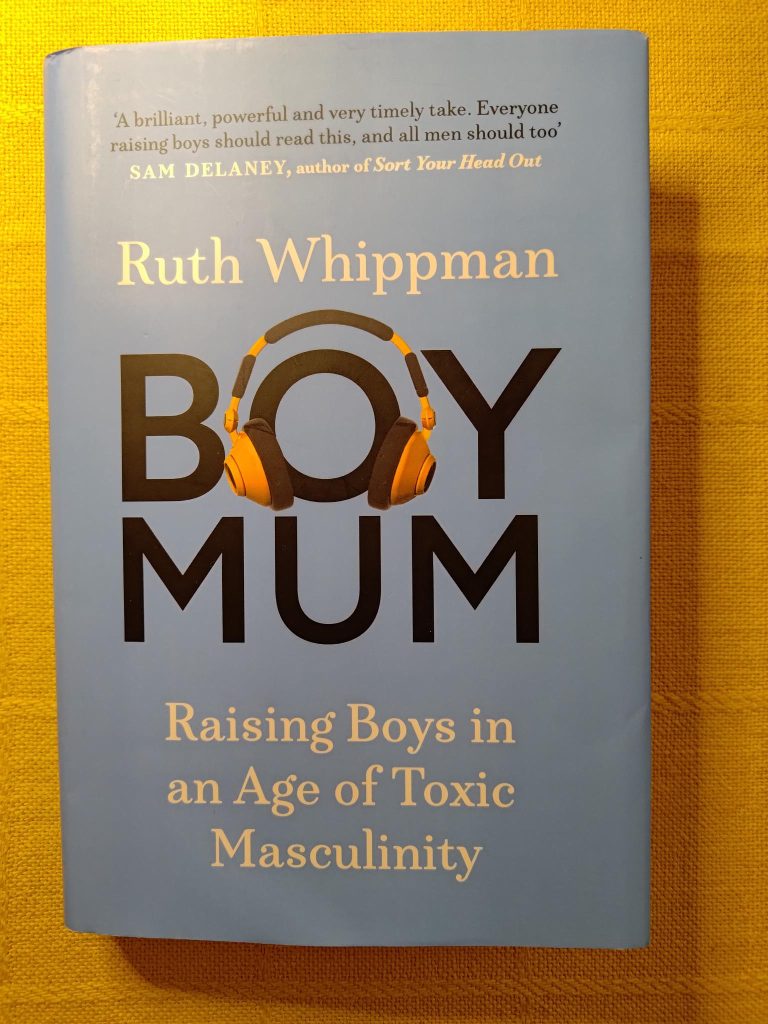
BoyMum: Raising Boys in an Age of Toxic Masculinity

Author: Ruth Whippman
Publisher: Quercus, London, 2024

The author, Ruth Whippman, was brought up as a feminist and sees that bringing up three sons is difficult today and explores in this book how boys are brought up differently than girls.

I can’t say that I enjoyed the book, but I did find the topic interesting. My son is now in his 40s, but I do have a grandson born in 2025, so found the topic relevant for my daughter who is bringing up a son. Though one has limited time to read when both working and bringing up children, it is certainly a book to make one think carefully about how gender roles are taught in the society that we live in.

Many of you who read my blogs are grandparents and you may find that reading this blog gives you an overview of the ideas and there is no need to read the book. On the other hand, if the topic interests you, the author has lots of stories and information in her book. I found several of the chapters a bit disturbing as society has changed since I was a child. Children always get inundated by expectations from their parents, their teachers and their peers. However, I’m finding that today’s society does not support the diversity that I feel is necessary for a healthy world, though you may disagree with me.

The book has eight chapters as well as an introduction and an epilogue. The author brings out many good points about how we learn to be either a man or a woman. You can think back to your own childhood, or parenting years, and think about what the expectations were. Socialization is different for girls and for boys, whether we like it or not. We need to discuss more openly what we really expect of our children, or grandchildren, while they growing up.

Throughout the book, the author tells stories about specific individuals, but also quotes experts in various fields and what the research shows or doesn’t show. She seems to have interviewed a lot of people over several years, and shares what she has learned through these conversations.

Introduction – #Metoo Baby

In general, boys are seen as more difficult to raise than girls. The author has three energetic boys and feels difficulty coping with the job of raising them, even with the help of their father. The introduction to the book shows what her personal background is and the context of society around her as she starts on this project of writing the book which seems to have gone over at least three years.

Chapter 1 Boys Will Be Boys – Off to a Bad Start

So much of boys’ behavior is put down to their genetics/biology of being male. But how much is the biology of being male, and how much is how they are brought up? There are certainly differences between boys and girls and the author is trying to figure out how much is nature and how much is nurture. But already as babies, parents give their infant boys “less positive touching, such as hugging, cuddling, rocking and soothing than they give their baby daughters”. (page 31)

Chapter 2 “Girl Stories” – What We are Failing to Teach Boys about Being Human

Girls are raised differently than boys and in this chapter the author goes into some of these differences which start early in life. Girls are expected to like certain things and activities and boys are expected to like different things and activities, already from a young age. Girls are taught to value friendship and understand emotions. Boys are expected to be heroes and enjoy fighting. “Cultural stories push boys away from quiet reflection and empathy, towards fighting and competition and aggression.” (page 70)

Chapter 3 Boy Stories – The Scripts of Masculinity

How do boys learn to become men? There are all sorts of conflicting messages being given, through books, films, games and real life situations. By talking to young men who have had difficulties, the author expands our knowledge of how difficult some boys find the challenge of growing into successful men. “The silent stoicism and lack of emotional openness that masculinity demands can be damaging.” (page 82) The author gives several examples of how things can go wrong. “Boys don’t need more masculinity, but freedom from that paradigm; they need permission to be fully human without the pressure to conform to oppressive masculine norms.” (page 107)

Chapter 4 “Feminizing the Classroom” – Boys and School

In general, girls do better at school than boys. The classroom rewards those who can sit still, like to learn and have good control over their behavior. “A fair amount of evidence shows that the ways in which we socialize boys do have an impact on both their attitudes towards school, and the performance and behaviour in the classroom.” (page 121) “We know that the discrepancy in grades and academic performance between boys and girls in not related to their intelligence. The differences between boys and girls that impact their school performance are largely social-emotional and behavioural ones.” (page 129) The author urges changes in the classroom culture so that social skills and emotional connection are emphasized. (page 134)

Chapter 5 Hyperconnection and Disconnection – Boys Online

In this and the next three chapters, the author discusses how boys, teenagers and young adults are reacting to the way they are expected to be “masculine”. Going online, playing a lot of games, comparing themselves to others, is all part of the modern way boys spend their time. With small children, screens give parents a break, but when screen time becomes extreme, things can go wrong. When young people do not spend time with each other in person, it is not easy to learn how to develop into a well-functioning adult. But this is also the chapter where the author admits to the diagnosis that her young boys have been given – ADHD and autism – scary things to have to handle. But medication for ADHD helps calm the boys down and life goes on.

Chapter 6 Angry Lonely Boys – Conversations with Incels

Chapter 7 “Rape-Con”

Chapter 8 Sex and Sexism

These three chapters contain interviews with boys to illustrate how sexuality affects teenage boys and young adult men. I’ll let you read those chapters if you want more information. I found them depressing to read as they are about the boys who are not functioning well.

Epilogue – What Do we Do About it?

This should be the chapter where we find out how to avoid the problems in the previous chapters, but of course, that would be too simple for a very complex problem. There are lots of things that have to change, including the way we address young girls (“Sweetheart”) and young boys (“Buddy”). But the problem needs to be tackled so that men and boys gain “freedom and connection, an opportunity to become more fully human.” (page 269)

We have to acknowledge that there is a problem. We have “to encourage our boys to become more attuned to other people’s needs and emotions in the same way that we have always expected girls to be.” (page 274)

The author has few suggestions for improvement but encourages the reader to work for improvements in the society around them. Every little change can make the world better.