Since my last blog, I’ve had some computer challenges which started with a short power outage while working at the computer. But that computer never started again. It took a few days to figure out a solution, which involved resurrecting an old computer and a new one has been ordered.
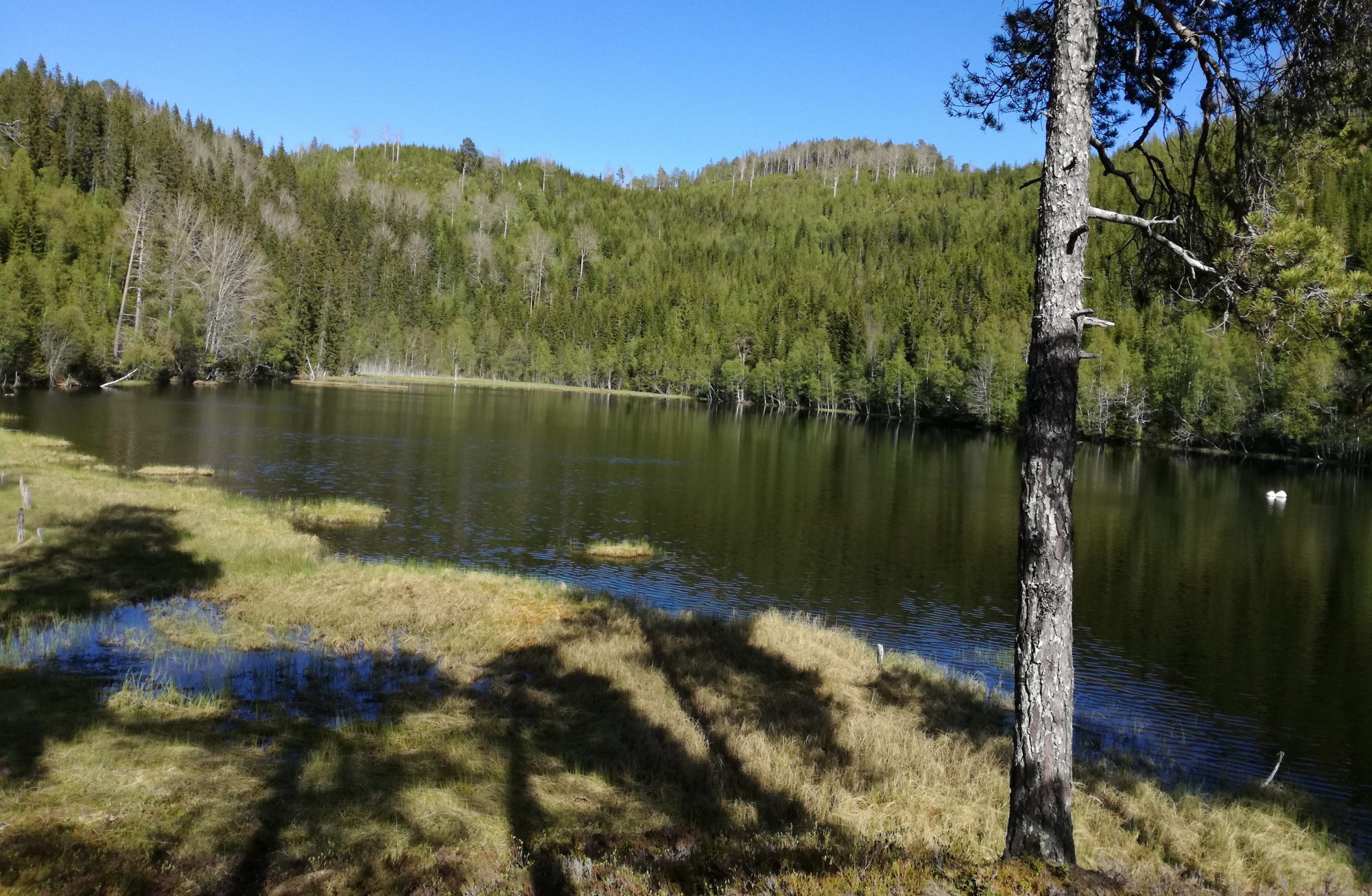
In the last month, spring has definitely come to Inderøy. In the picture above you can see that most of the deciduous trees have their leaves out, especially the birches and rowan trees. On our lot, the bird cherry has its leaves out and the willow has its flowers out.
The first of May is a holiday in Norway, Labor Day, and the weather was sunny and a pleasant 12 degrees Celsius. So we decided to go for an uphill walk on the Mosvik, western side of Skarnsund. We used about an hour climbing up to the viewpoint at the top of Furufjellet (Pine Mountain), stopping to catch our breath and take pictures as we went. Most of the climb is not that steep, but it is a steady uphill climb.
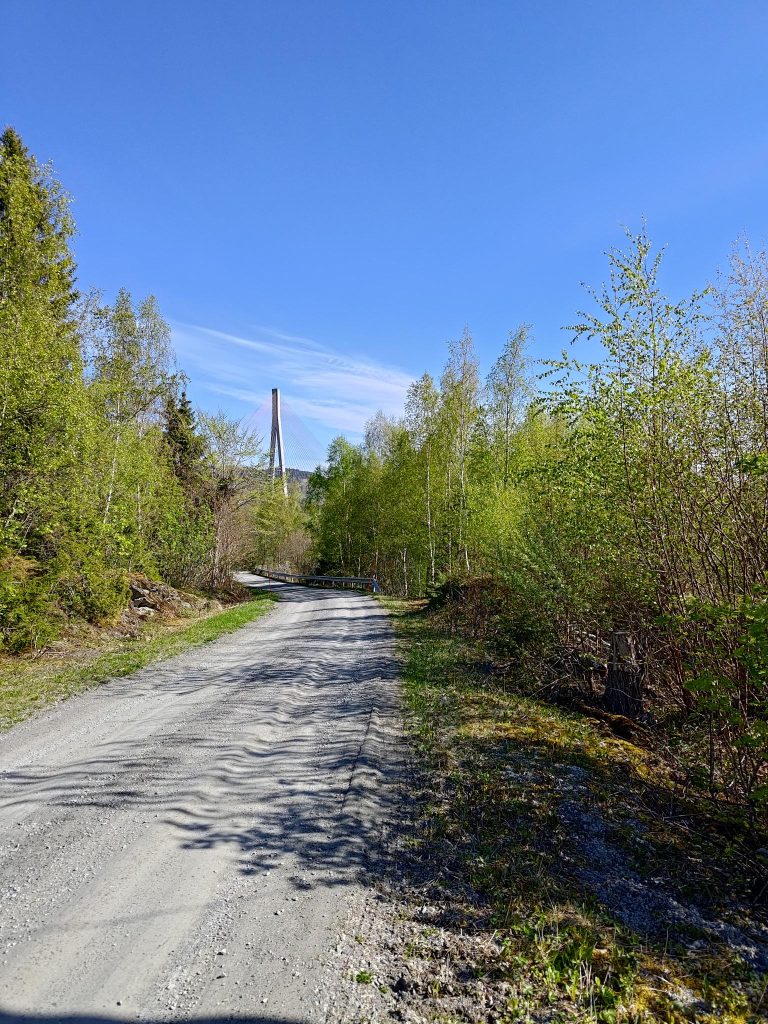
We drove across the bridge and parked in a small picnic area and then headed up the dirt road (Duklettvegen) that you see in the picture above. There are very few cars on this road so it is a very pleasant road to walk along. We can walk side by side and talk easily. As we climb, we soon see above the trees along the road. The sunshine was lovely after a week of rain and sleet.
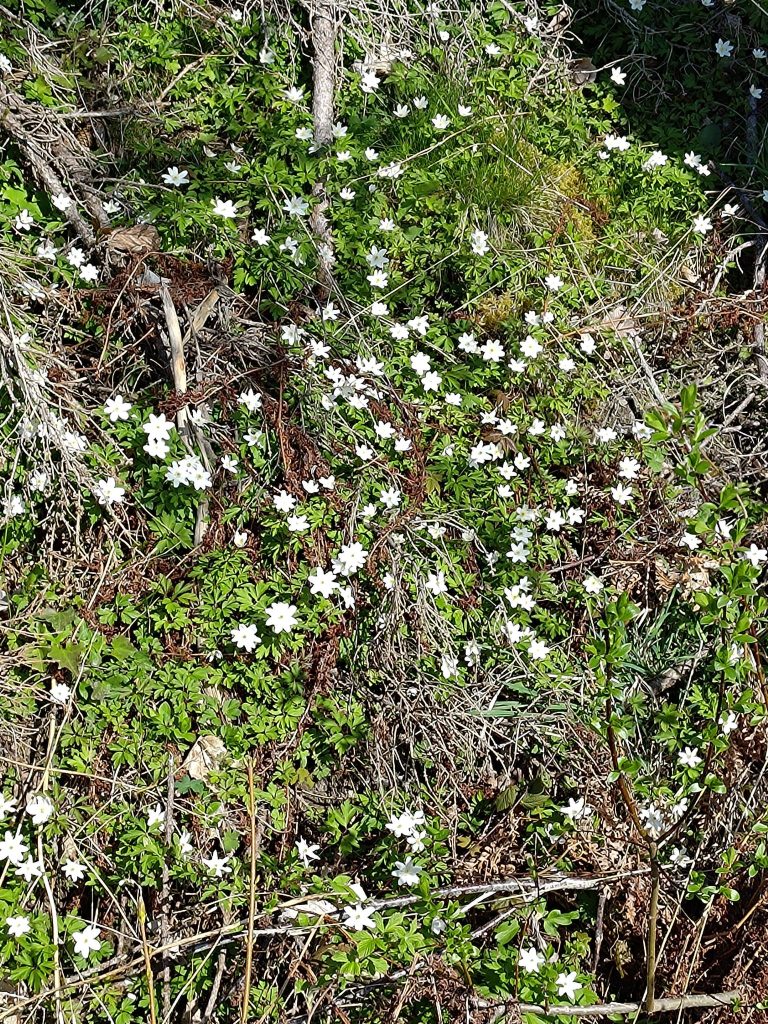
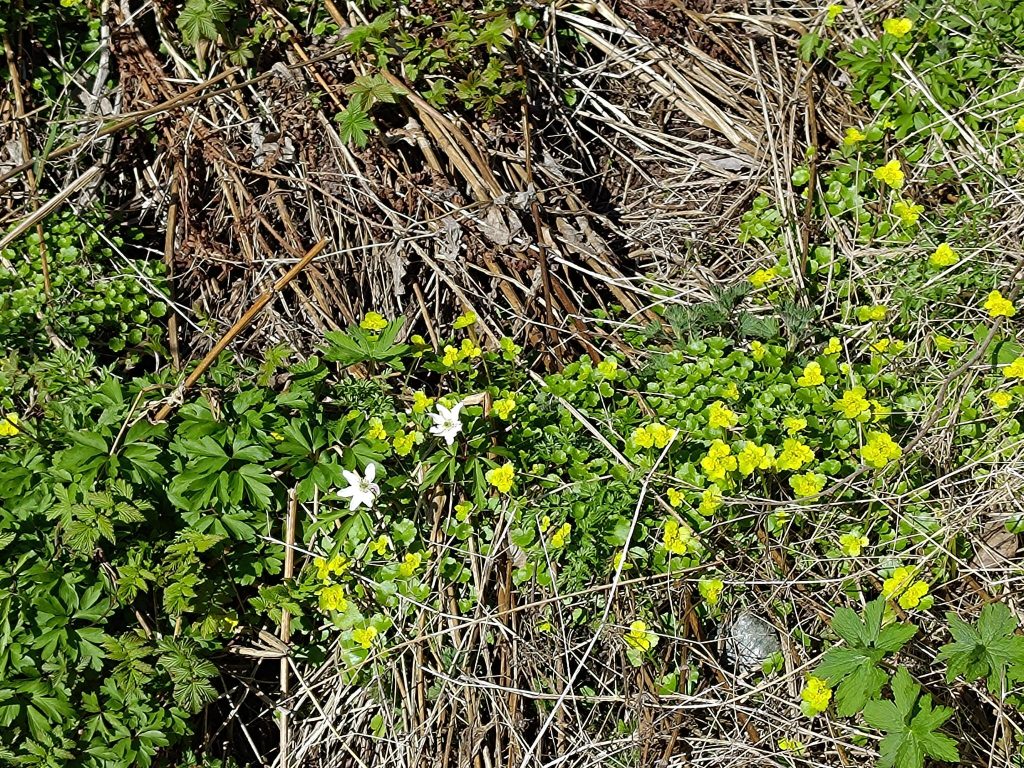
I was looking to see which flowers were blooming now and there were two in particular that stand out on a sunny morning. The white flowers (wood anemone/hvitveis/Anemone nemorosa) like sunny places especially along the sides of roads. They bloom in huge quantities and usually take advantage of the lack of leaves on the trees. The trees have leaves early this year and the wood anemone won’t last that long if they end up in the shade.
The yellow flowers grow primarily in damp ditches. They seem to need a lot more moisture. We’ve had a week with some rain and sleet, so now that the sun has come out they are also blooming. Called “May gold” (maigull) in Norwegian, Chrysosplenium alternifolium grows in clumps. It is called golden saxifrage in English.
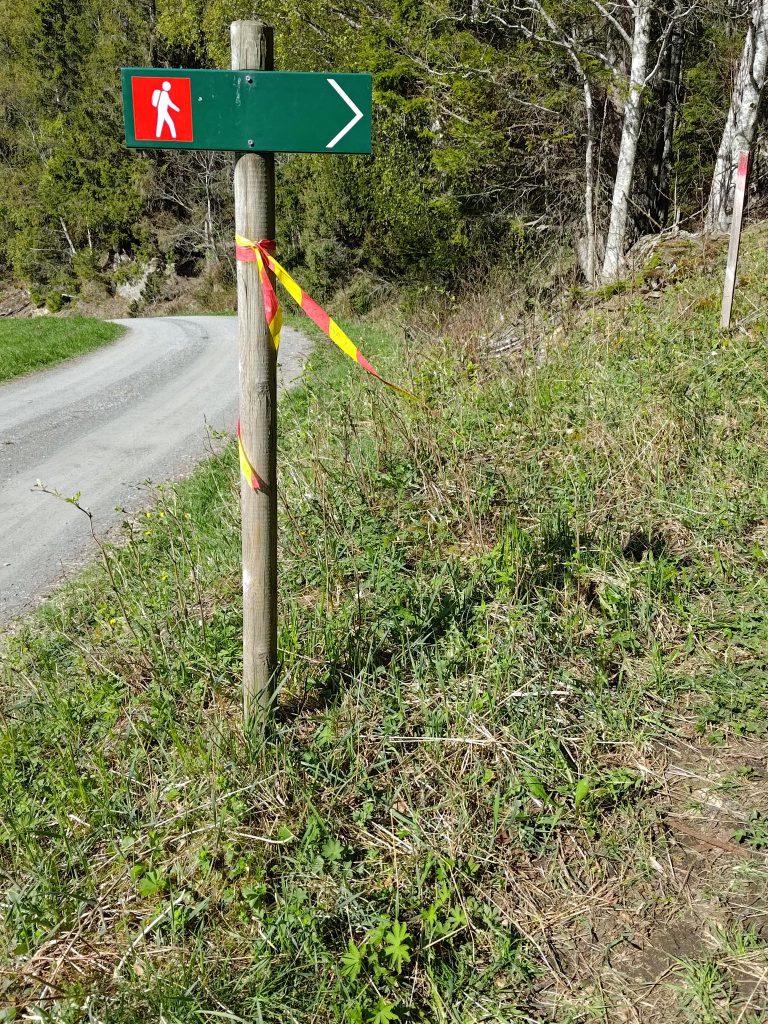
As we climbed the hill, there were fewer and fewer flowering plants and once we were in the woods, I didn’t see anything flowering yet. After a while, we turned off the road and headed into the woods. The red background to the hiker means that the walking can be a bit challenging and rough. The red and yellow strip attached to the pole indicates that this will be an official Inderøy walk. The official opening this year is the 10th of May, so we will be coming here again. This is a walk I quite enjoy.
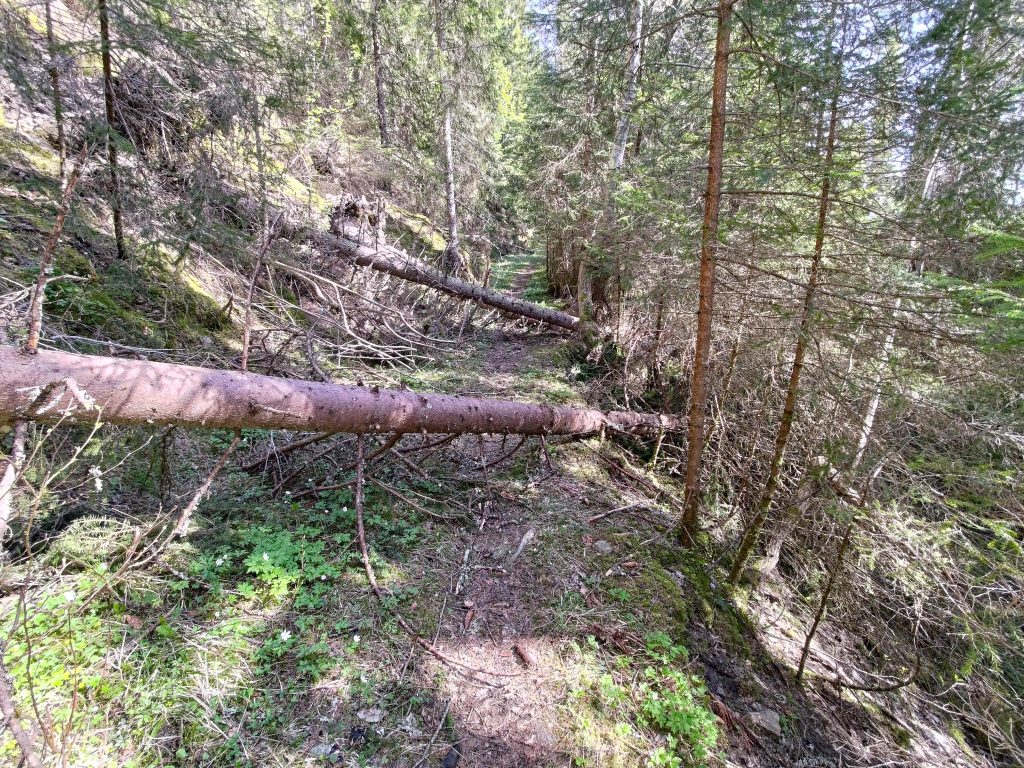
However, we had several wind storms during the winter and not all of the trees were still standing. One of the problems with spruce forests is that the roots are very shallow. That means that they grow fine on the steep slopes here, but they are susceptible to being blown over in the wind. On our walk, there was one place where they had trimmed off the branches, but we had several trunks that we had to carefully climb over.
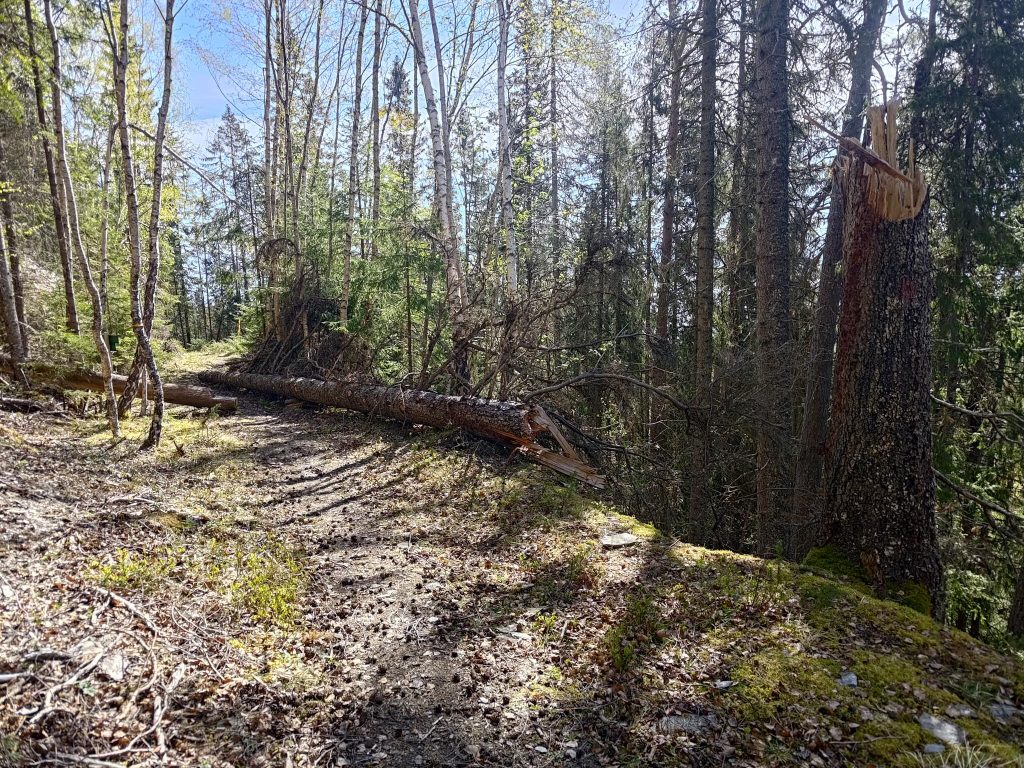
Storms are hard on trees. Some trees are blown over so that their roots are in the air, but others are just broken off. Sometimes the trees can be moved so that they don’t block the trail completely. The one below had its top cut off so that it was easier to walk around it.
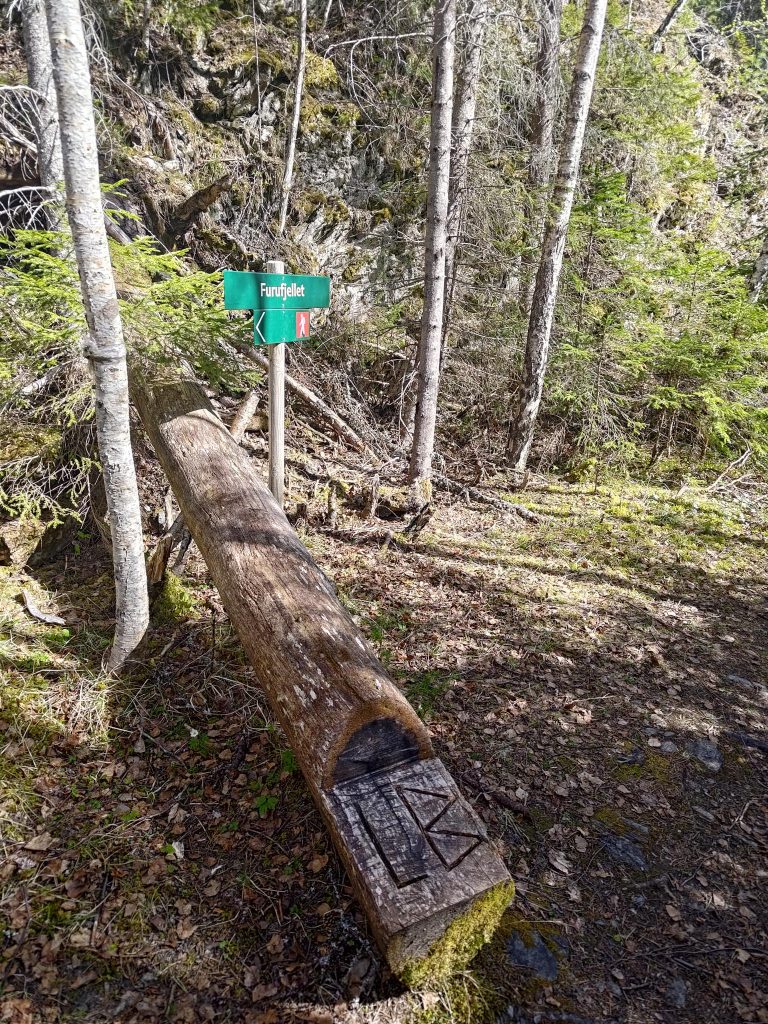
The goal of our walk was to get to Furufjellet (Pine Mountain). Our first sign of Furufjellet is a sign and a small bench on the trail. This is actually the bottom of the mountain.
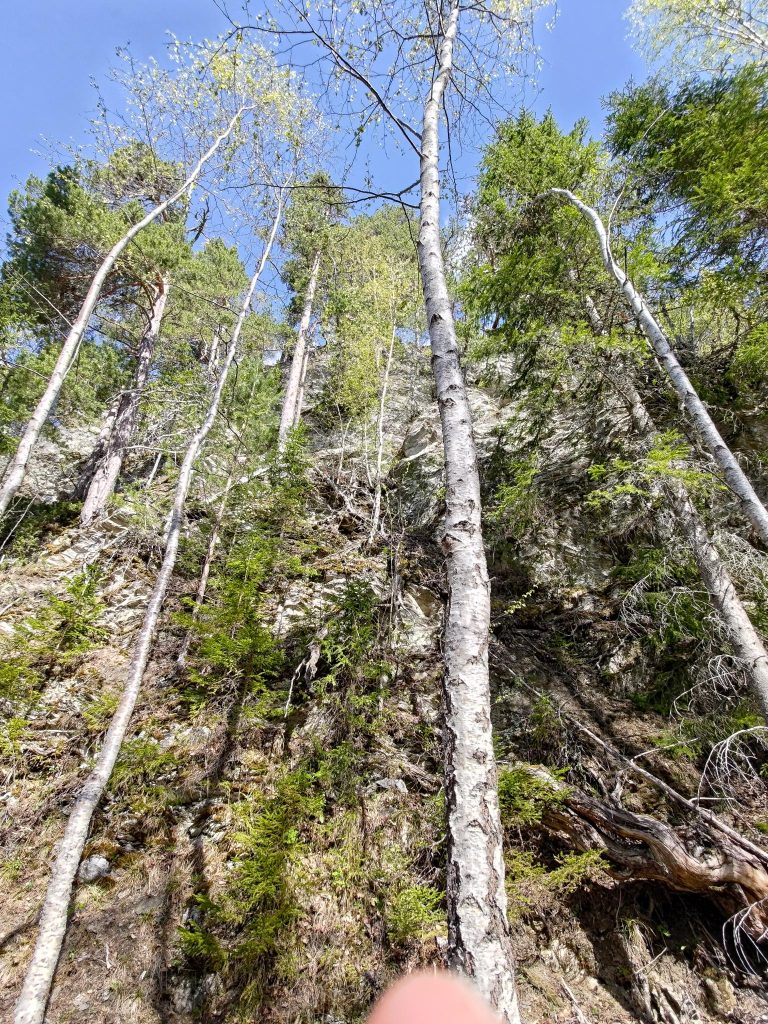
The cliff is steep and there are trees, mostly birch at this point, growing along the cliff. Our goal was to get to the top of this cliff where there is a good viewpoint out over the fjord, but one has to continue walking another 10 – 15 minutes or more.
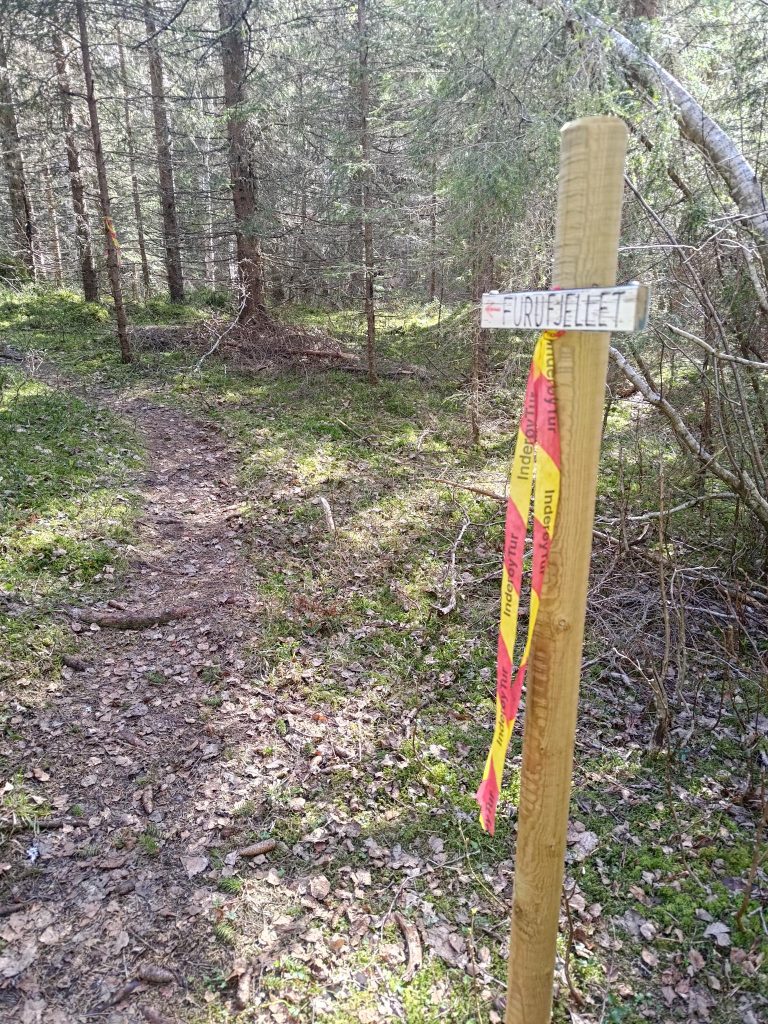
This part of the trail has only been marked for about three years and I notice there there is still a handmade sign. There are two trails off the main trail, so it is important to know which one to follow. This is a relatively easy trail. The spring has been very dry, so the muddy sections were not too bad, just a bit soft. The last part of the trail actually goes a bit downhill.
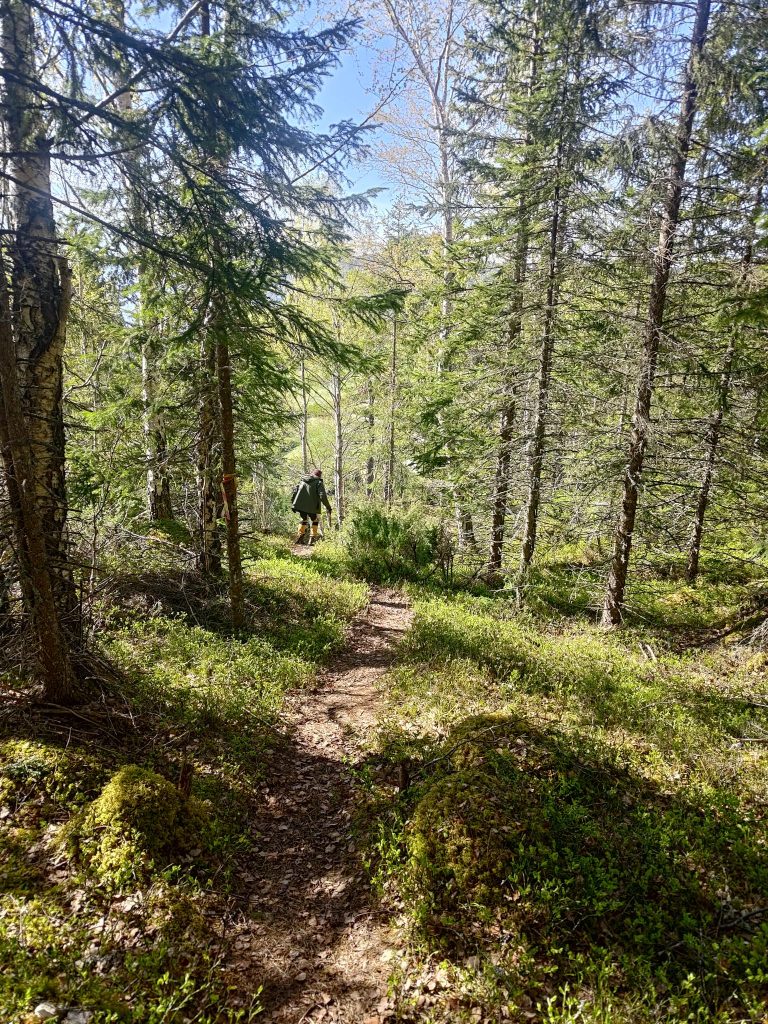
The views from the top of Furufjellet are lovely on a sunny day and well worth the one hour walk to get there. It is peaceful. The only noises are the birds chirping in the trees and the conversation with my walking companion. We find a soft mossy spot to sit on and rest before starting the return trip.
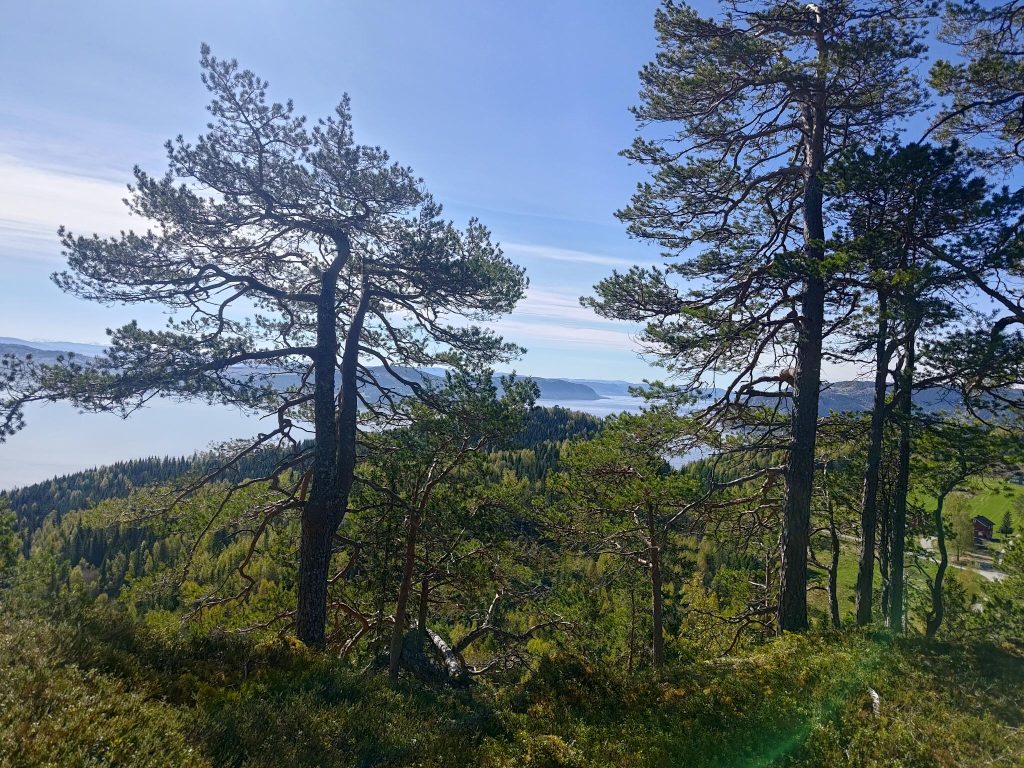
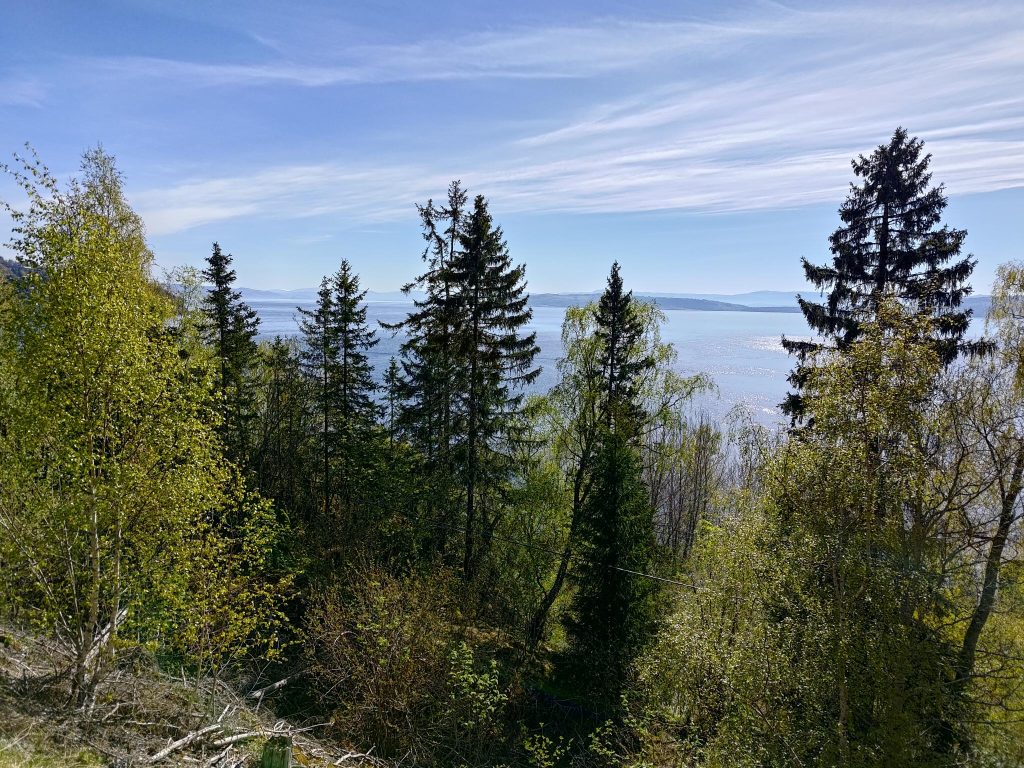
Once at the top we can see the pine trees that the mountain is named for, but behind us there are mostly spruce trees. The view is looking westwards over Trondheimsfjord.
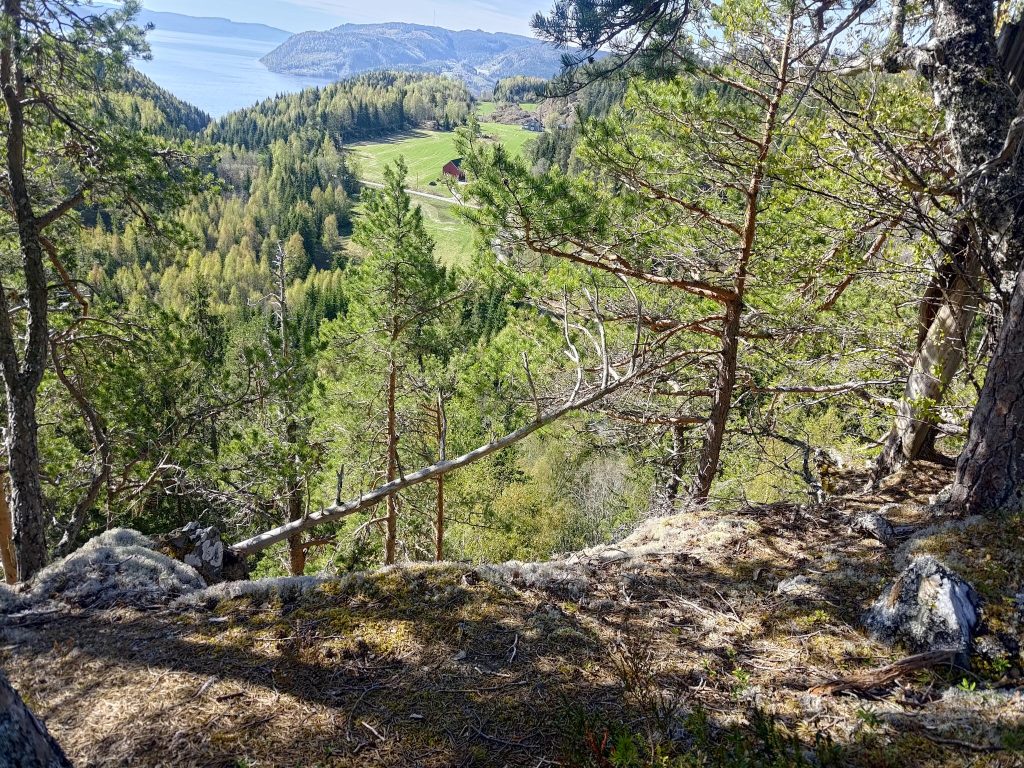
One has to be careful at the top. You saw the cliff from the bottom and here is the top of the cliff. Trees grow here, but also get blown over. The pines survive better than spruce on a top like this as they have a better root system.
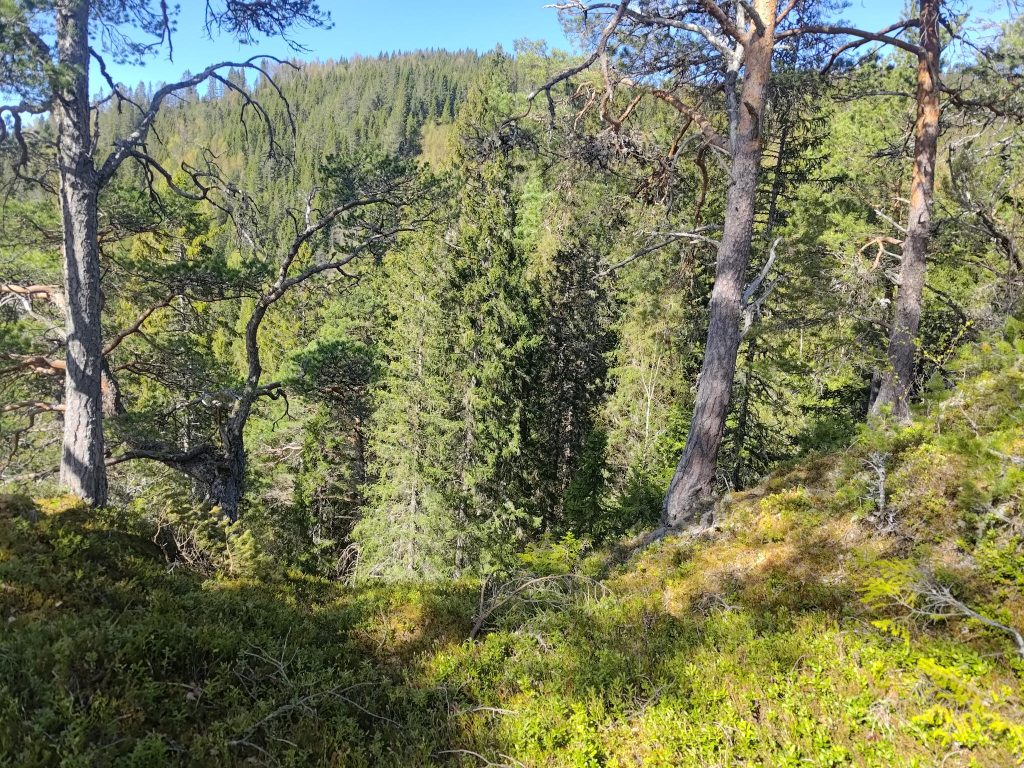
Changing the direction I looked and we can see how at this side the cliff is also very steep. The trail we walked along was at the bottom of this side of the mountain and came up around the back. We are at about 180 meters above sea level. In the distance is a higher hilltop, which is about 250 meters above sea level. Even farther back is Storlia (the Big Hill) which takes one up to 380 meters above sea level. So getting to Furufjellet is an “easy” walk.
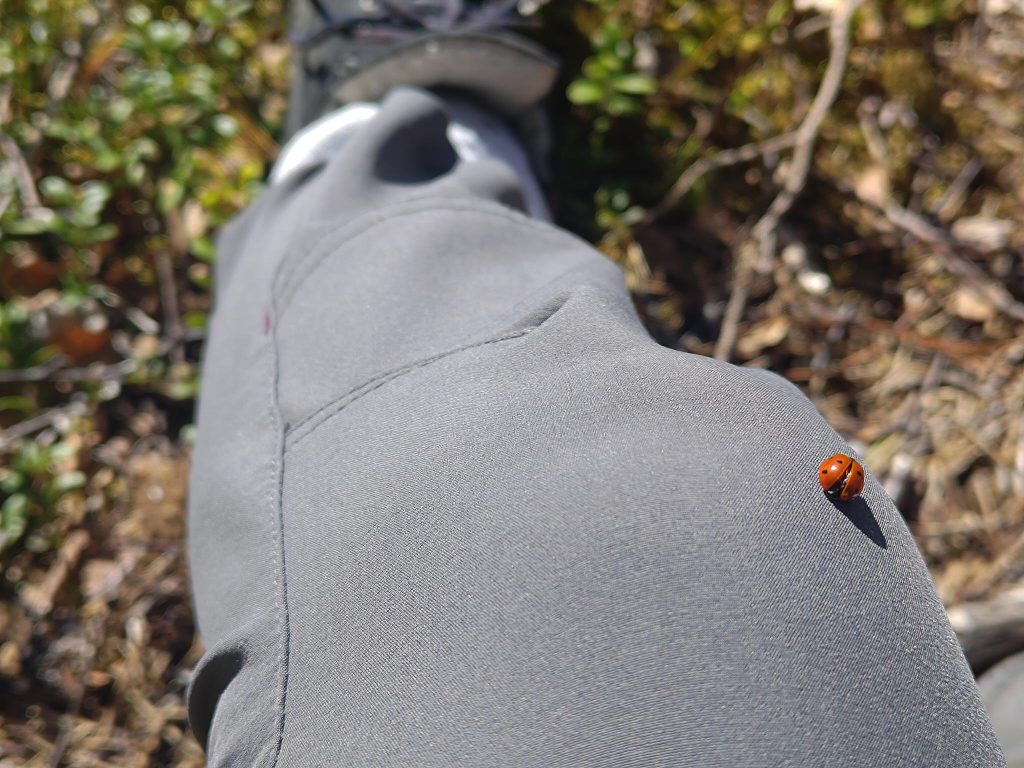
While sitting having our rest, I got a small visitor, my first ladybug of the year. She didn’t stay long, and soon flew off.
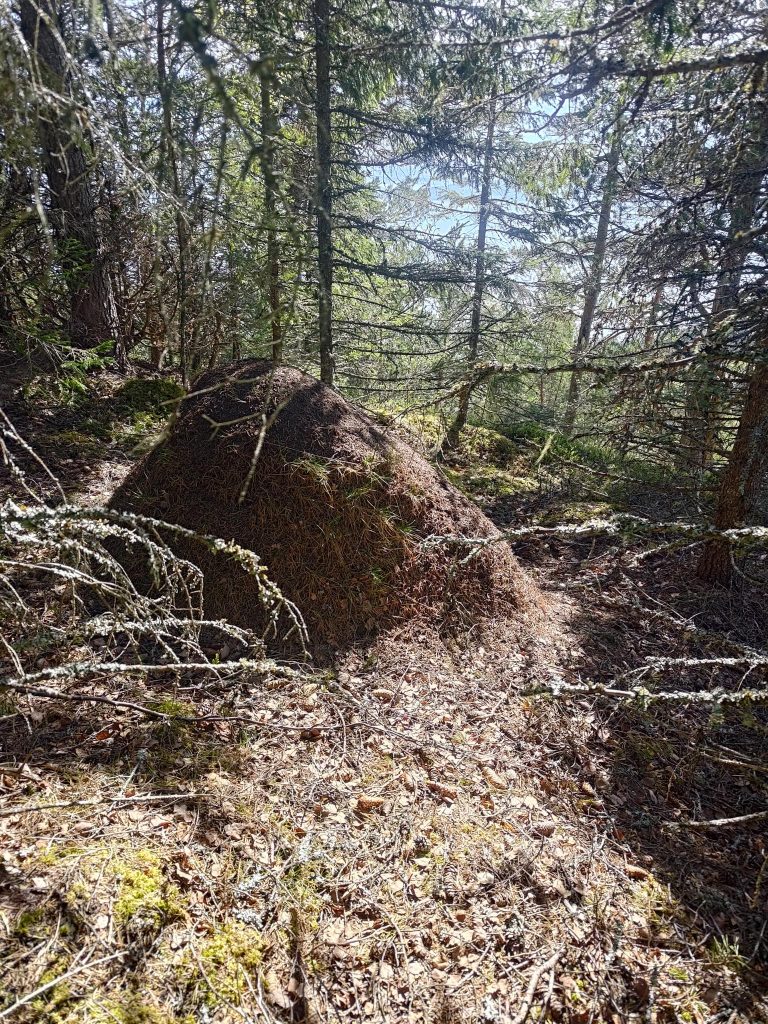
Ants can be problem anywhere and before we came out of the woods, I saw this anthill and said to myself to be careful where I sat down. I had tucked my trousers into my socks as I knew this could be a problem. Ants like the sunshine and they often use the same trails that people do.
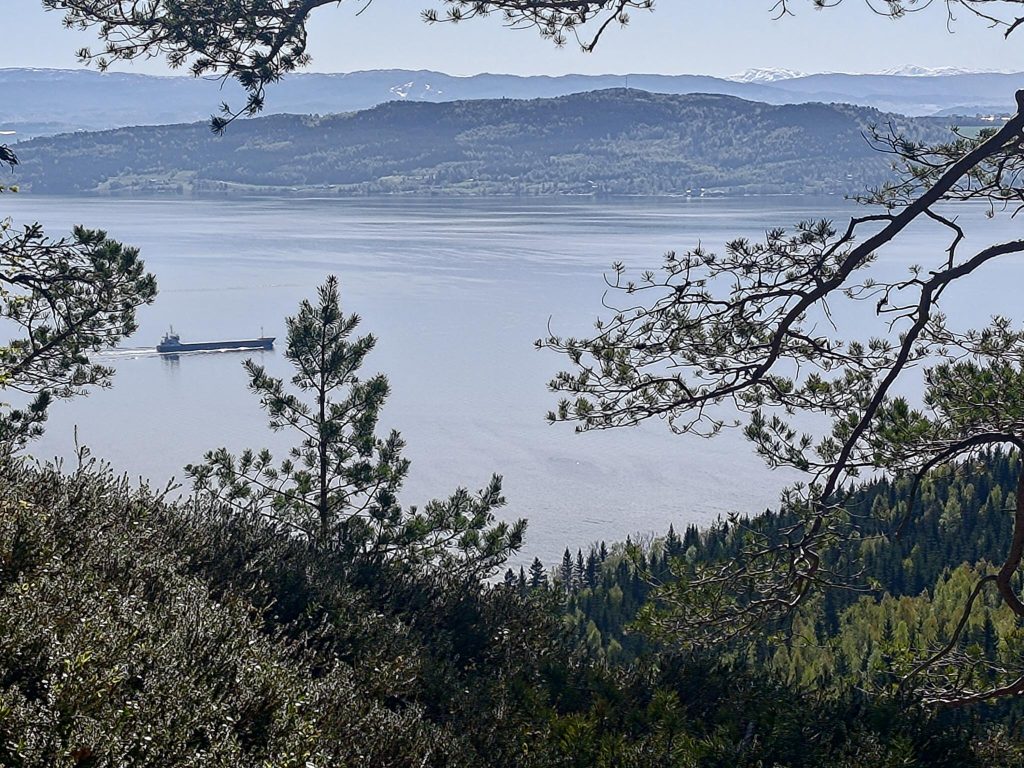
There isn’t a lot of ship traffic on Trondheimsfjord near us, but we regularly see small freighters, often carrying sand or gravel.
The walk up to the top of Furufjellet takes us about 60 minutes as we aren’t as young as we used to be. I like to stop and take pictures, particularly as we climb the hill. We took a long pause at the top before going back down the hill to our car. This is a walk we will do several times during the summer months.