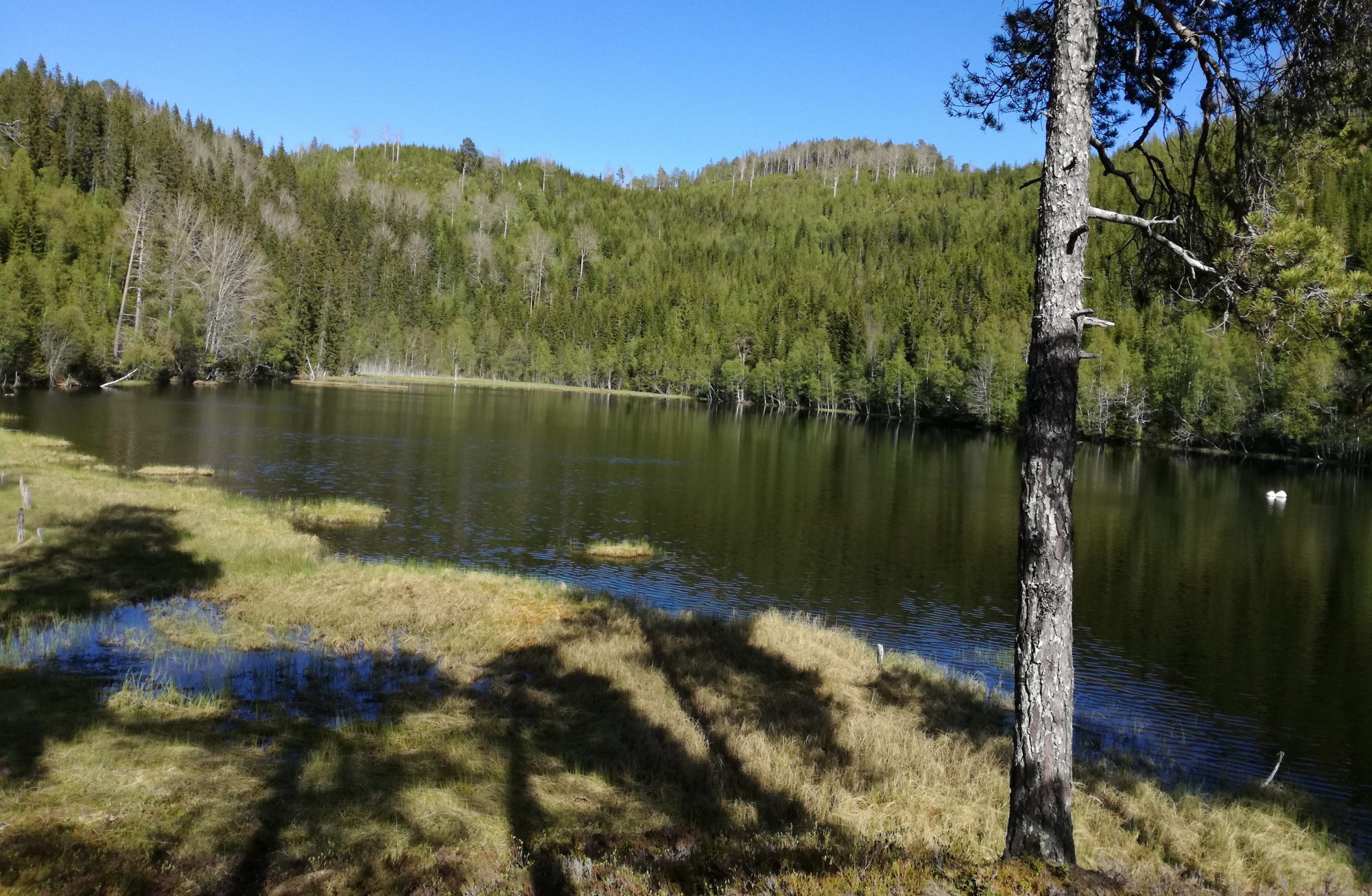
Spring is Coming – March 2026

While my husband was attending an art club meeting, I decided to go for an hour’s walk in the sunshine. After several rainy days, the sun was shining and I was eager to get out in the sunshine and enjoy the new season.
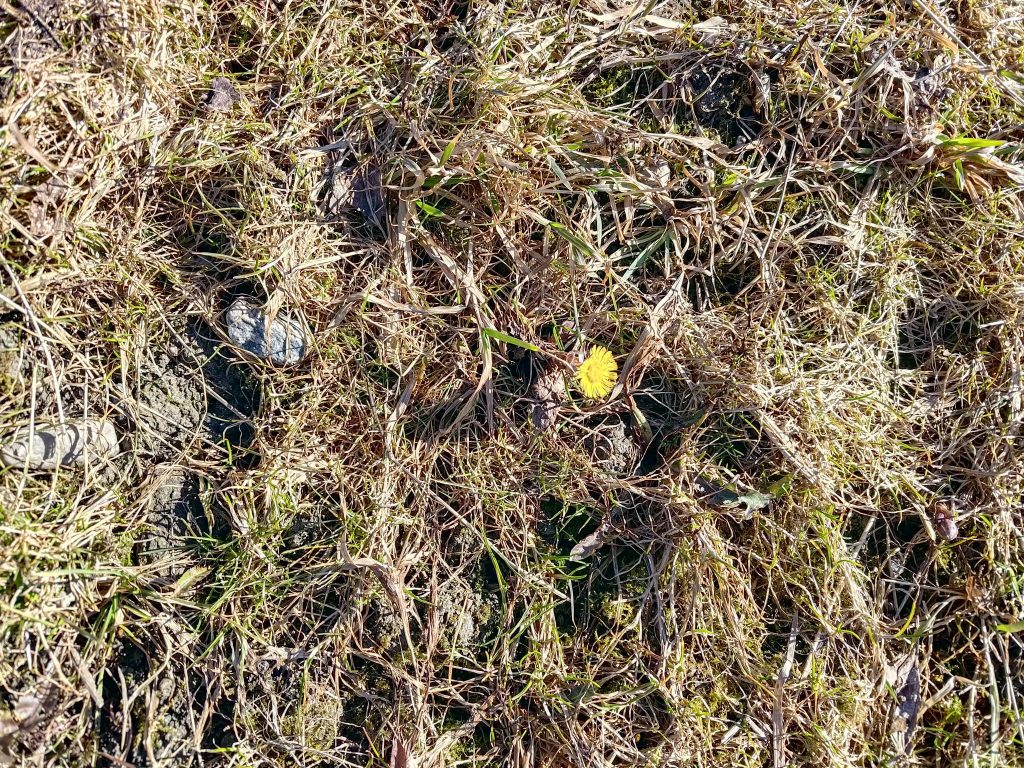
The earliest wildflower in our area is the colt’s foot (hestehov). It comes out on the sheltered, sunny banks of roads and is a certain sign that spring is around the corner. It is a plant that puts out the flower first, and large leaves will come out after the flower is finished. Also note that the grass is starting to grow and turn green in this sunny spot.

The spring equinox has just passed so now the sun is above the horizon a lot longer than it is below the horizon. As an example, today sunrise was at 5:59 and sunset at 18:45 so the sun was above the horizon for 12 hours and 46 minutes. At this time of year, we get about 6 more minutes of daylight each day. The temperature while I was walking was about 7 degrees Celsius, but as I was a climbing a hill for over half an hour, I kept plenty warm enough.
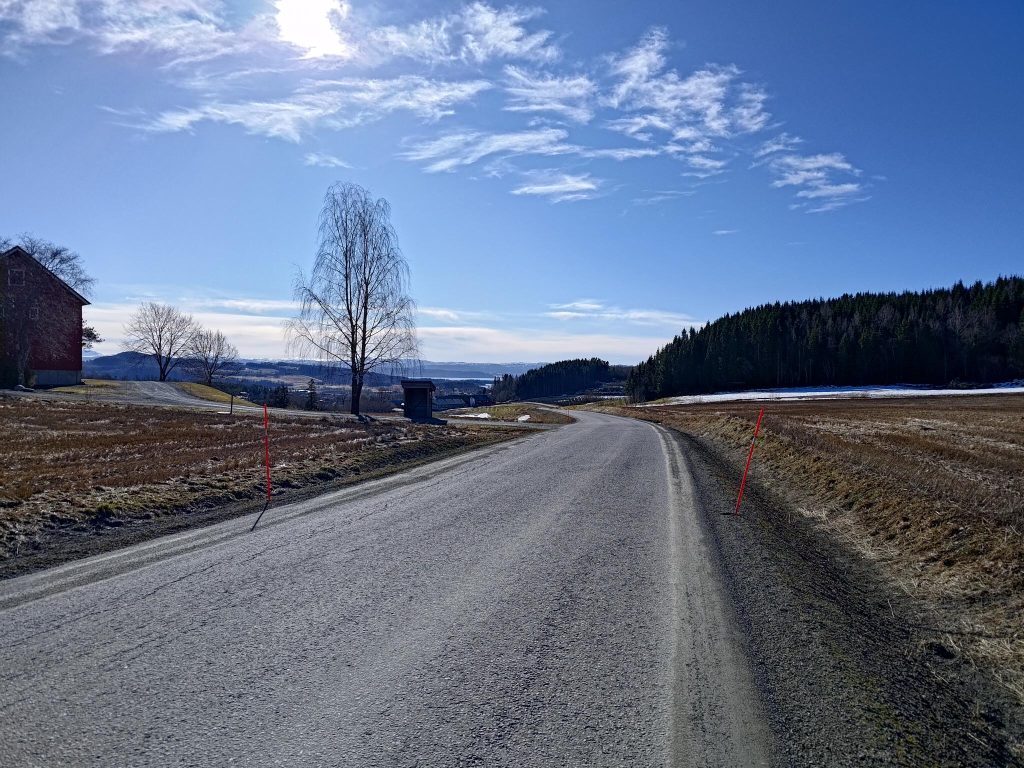
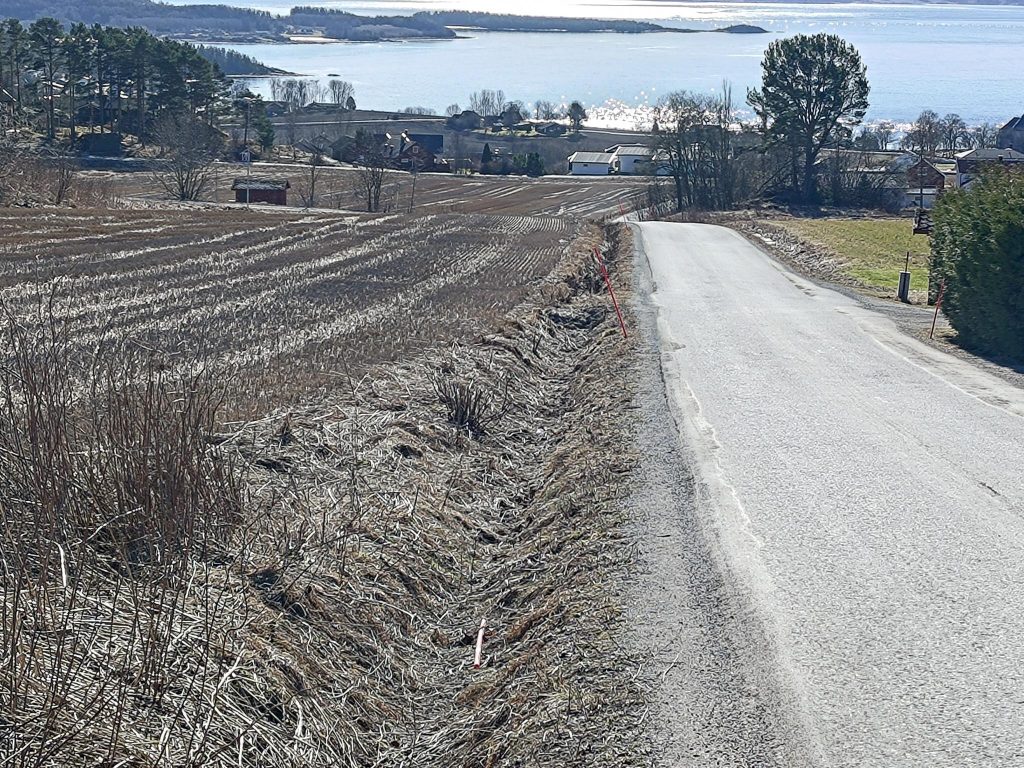
Looking back at the road I’ve been walking along. Most of my walk was in bright sunshine as there are fields along the roads in this agricultural community.

Where the sun has shone on open fields, most of the snow has disappeared. Our last major snowfall was at the end of February and there has been considerable amounts of rain as well since then. Pockets of snow can still be found where the snow has piled up during the winter, either because of the wind blowing or people getting it out of the way.
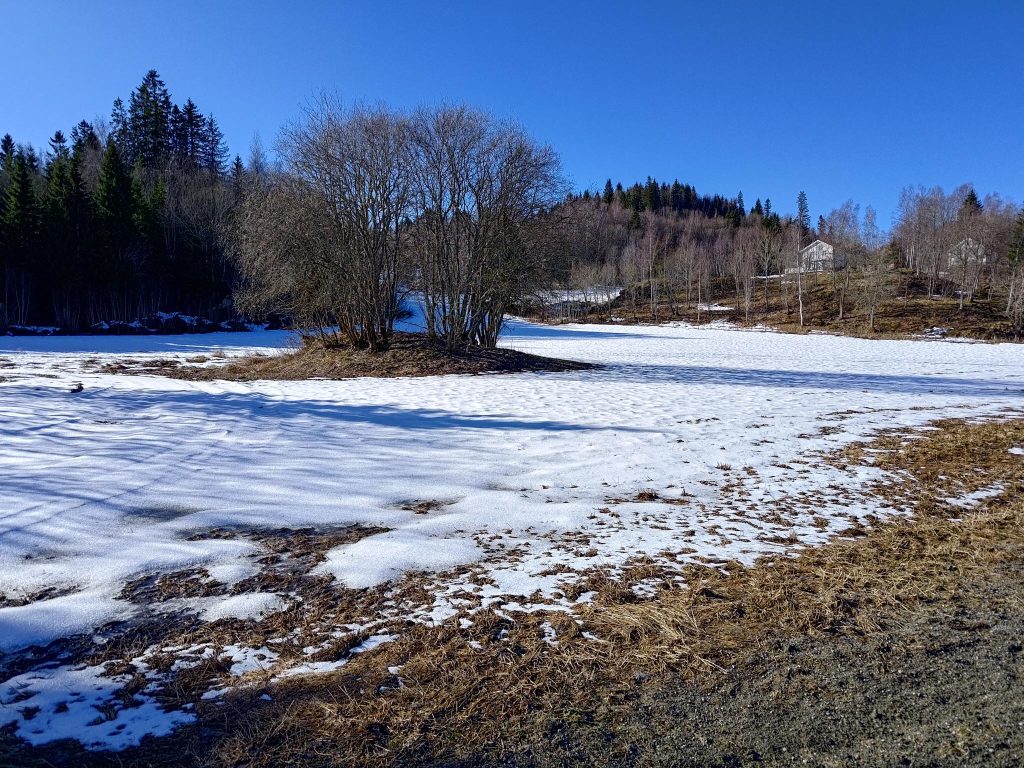
In this photo, the field faces eastwards and gets less sunshine than many other fields. As the temperature warms, or we get more rain, even the snow in the shady areas disappears.
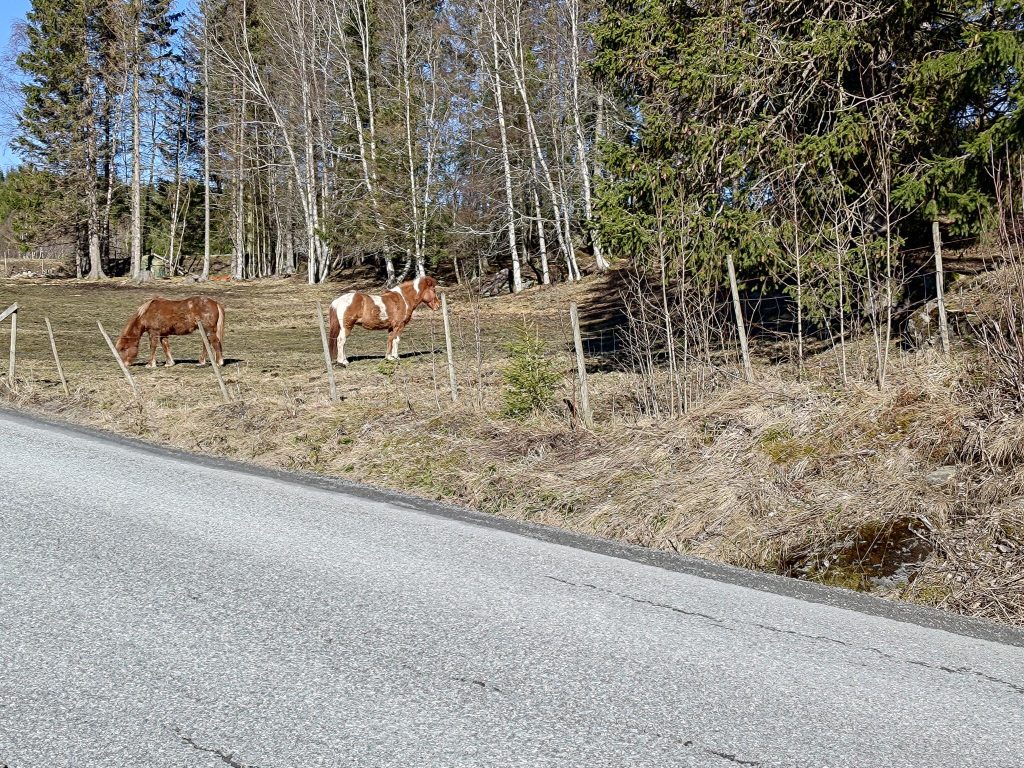
These two animals also seemed to be enjoying the sunshine today. They didn’t pay me much attention. The one on the left continued to try to find grass to munch, but it wasn’t easy to get.

There weren’t very many wildflowers yet as it is a bit early here. But another sign of spring is animals out grazing in the fields. Not much grass is growing yet, but it is just starting in some places. Certainly the horse on the left in the picture above was doing his/her best to find something good to munch on.

There wasn’t much activity at any of the farms as it is a bit early yet to get the fields ready for planting. But there was evidence of winter activities. Most farmers in Inderøy will also have extra income from either clearing roads or logging. I saw one tractor out with a brush at the front of his vehicle that is used to clear the sand/gravel off the road at the end of winter. It is early this year, but then everything to do with weather is changing and old schedules are being redone to match the factual change in seasons.
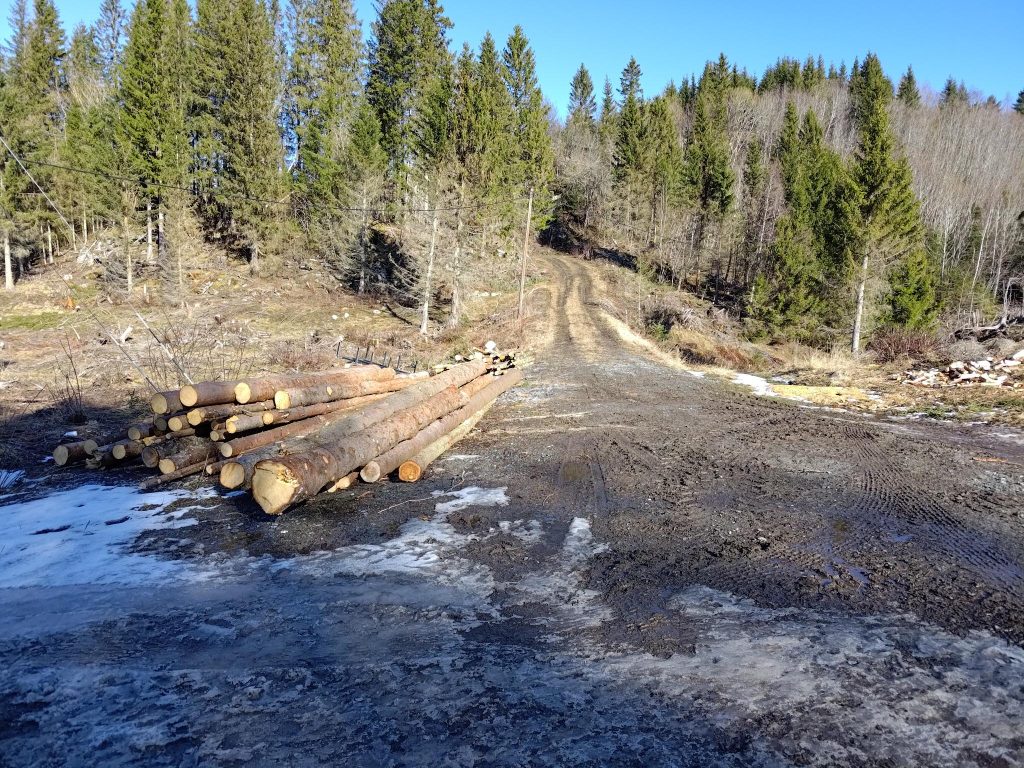
An additional income for some farmers can be logging. Logs can be used for lumber, for firewood, or for chipping for fuel.

I walked for over half an hour up the hill, stopping to take photos to catch my breath. Finally, the road I was looking for was up ahead and to the left. From here I could get back to my starting point and make a large circle route. I had estimated that the walk would take me an hour and in the end it took an hour and a quarter. I don’t walk as fast as I used to and take more pauses when walking uphill. It’s good for me and I enjoy it, especially when there is no hurry and the sun is shining.
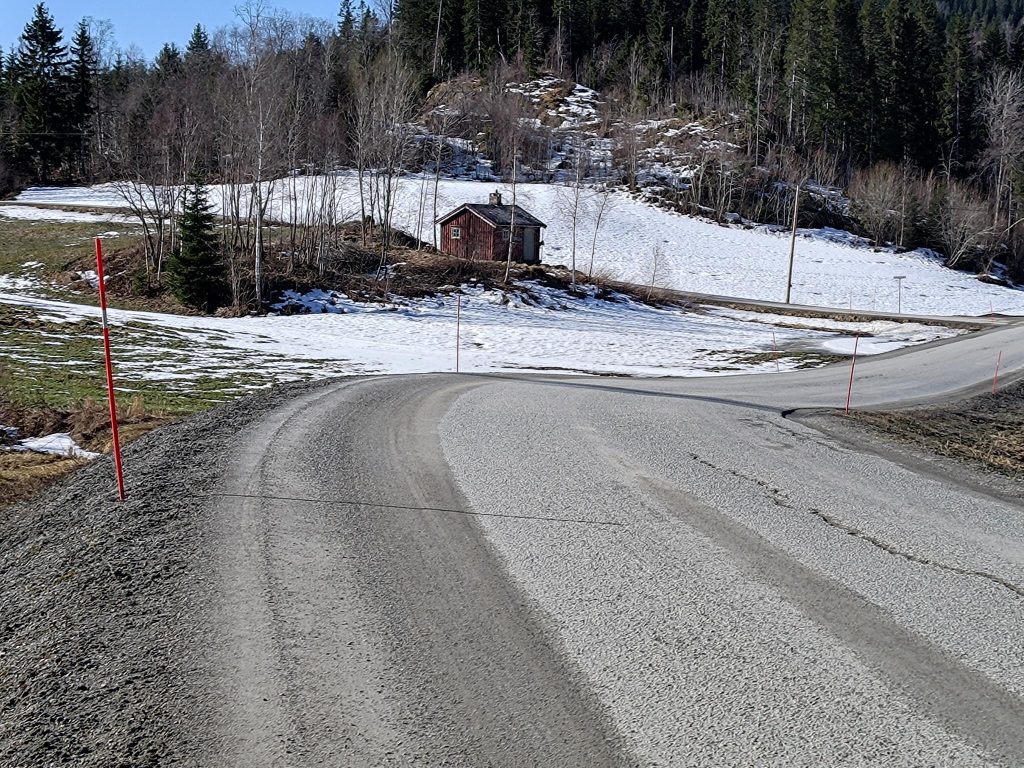
Finally, the road I was wanting to turn off onto. The little building is an old bathhouse, that has been refurbished and is in use again. But I had forgotten that the walk continued on up the hill for quite a bit, before heading down the hill again.

It is still a bit early to walk much in the woods as there can be patches of snow and ice still. So I had designed my walk to stick to roads. However, even in the village of Straumen, there aren’t a lot of roads to choose from. There is no such thing here as “a walk around the block”. I would estimate my walk today at about 5 km. I chose to go in this direction because it is a relatively gentle climb up the hill, though I did notice that it was almost constantly uphill. Once I started going downhill, the slope was much steeper.
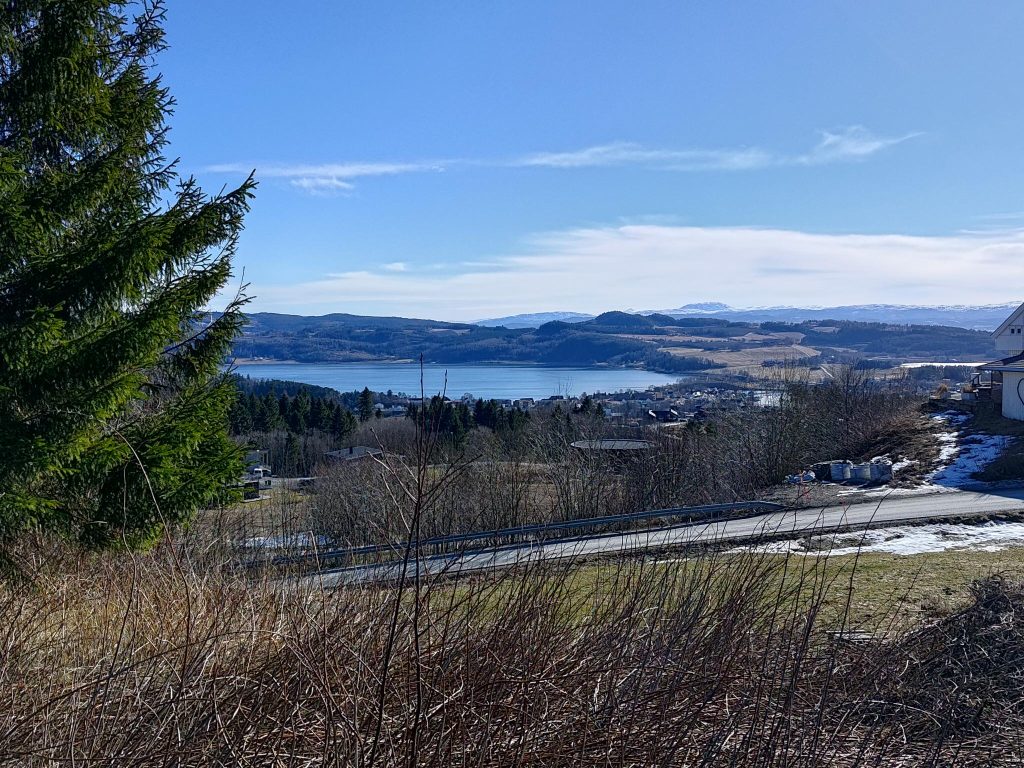
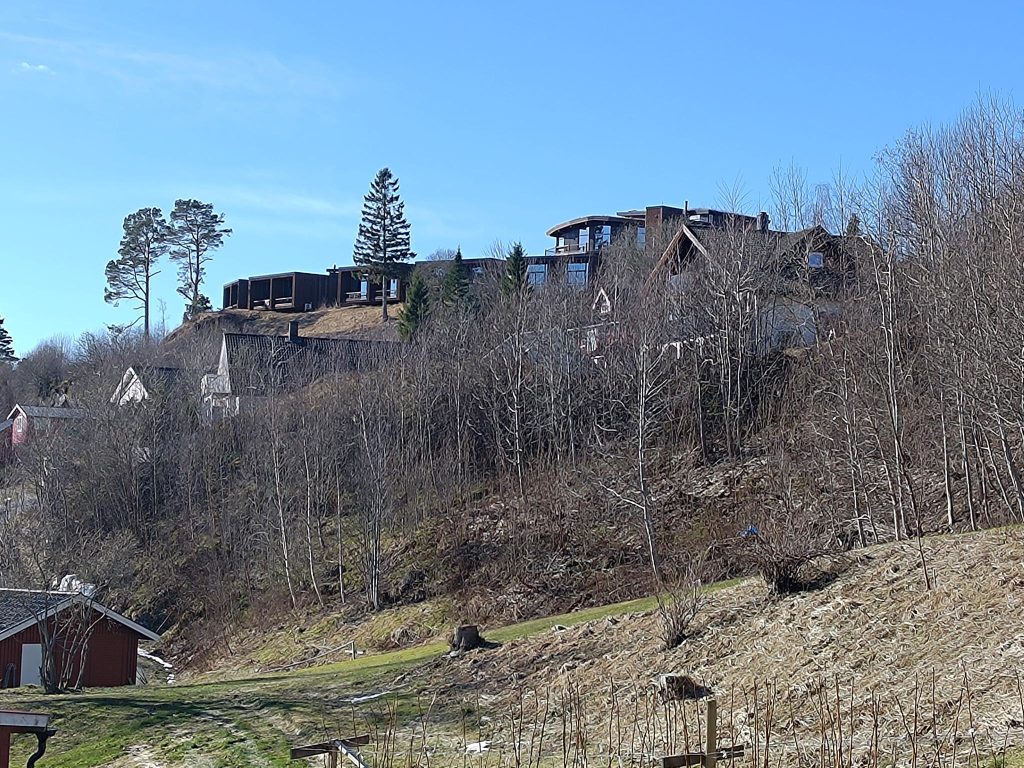
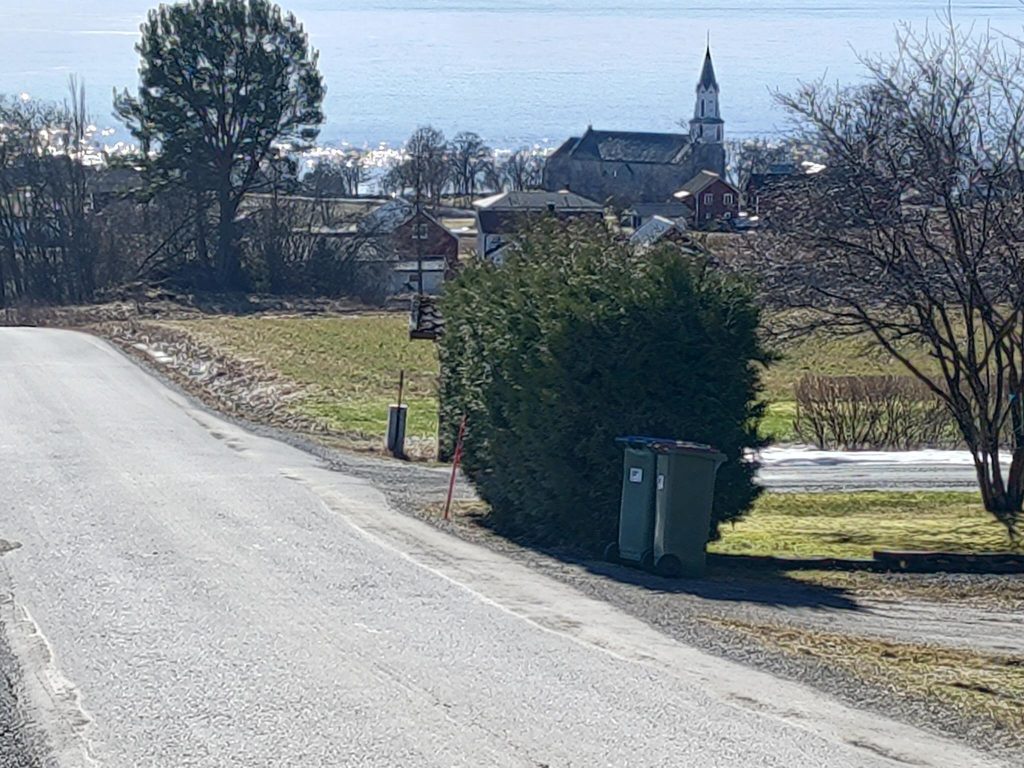
The village of Straumen is just down the hill. I’m standing in a subdivision at about 120 meters above sea level, looking southeast. This is the reason for going in this direction on the walk, to get this view.
At the top of a nearby hill, but accessed by a different road, is Øyna, a local hotel and restaurant, which has fantastic views over Straumen and Trondheimsfjord.
In the distance we can see the “new” church which was built in 1871, so is over 150 years old. It is a large church with 850 seats.
Down the hill, with my destination, husband and car another 15 minutes downhill and off to the left.

I enjoyed my walk, though it was a bit longer than I had remembered. It is not a walk I do very often, but it appealed to me today. Spring has sprung and I’m enjoying that winter is over for this year.
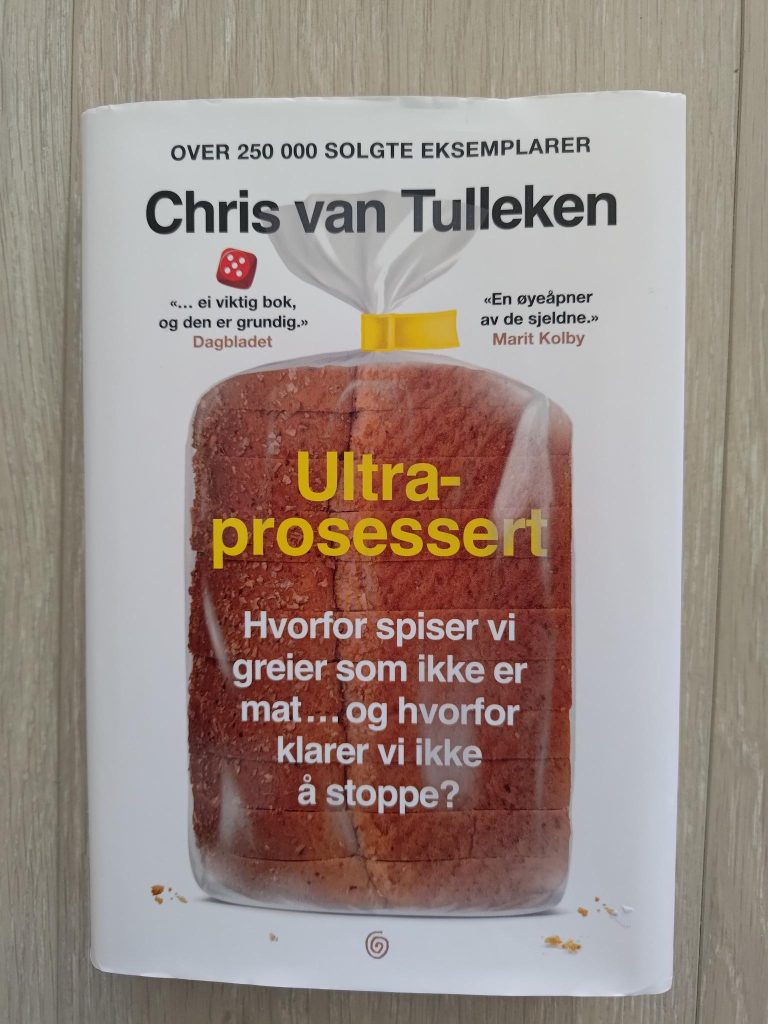
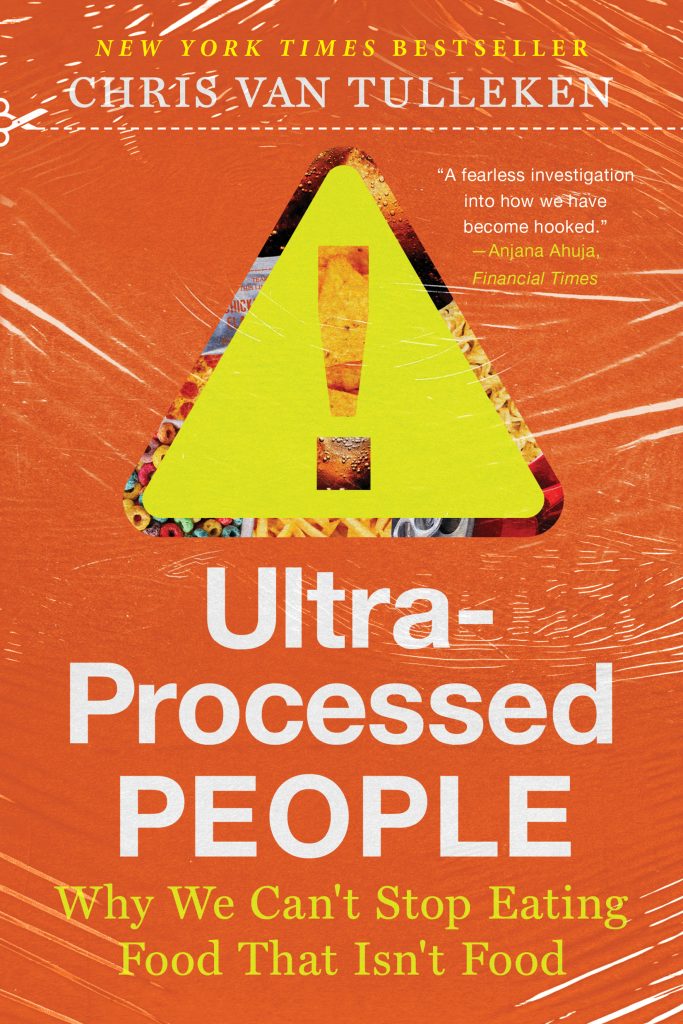
Ultra processed People / Ultraprosessert

Author: Chris van Tulleken
Publisher: (Norwegian) Kagge Forlag, 2024
Publisher: (English) W. W. Norton & Company, 2023

I read this book in Norwegian and found it interesting. The topic is very relevant for me as I’m working on improving my eating habits and this book explains what the problem is with ultra-processed food. It is getting to be common knowledge that the food industry is processing food so much that it is helping people to eat too much and to put on a lot of weight. This book helps explain what is actually happening.

The book has been translated from English, so I have shown the cover of the English edition as well as the edition that I have actually read. As I have read it in Norwegian, I won’t be quoting from the book and titles of the parts are my own translations back from Norwegian. The author is British and lives in London.

I think the most important thing for everyone to realize is that those who process our food are doing it to make money, not to give us better health. If we want to have better health, we have to investigate and make better choices and not just take anything off the shelves in the stores that is easy to grab and easy to eat.

In the process of writing this book, the author decided to eat only ultra-processed food for a month and found that it gave him a revulsion for that type of food. He also put on a lot of weight. He looked at what his young children were eating and decided that changes needed to be made in his own life and his family’s life.

Part 1: What am I really eating?

In the four chapters in this first part of the book, the author discusses what ultra-processed food looks like, especially when the ice cream melts and the breakfast cereal has been sitting in milk for a few minutes. He goes back to the beginning of making “new” foods from what’s leftover from other industries, including margarine made from coal. Chemists can transform anything into something they can call “food”.

Part 2: But can I not just watch what I’m eating?

In six chapters the author goes through the changes that our eating habits have gone through over centuries. He takes up the problem of losing weight which many people have tried but not succeeded with. He concludes that there is something about the ultra-processed foods that changes how our brains think about food. The problem is in the food, not in us.

Part 3: So that is why I am restless and my stomach hurts

In four chapters the author discusses what is actually done to the raw food. First it is chewed up, then aromas and tastes are added back in. There is nothing “natural” about food that has been processed in this way.

Part 4: But I have already paid for this!

The food industry is wanting to make a lot of money from your eating habits. You cannot let the industry regulate itself as it will not make decisions designed to give you good health. At the same time, old-fashioned cooking from scratch is looked down upon. It is much easier to just grab something that can be reheated quickly, or not even heated at all.

Part 5: But what can I do?

In this last part of the book, the author uses three chapters to discuss what to do. Ultra-processed food is made to be consumed in excess and it isn’t so easy to just cut back on how much one eats. The authorities have to regulate better what is actually allowed in the food and how it is marketed. You are also encouraged to think about what you actually grab when in a store or an eating place.

I found the book worthwhile to read, though at times depressing. The food industry wants to make money from us without caring if we live healthy lives or not. Killing its customers seems to be part of the plan. However, I can make better choices by buying raw food and making my own dishes and meals. I can learn about what foods are good for me and which foods are not good for me. I have a choice and I’m willing to do the learning that’s necessary to make good choices. What are you willing to do? What choices will you make?

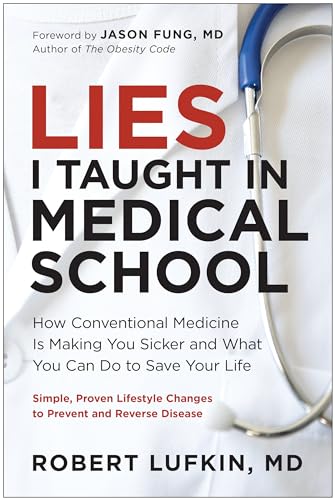
Lies I Taught in Medical School

Subtitle: How Conventional Medicine is Making You Sicker and What You can Do to Save Your Life
Author: Robert Lufkin, MD
Publisher: BenBella Books, 2024

I enjoyed this book and recommend it to others who are interested in wanting to improve their own health through the food they eat. I have read many books on this topic and I found this one easy to understand.

The author has taught at medical schools in California, but developed several medical conditions including obesity, hypertension and pre-diabetes. It started him on looking at what is really the cause of these conditions. The result was a better lifestyle for himself. He has written this book to try to pass the knowledge on to others. He also runs a clinic where he works with clients to help them to better health.

One of the ideas that runs through his book, and which I agree with, is that doctors are too busy trying to “cure” or “treat” diseases to help you avoid them. If you want to avoid becoming sick, you have to investigate yourself (perhaps by reading books like this) and then by making the changes that you feel are worthwhile in your own lifestyle.

Though I didn’t find a lot of new information in this book, it looked at the topic from a slightly different perspective and was able to help me understand the problems behind helping people get better. Many medical treatments do not actually help the patient. I remember reading a few years ago that sometimes the best solution to a problem is actually to take something away, not by adding something. This is the case in many of our modern diseases that are not caused by viruses or bacteria. We have to take away what is making us sick. Unfortunately, if you consult a doctor, he is likely to want to add a medication to whatever you are taking already. This is not always the best solution.

Here is a list of the chapters in the book so you can see which topics the author covers. The research that has been done since 2000 has led the way to more knowledge about what actually causes obesity, diabetes, cancer, heart disease and fatty liver. Mental health and Alzheimer’s are also being included in this group of diseases that is being caused by poor nutrition. There is still a lot of ongoing research and knowledge may improve in the coming years.

Chapter 1: I Did Everything Right and Almost Died Anyway

Chapter 2: The Metabolic Lie: “Metabolism is Just the Body’s Way of Digesting Food”

Chapter 3: The Obesity Lie: “To Lose Weight, Just Exercise More and Eat Less”

Chapter 4: The Diabetes Lie: “Sugar is Harmless, Other than Causing Weight Gain and Tooth Decay”

Chapter 5: The Fatty Liver Lie: “There is No Treatment for Nonalcoholic Fatty Liver Disease”

Chapter 6: The Hypertension Lie: “High Blood Pressure is Best Treated with Drugs”

Chapter 7: The Cardiovascular Disease Lie: “Statins are a Good Choice to Prevent Heart Disease”

Chapter 8: The Cancer Lie: “Most Cancer is Caused by Accumulated DNA Damage”

Chapter 9: The Alzheimer’s Lie: “Alzheimer’s Disease is a Progressive, Untreatable Disease Caused by Beta-Amyloid Accumulation”

Chapter 10: The Mental Health Lie: “Metabolism has Little Effect on Mental Health”

Chapter 11: The Longevity Lie: “Aging is the Inevitable Result of Accumulated Wear and Tear”

Chapter 12: The Plan: Simple Lifestyle Changes Can Prevent and Reverse Diseases Conventional Medicine Causes

To summarize the author’s suggestions for lifestyle changes are to:

  • quit smoking
  • cut out sugar and lower consumption of carbohydrates
  • eat more meat, fish and poultry as well as a moderate amount of dairy products
  • consume more healthy fats, but not margarine or vegetable oils
  • keep meals within a shorter time period within the day and have longer fasting periods

The author feels that if you can change your lifestyle adequately, including when you eat, what you eat and how much you eat, you can reverse some of the more serious diseases that large portions of the population are facing. These changes need to be “forever”, so it is not just a short-term adaption and then go back to one’s old lifestyle.

I felt that this book has, among other books, helped me make the decision to change the way my husband and I eat. Change takes time, but I’m hoping the result will be a healthier old age.

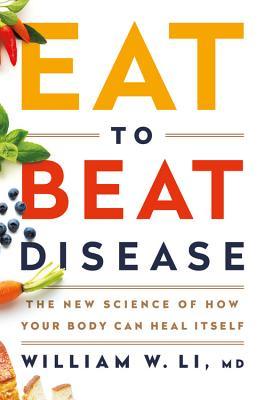
Eat to Beat Disease

Author: William W. Li
Publisher: Balance, 2019

In my continuing quest to learn more about how food affects our bodies and minds, I have now finished the following book. Some parts of it were interesting, but not all of it. I am not particularly recommending the book unless you want to read about a list of research that has been done.

The book has three parts to it, of which I only found the first part at all interesting. In addition, the author repeats himself a bit too much for my liking. His general theory is that the body has five defense mechanisms and that certain foods will help these mechanisms in their job. He also mentions a few things that should be avoided. He has written other books as well, though I doubt if I will read them at this point. His ideas are okay, but I don’t care for his writing style.

The author is a co-founder of the Angiogenesis Foundation and is involved in research primarily related to blood vessels and cancer treatment.

Here is a short summary of the book so you can decide if it is something for you.

Part I Hardwired for Health

I found this part of the book the most interesting as the author describes five systems in our body that are designed to keep us healthy. The research that the author refers to shows how certain foods aid in promoting health to these systems. Though I don’t doubt the validity of what has been researched, I always wonder why certain food items have been researched and many ignored.

The first system is Angiogenesis, the author’s own specialty. This is about blood vessels and how they work. For example, if you can starve a cancer tumor of its blood supply, it will die. But angiogenesis is also needed when there is a wound on the body. New blood vessels need to be made for healing a wound. So there are foods that are good at promoting the formation of new blood vessels, and other foods that can hinder supplying blood to unwanted tumors.

The second system is Regeneration, where the stem cells in your body help with repair work when there has been an injury. The stem cells build new cells depending on what is needed at the injury site. This is part of staying as young as you can, even as you age.

The third system is the Microbiome, all the bacteria, viruses, and fungi that are part of us. Most of them are good, but some are bad. Particularly the bacteria in our gut has been the subject of a lot of research in recent years. Here he lists lots of foods that I like, but warns against artificial sweeteners as they harm your microbiome.

The fourth system is how your DNA protects you. Your cells need DNA to function properly, but as the DNA is copied many errors are made. However, the system is designed to find the errors and fix them. This is one system that seems to get weaker as we age.

The fifth system is Immunity, protecting from invasion from outside.

Part II Eat to Beat Disease

For each of the five systems discussed in part one, there is a chapter giving the evidence of what foods are good, or bad, for the system. I found a lot of this repetitive, but there was more detail about which foods were good for each system.

Part III Plan, Choose, and Act

In this part, the author gives lists of food and some ideas on how to combine them to improve one’s health. I found the chapter about cooking food useless as I already know how to cook. The recipes used ingredients that belong to a foreign culture and many of them not available in my local food stores.

This is a very special book, only for those who want to get the scientific evidence about what foods are good for you. I have read better books, but this one was from a slightly different perspective so I did learn some things from it. I’m continuing to read more books about health and food so there will be more blogs on this topic.