
Author: Nina Teicholz
Publisher: Simon and Schuster , New York, 2014
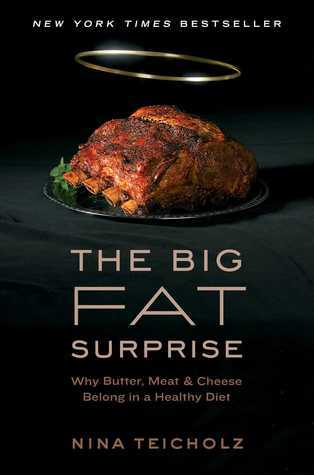
Though this book was published twelve years ago, I found that the contents were enlightening. The author explains in her book how the idea that we should have a low fat diet was created in the late 1950s and how this idea is still entrenched in the American recommendations for how we should eat.
The big surprise is that a low fat diet is bad for us. If you cut out saturated fats from your diet, (those fats that come primarily from animal foods), you end up eating something else, usually carbohydrates and vegetable oils, neither of which are particularly healthy for you. The author goes into how vegetable oils are not healthy replacements for animal fats.
The American health authorities started on a huge experiment in about 1960 when they recommended that people eat less red meat, eggs, cheese and dairy products in order to prevent heart disease. The scientific basis for this decision was both meager and faulty. The result has been an increase in obesity, type 2 diabetes and cancer, as well as other health issues related to metabolic syndrome. There may have been a minimal reduction in deaths from heart disease, but even there, was it the diet, or the medical treatment that contributed to the reduction? We may never know. There was very little good research done in the 1950s and 1960s before the dietary guidelines were put in place.
If you are interested in health and diet and want to know more about the history of what has happened in the last 60 years, this book gives a very good outline about fat. The author takes us through how we came to think that saturated fats are unhealthy and how the low-fat diet was introduced to America, including the Mediterranean Diet. There is also a chapter on how inappropriate this low-fat diet is for women and children. There are also two chapters on what replaced saturated fats in our diet, including vegetable oils and trans fats. Now that trans fats have been shown to be bad for us, what is it being replaced with? Something worse?
The author’s conclusion is that a high fat, low carbohydrate diet is better for us. Research in the 21st century is showing that it is carbohydrates, in particular, sugar, that are ruining our health. The author feels that we should go back to a diet high in meat and animal products, and especially eating animal fats, including cheese and full-fat dairy products. Eggs are good for us, as all the fuss about cholesterol seems to have been a lack of knowledge of how our bodies work. Research is being done that indicates that a high animal fat diet is actually better for us than just eating plants.
In February 2026, I changed my diet considerably, reducing drastically my consumption of carbohydrates and trying to get rid of most of the sugar in my diet. The first result was going down in weight, losing about 6 kg over a period of several months. The second result was feeling better, though that is more difficult to actually document. At 77 years of age, I am also fighting my added years, but at least I don’t have to lug around my extra weight. My intention in changing my diet was to improve my health and to avoid developing diabetes and dementia. I feel that I have made the right decisions and will continue on this high fat, low carbohydrate diet.
This book is recommended reading for those who want to know more about what foods make a good diet.
Other blogs that I have written on similar topics include: