When I think of nature, I usually think “green” and many of the nature pictures that I take and like best are a combination of blues and greens. So on Sunday, while out walking with my husband, I decided to look at what colors I actually found.
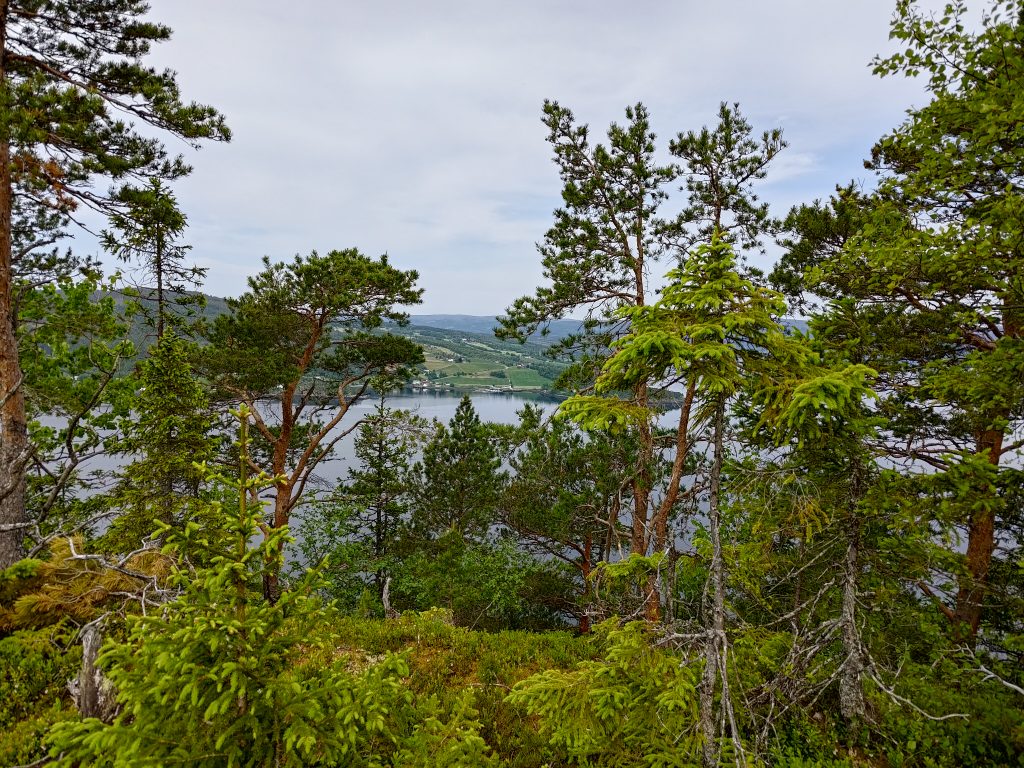
A typical nature picture that I take is mostly green, with some blues and greys, depending on the weather. But how many different greens can you see in this picture? It can be hard to count all the different nuances of the color green.
When I took the picture above, I was particularly looking at the small spruce tree on the left which has bright green new growth and last year’s growth is a darker green. But when I look at the ground cover plants, there are several shades of green and the pine trees are a different green than the spruce trees. Trunks and branches of the trees are often either a brown or a grey. But if you look in the background of the picture, you will see blocks of white on the hillside in the background, which are man-made buildings that are painted white. Farm fields are different colors depending on whether there is grass growing or it has just been cut.
Flowers
Trees usually spread their pollen in the wind so they don’t have bright colors even when they flower. Many are white or pale yellow. But plants that want to attract insects for pollinating them, often have bright colors so that the flowers can be seen against the background of greens. I’m not very good at naming the flowers that I see, even the ones that are common. For me, there is an English name, though perhaps a Norwegian name is more familiar to me and then there is the Latin name that helps one go between languages.
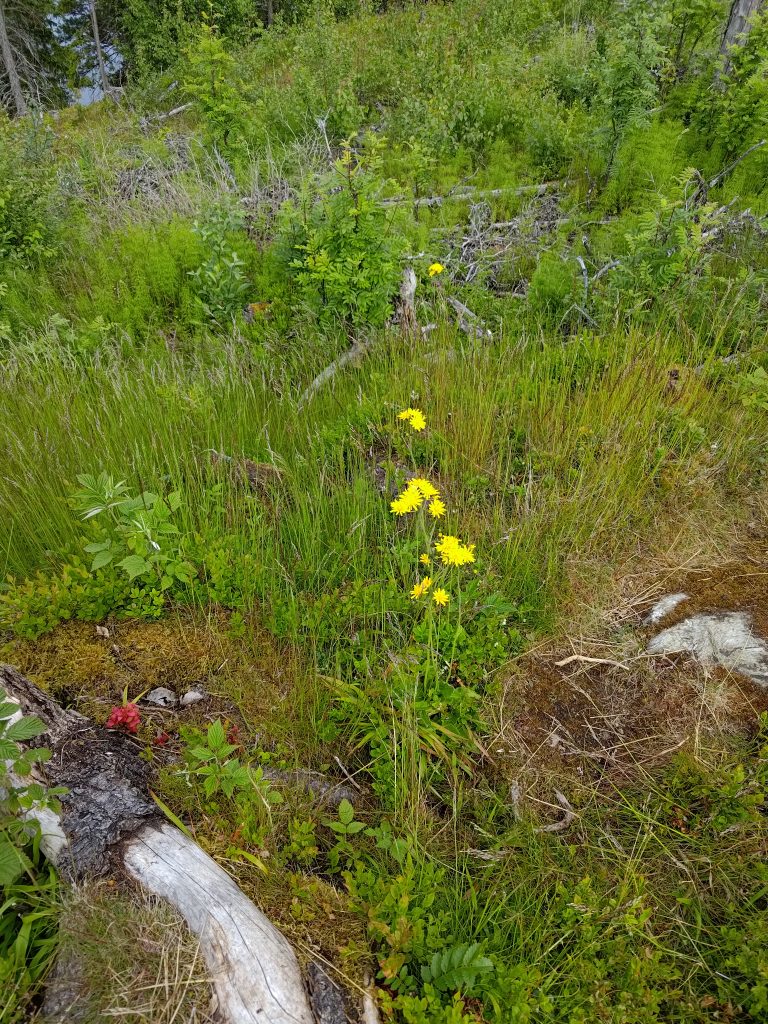
A group of bright yellow flowers are easily seen by humans. In addition there is a bright red clump of leaves on the left, which are very noticeable.
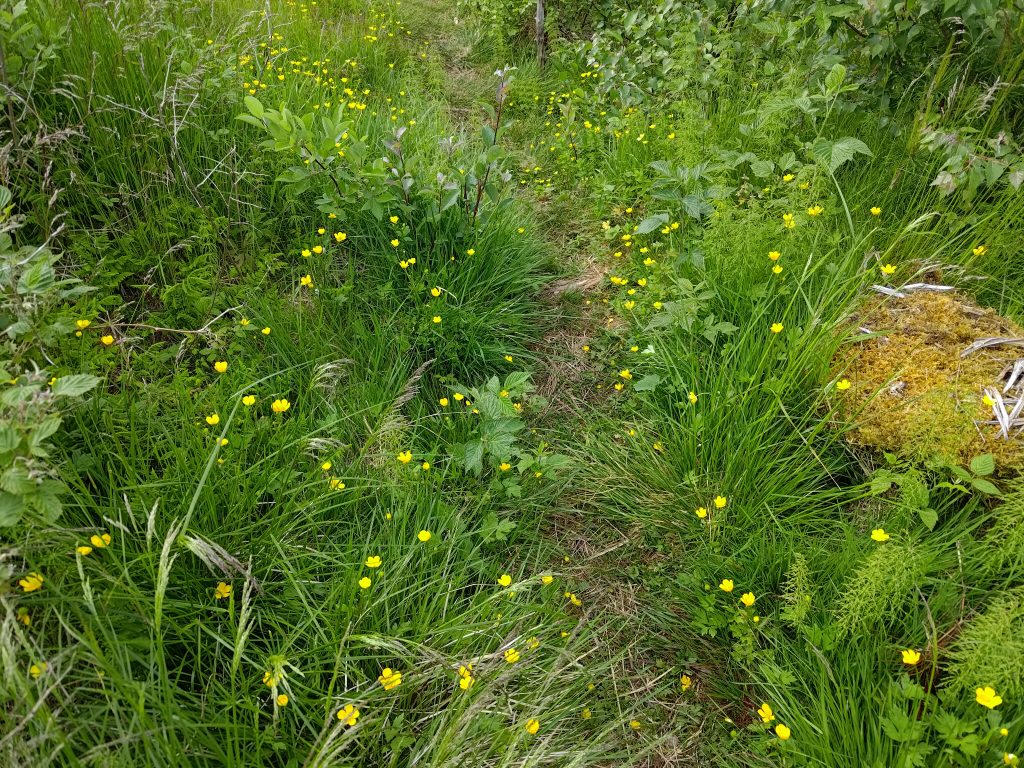
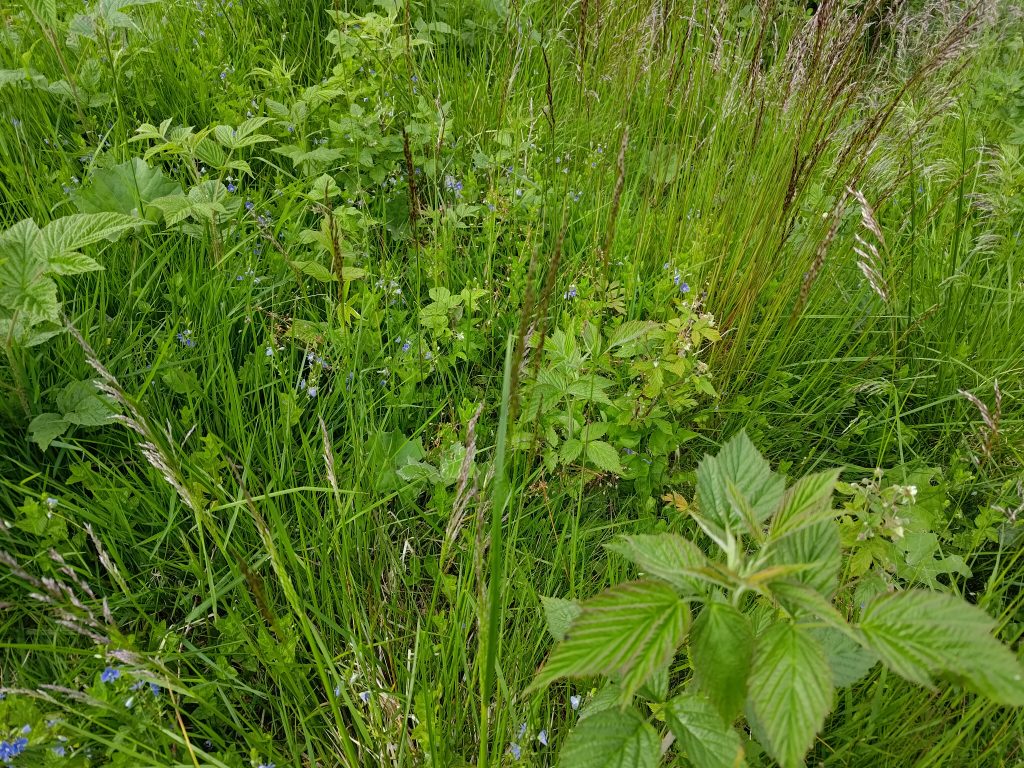
Buttercups (engsoleie, ranunculus) often bloom in large groups so that insects will go between the flowers helping to pollinate them all. They spread with runners so there can be a lot very close to each other.In this picture there are both white and blue flowers that are both small and more difficult for human eyes to pick out. The blue flowers are probably forget-me-nots (forglemmegei/myosotis). There are also raspberries and different types of grasses in the picture.
Some of the colors that we find in nature are placed there by humans.
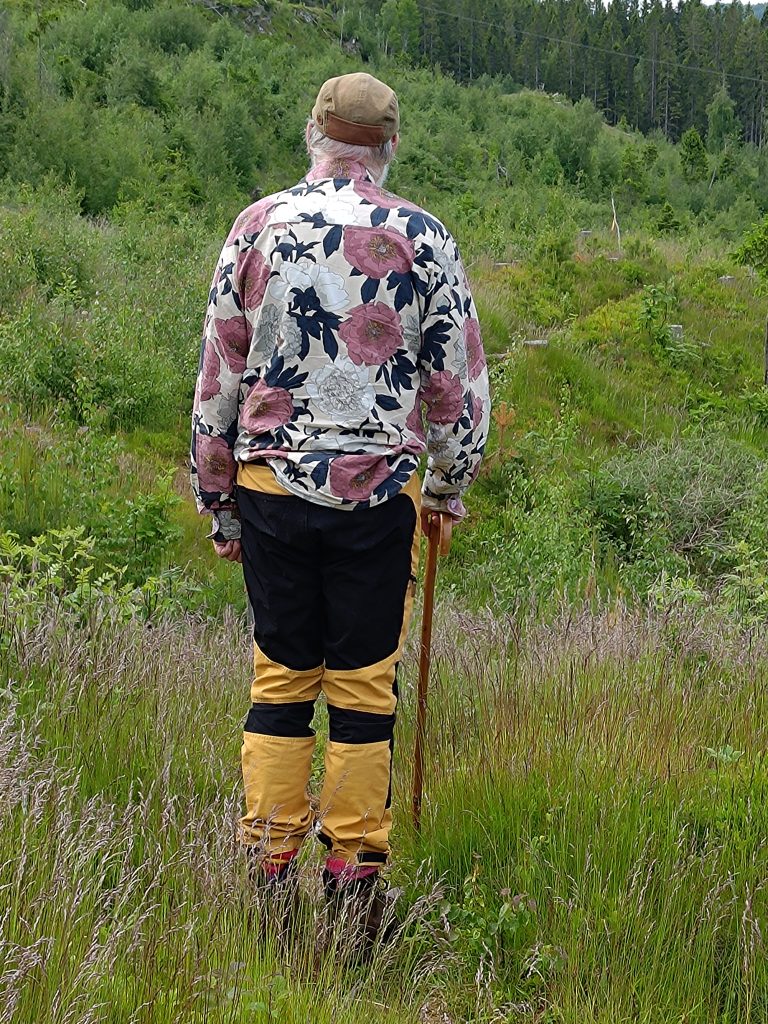
Sometimes people like to take their color with them into nature. My husband loves brightly colored shirts, often with flower or bird patterns. Notice also the color of his socks.
Jåsetbråttet
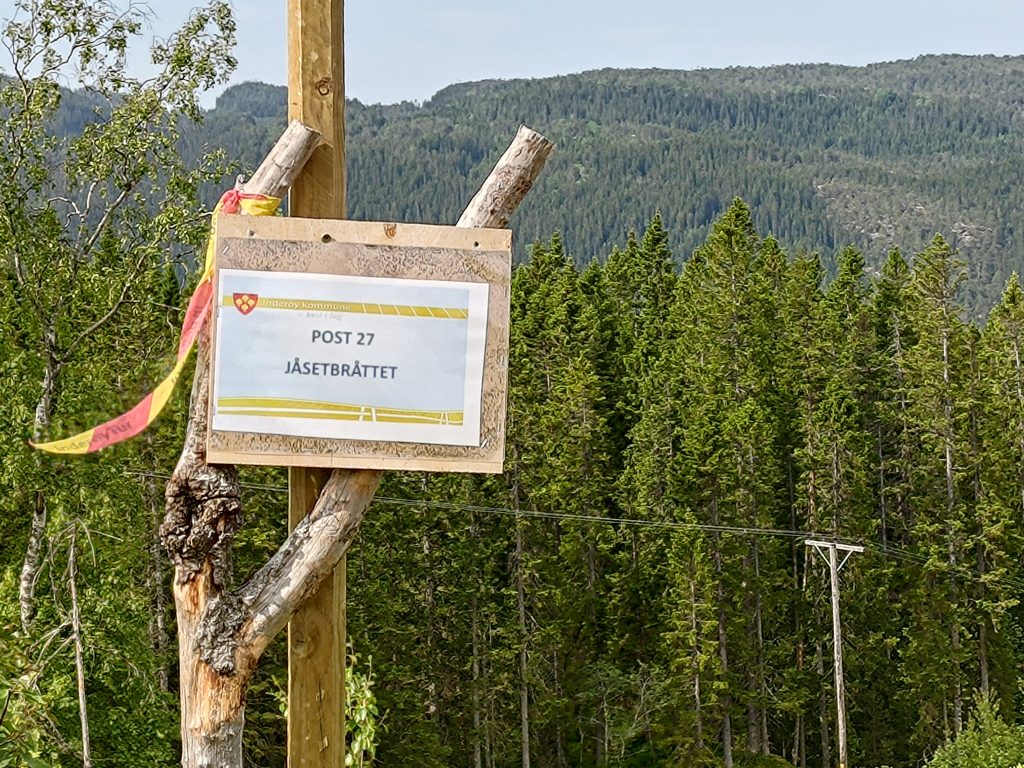
The purpose of our long walk today was to visit two places. The first place was a view point at the top of Jåsetbråttet where one has a view of the north end of Skarnsund. As it was a warm morning (20 degrees C is warm for us), and we are not getting any younger, we used about 40 minutes to get to our first post, but there is a picnic table to sit at and enjoy the view.
The first of two posts on our Inderøy walk today.
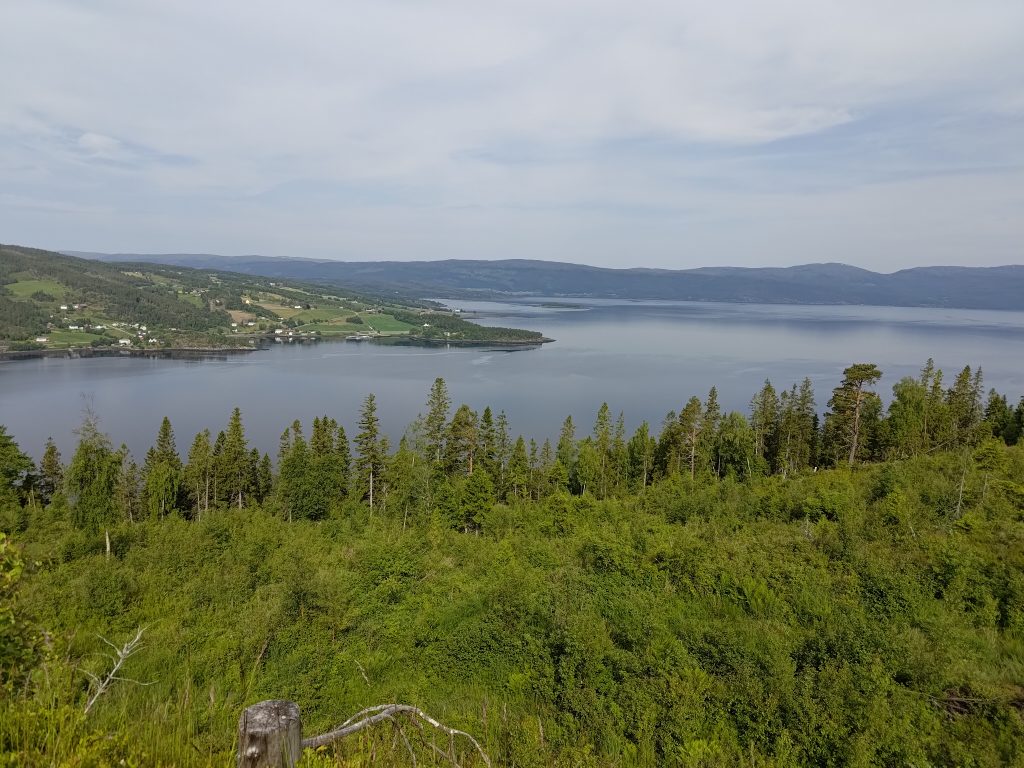
I am sitting on the east side of Skarnsund, with Framverran and Mosvik on the other side of the sound and on the left. The municipality of Steinkjer is in the distance on the far side of the fjord. When you look at the colors in this picture, I notice mostly greens, blues and greys. The forest-clad hills in the distance turn dark blue because of the distance.
Shortly after leaving the picnic table, we entered a nature reserve and the border between the logged hillside and the nature reserve is very visible. Within a nature reserve one is not allowed to disturb nature as the area has been set aside to preserve the specific nature that is found in that area.
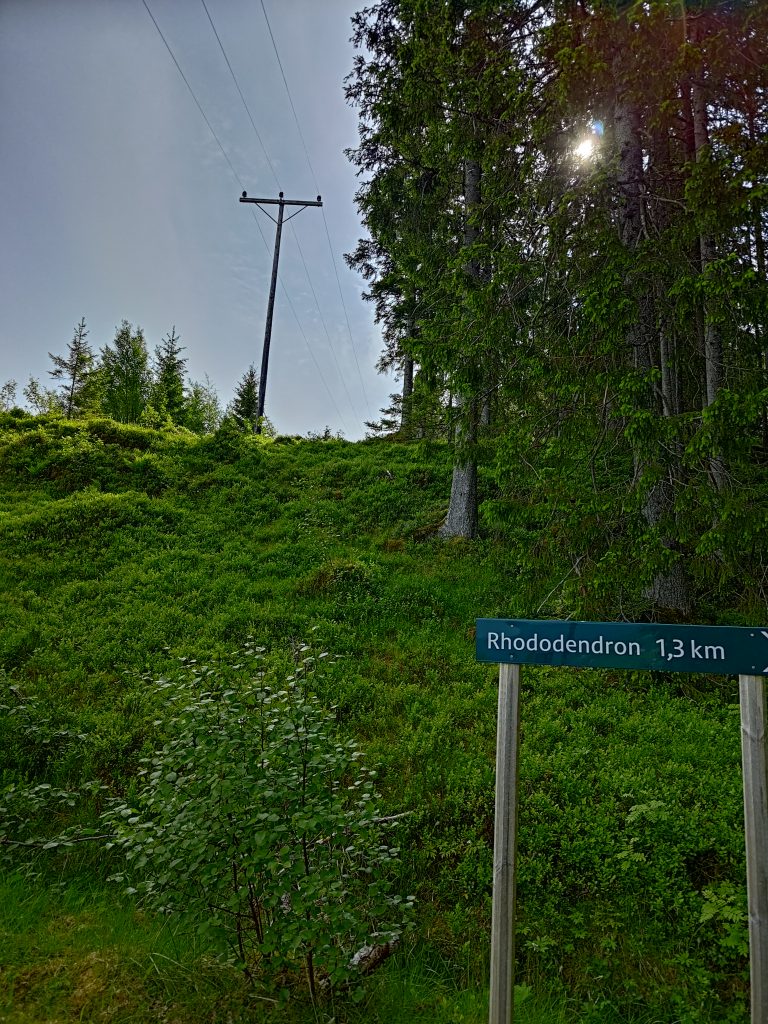
Logged hillside on the left and nature reserve on the right. Yes, we will eventually get to the rhododendron plant that is one of our goals for the day. The sign says 1.3 km, but it felt like 3 or 4 km. However, walking on forest paths is not the same as walking on sidewalks.
Ørdalen Nature Reserve
Ørdalen nature reserve was established in 1992 and its purpose is to protect a forested hillside which has not been influenced by much human activity. However, there are a series of trails through this nature reserve and we usually take this trail about once a year.
The hillside is very steep and would be difficult to log. It is a dense forest which has spruce, pine, hazel and elm, as well as a variety of forest floor plants. This winter we had two storms which took down a lot of trees, especially spruce trees and this damage was seen also in the nature reserve. In several places, fallen trees had been cut so that walkers could use the trail. In other places, the trail was altered to go around the fallen trees.
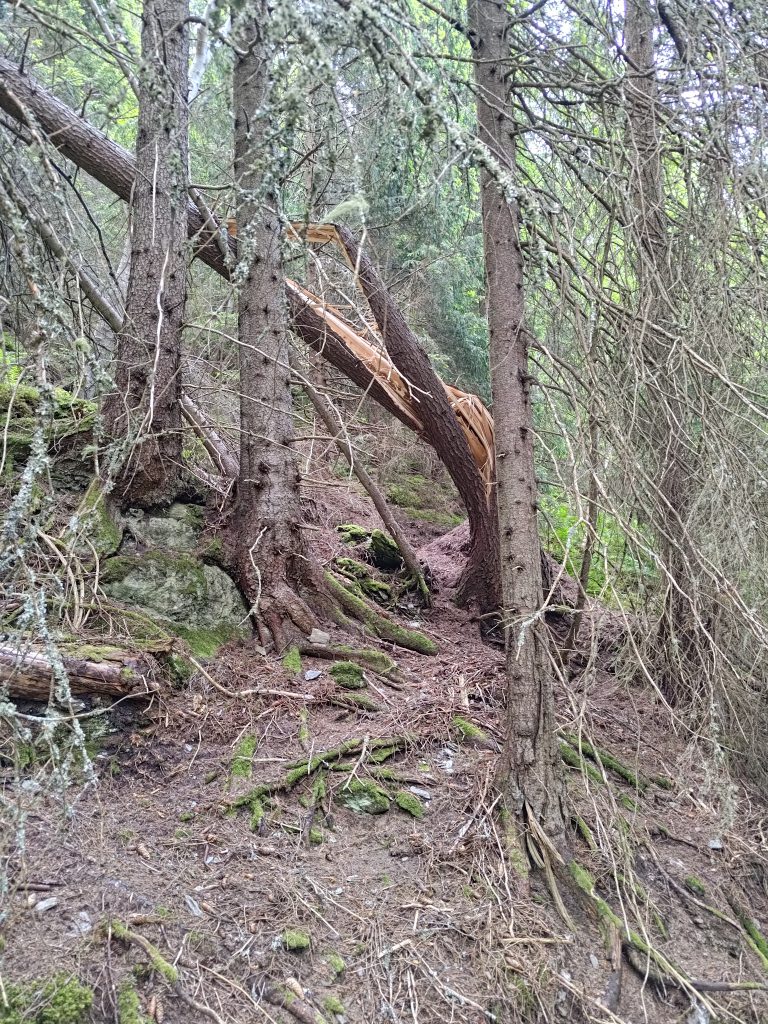
Inside the forest, where there is much less light, even on a sunny day, there are a lot less colors. Browns and greens predominate. Not all trees survive the winter storms. This winter we had two very windy storms that brought down a lot of trees. Some trees were broken and others were toppled so that their roots were in the air.
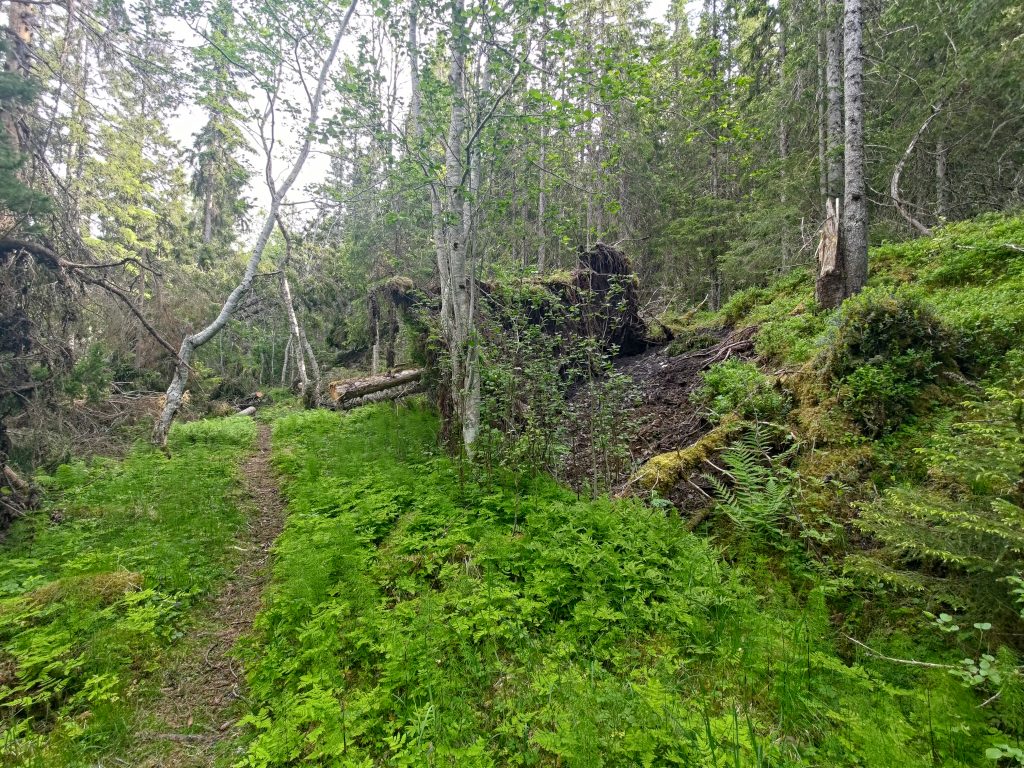
Spruce trees have very shallow roots and are very susceptible to strong winds. On the right of center, you can see the underside of several fallen spruce trees. Here the trunks have also been cut to allow walkers to pass on the trail.
When trees fall over in the storms, it opens up the forest floor to more light. This spring has been very wet so there is a lot of new growth on the forest floor. There were not many flowers in the woods, so it was mostly greens and browns.
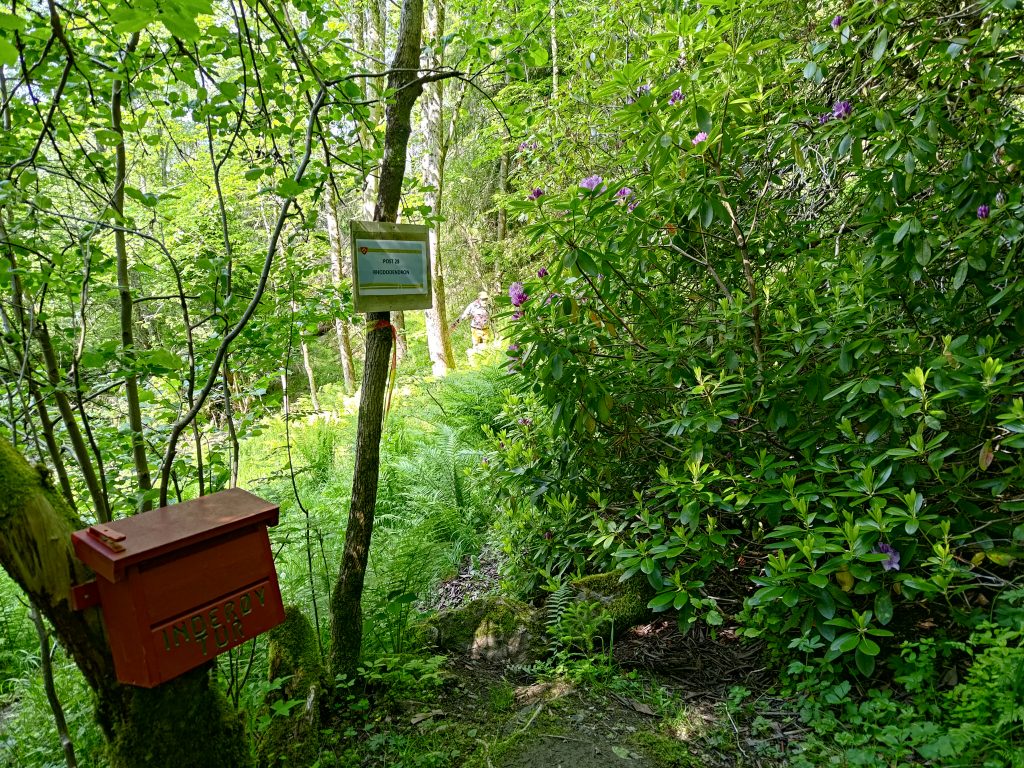
The second post on our walk has been reached, but we used almost an hour between the two posts. It was a bit early to see the rhododendron bush at its best. Though the bush in my garden has come out nicely with the sunshine the last four days, here in the woods, only some of the buds have opened out. With all the rain this year, there are, however, a lot of new shoots.
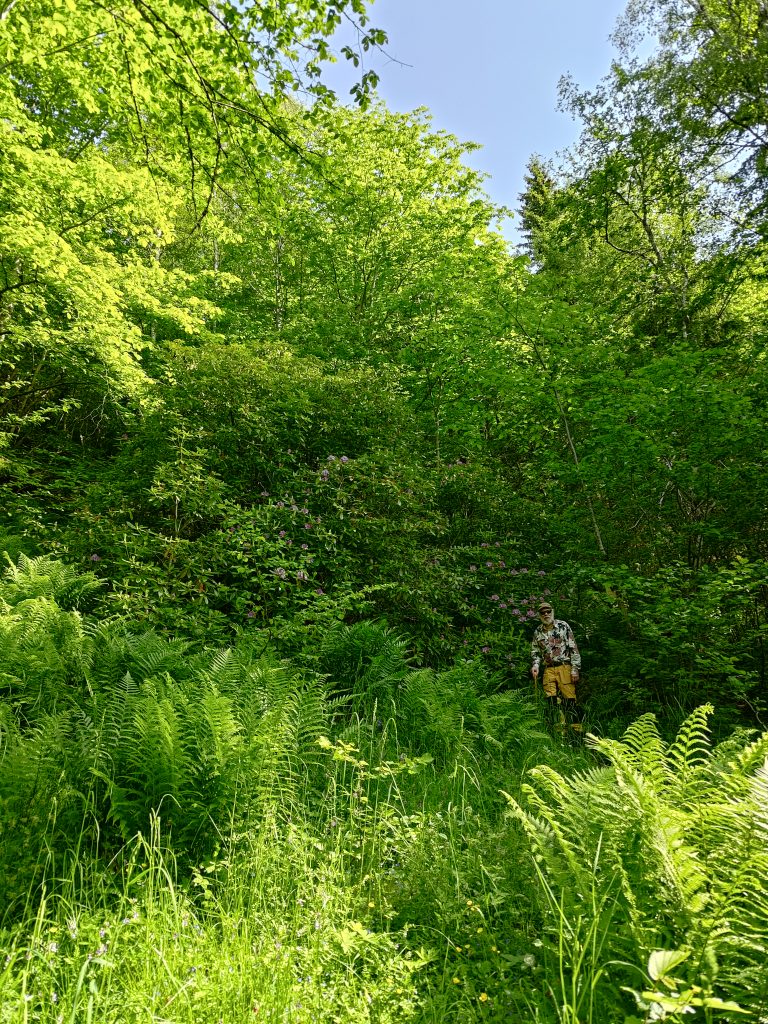
One of the attractions in this forest is a large rhododendron bush, originally planted by someone who had a subsistence farm on this slope. I’m not sure how old the bush is, but it is certainly many meters high, perhaps as much as 8 to 10 meters tall. I would estimate that it is at least a hundred years old.
A tall man looks very small when standing at the base of the rhododendron bush. Unfortunately we are a bit early this year and the bush is not blooming nearly as much as it will in about two weeks. It is hard to see the difference between the rhododendron and the trees behind it when it is not blooming.
Outside the nature reserve
We took a different route back to the car, a route that took us near summer cottages and the fjord. Nature is found not only in the wild, but also deliberately planted by people. I know in my own garden, there are also beautiful plants that come up on their own, some are planted, some are wild, some are called weeds, but all give a variety to look at.
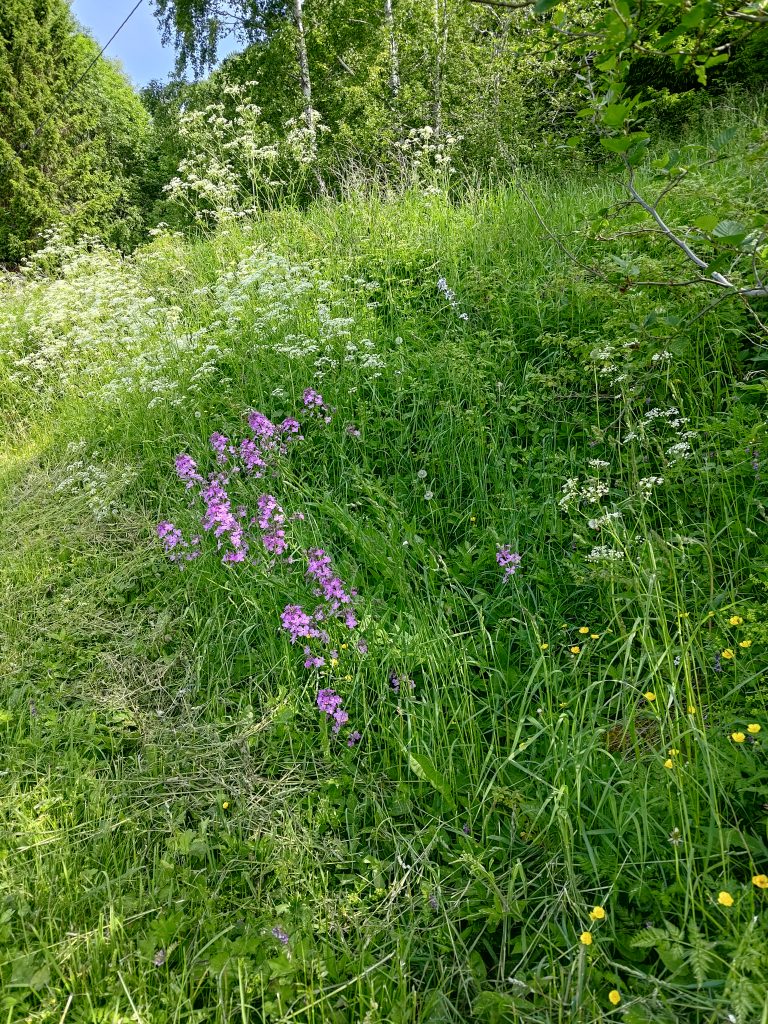
Here there are yellow, white and pink flowers, mostly growing wild, but near a summer cottage. These are typical flowers that grow wild here, often along roads.
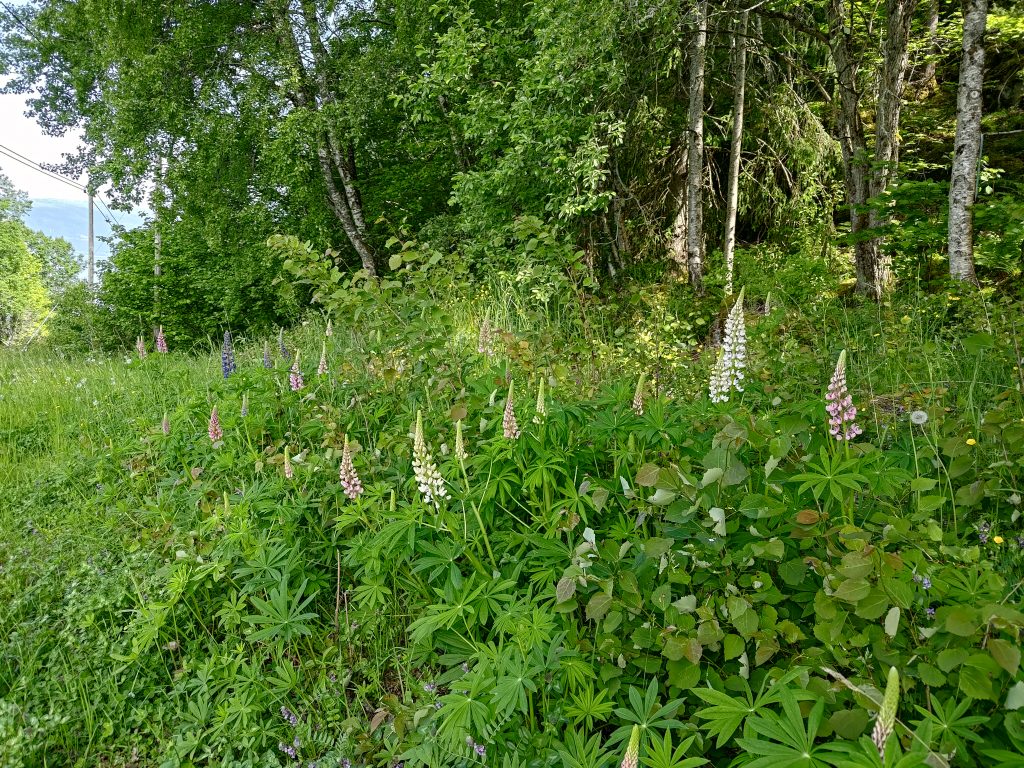
Lupines are one of my favorite flowers, though not every thinks that they are good to have. Once established they have strong roots and can spread. This was along a roadside and there were white, pink and purple blooms.
Though this blog was partly about a walk that my husband and I did today, it was also about color in nature. The following pictures were taken in my own garden after we had come home and are meant to illustrate more colors that can make a garden interesting.
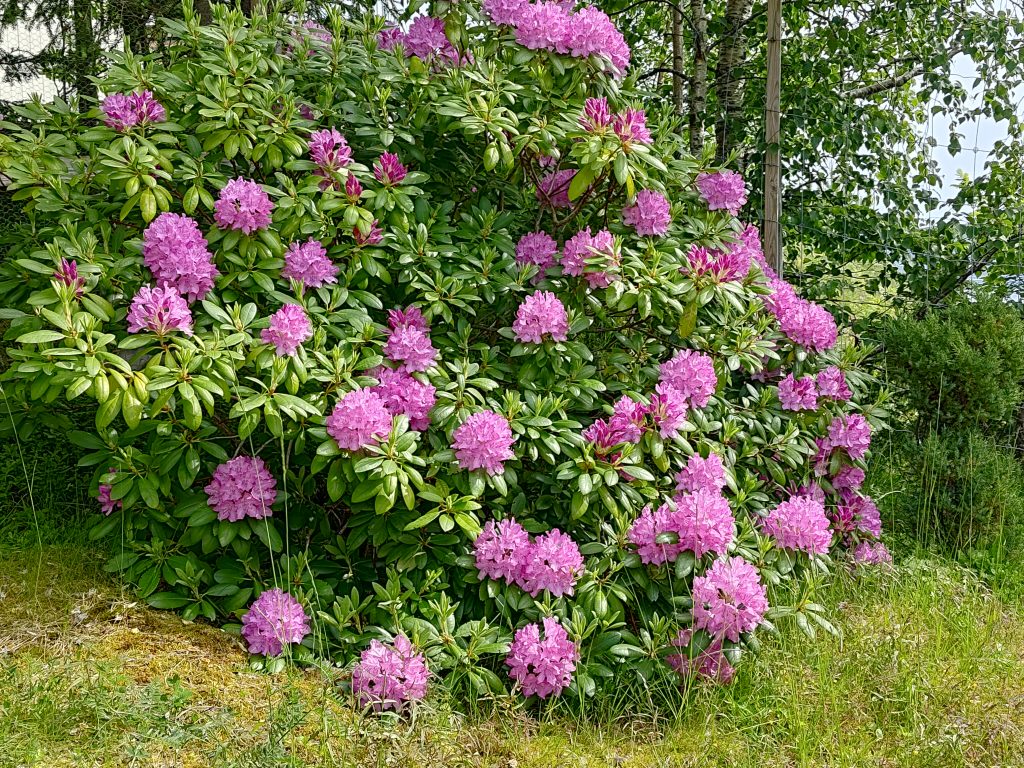
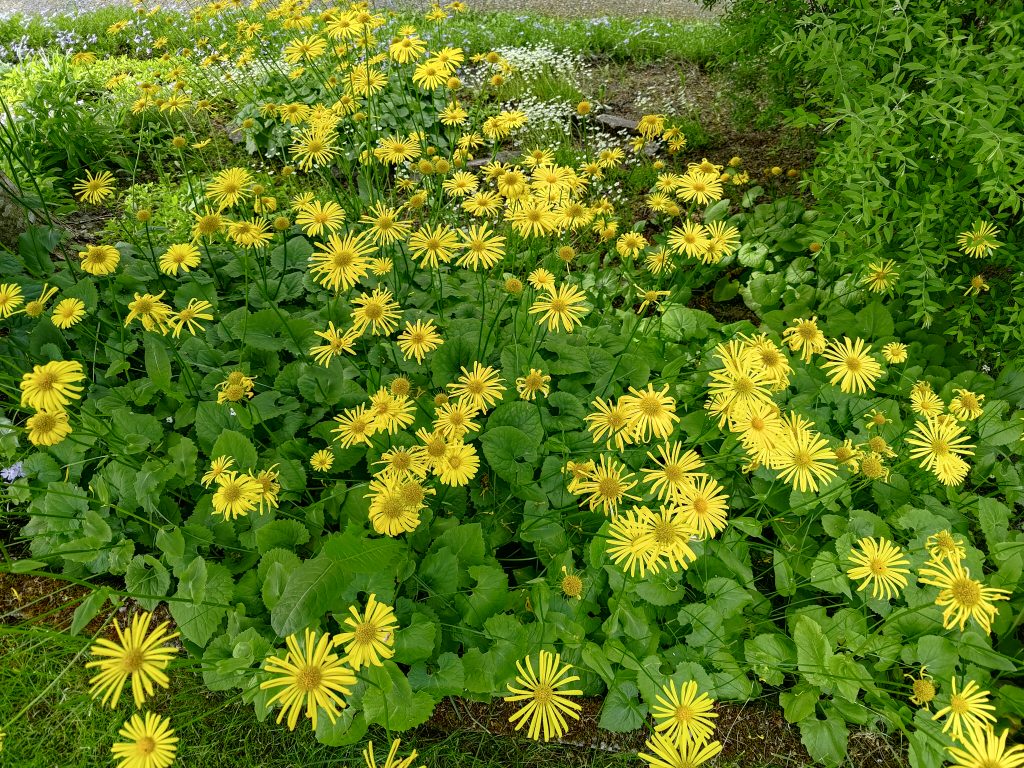
The largest of the rhododendron bushes in my garden. This plant was on the lot when we moved into the house in 1989, but it wasn’t doing so very well and was very small. So after several years, I moved it here, in a small space between the rocks where it is mostly in the shade but also gets lots of rain and light, so now it is taller than me. The blooms have only just opened out the last few days when we have had warmer temperatures and sunshine. With lots of rain this spring, it also has lots of new growth, even before the flowers are out. This is the same sort of bush that is in the Ørdalen nature reserve.Leopard’s bane (gullkorg/doronicum) grows well in my garden. It spreads easily, especially if the flowers go to seed. They are a bright yellow flower that blooms in May and is one of the first flowers to give a lot of color to my garden. In the background, the white flower is a rockfoil (hagesildre/saxifraga).
The next time you are out for a walk or a drive, look at the colors you see in gardens or nature and enjoy the variety.