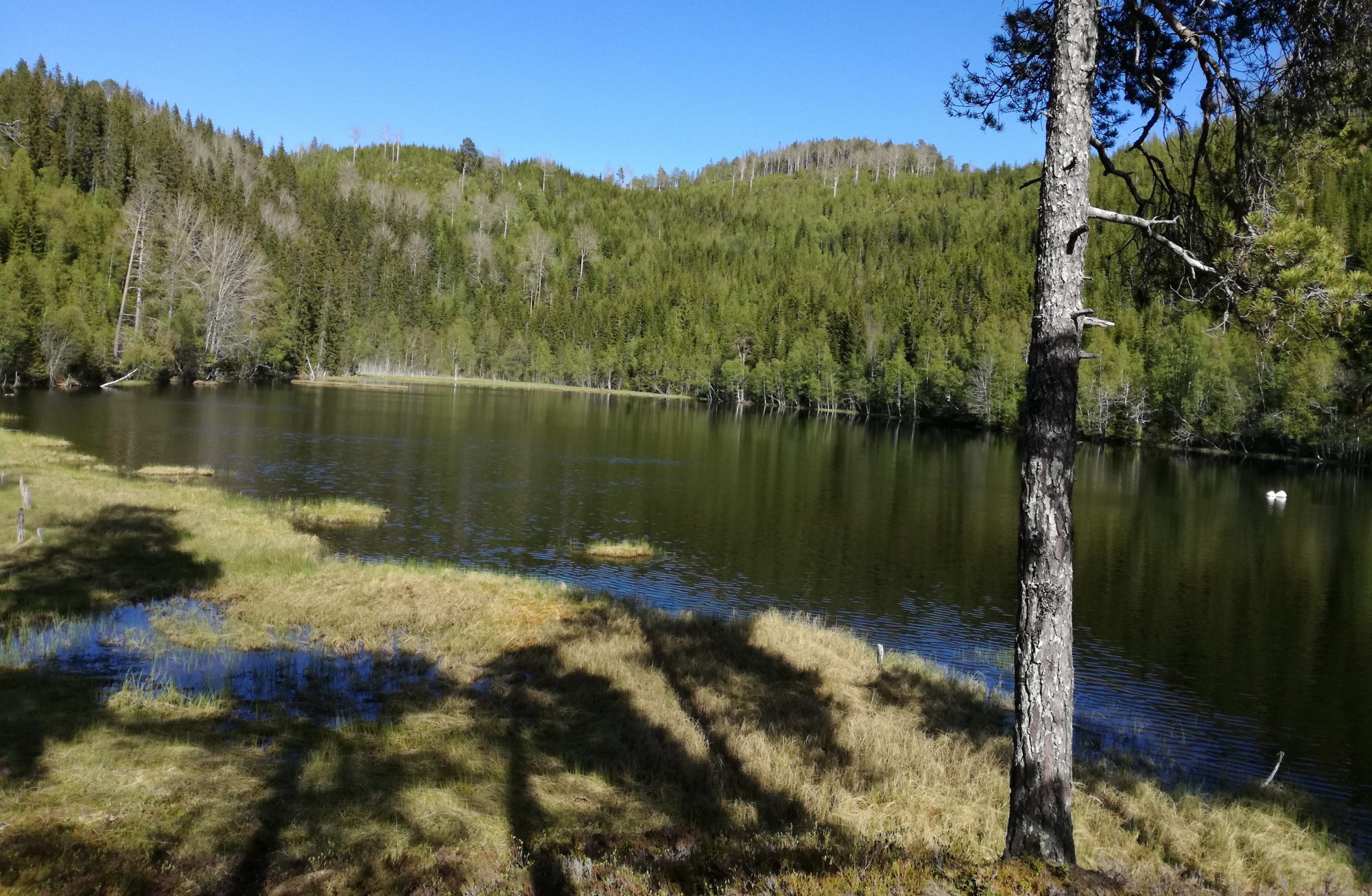
Book: There’s No Such Thing As Bad Weather (Touchstone, 2017)

My daughter came across this book and I decided to read it. I enjoyed it so much that I want to share some of my ideas after reflecting about the book.

The book was written by a Swedish woman who lives in the United States and has two children. Having grown up in a village in Sweden and surrounded by people who enjoyed being outdoors, she was disappointed that where she was living in Indiana, children had little chance to play outdoors. She took her kids to live in Sweden for six months and wrote about many of the differences between the two countries as relates to bringing up children.

The book is primarily for parents and gives tips on how to raise children in a Scandinavian fashion. Here she includes information from Norway, Denmark and Finland as well as Sweden. I could relate to much of the information that she had gathered about the advantages for children spending at least some time outdoors, every day, no matter the weather.

At the moment of writing this, it is a dark December day in Norway. There are only a few hours of daylight every day, and though I try to go outside most days, some days it is just not appealing to be outdoors. But while reading this book in December it made me think about the importance of being outdoors, not only for children, but for adults.

Summary of the book by Linda Åkeson McGurk

  • Introduction: A Swedish Mother in Rural Indiana
  • Chapter 1: A Right to Nature
  • Chapter 2: Fresh Air is Good for You
  • Chapter 3: Just Let Them Play
  • Chapter 4: We Must All Take Care of Nature
  • Chapter 5: A Little Dirt Won’t Hurt
  • Chapter 6: Freedom with Responsibility
  • Chapter 7: Outside, There is a Better Connection
  • Chapter 8: It Takes a Village

The author starts by explaining the American trend (based on her experiences in Indiana) that parents are concerned that if their children aren’t reading by the age of four, that they will not get anywhere in life. To my mind as a parent, that is not understanding the stages of development that children go through. It is common in Scandinavia that children start school at six or seven years of age (both my children started at seven and they both have master’s degrees ) and they might go to a kindergarten or preschool before that. Both my children started at kindergarten (barnehage) at the age of three.

The author refers to several other authors who have written about different aspects of children and parenting (see the list below) and has found the facts which I will be making references to here. You will need to read the book to get things exactly right. The author is concerned that children need to get “fresh” air every single day. Of course, not all people are lucky enough to live where the outdoor air is actually good for you. But by going to parks and other areas of nature, you can get fresh air into your lungs.

Children do not need to have activities constantly organized for them. One of the things children need to learn is how to organize their time, how to be bored, how to take suitable risks, how to socialize with others. In addition, they need time with adults who actually talk to them, as that is how they build up their vocabulary. Curiosity about the world around us leads children to learn how things work, either through their own investigations or by asking adults appropriate questions.

The author is also concerned that if the next generation is going to learn to take care of nature, they need to come in contact with it and learn to love it. Looking at trees only on a screen does not give the same learning or loving attitude as a walk in a park with tall trees. Children like to investigate things and usually get dirty doing it. Research has been done that indicates that we are too clean now, and we don’t get some of the good bacteria that we need to live a healthy life. Playing in the dirt or sandbox is not a health problem.

Small children need quite a bit of supervision when they are outside. They need to be protected from dangerous situations, for example a car whizzing by on the road, but they also need to learn to take responsibility for themselves, for example, learning to cross roads at crosswalks. As children grow older, the borderlines of where they are allowed to be on their own should expand as they are able to handle longer distances from the house on their own.

It has been shown in many research projects, that being outside in nature is good for mental health, not only in children but in adults.

A Scandinavian Mother’s “Get Up and Go Outside” Manifesto includes the following points (mostly directly quoted from pages 209-211):

1 There is no such thing as bad weather, only bad clothes. Whatever the weather, children must be dressed appropriately, whether it is sunshine and warm, rainy and wet, or snow and cold. Learning to dress yourself and your children appropriate to the weather is important for the parent to learn. Make sure footwear is appropriate too. There are, of course, certain types of weather which do not suit outdoor play, such as thunderstorms, tornadoes, hurricanes, or flash floods.

2 Fresh air is actually good for you. It reduces the risk for common infections, near-sightedness, vitamin D deficiency, and obesity. It will also lessen the symptoms of ADHD, anxiety and depression.

3 Unstructured outdoor play has everything kids need for healthy physical, social, and cognitive development in the early years. Older kids need time to play too.

4 Our modern indoor lifestyle has made kids too clean and likely triggered an epidemic of immunological disorders. To bring some beneficial germs back into your child’s life, ditch that hand sanitizer and let him sink his hands deep down in dirt.

5 Kids need risky play to learn how to assess risk and prepare for adulthood. Activities can include climbing trees, sliding on frozen puddles, using real tools and walking to the park without an adult.

6 If we want our kids to keep a foot in the natural world, we need to pry them away from their screens sometimes, and do things outdoors as a family. The adults must leave their screens behind too.

7 Find some like-minded people and figure out how you can get kids back outside in your community. Working with others makes it easier.

8 Children and nature make a really good fit. By immersing kids in the natural world early, we’re increasing the chances of them wanting to take care of it later in life.

References to Other Books

  • Last Child in the Woods: Saving Our Children from Nature-Deficit Disorder, by Richard Louv. Algonquin Books, 2008.
  • Balanced and Barefoot: How Unrestricted Outdoor Play Makes for Strong, Confident, and Capable Children, by Angela Hansom. New Harbinger, 2016
  • Under Pressure: Rescuing Our Children from the Culture of Hyper-Parenting, by Carl Honoré. HarperOne, 2009
  • Beyond Ecophobia: Reclaiming the Heart in Nature Education, by David Sobel. Orion Society, 1999.
  • Let Them Eat Dirt: Saving Your Child from an Oversanitized World, by B. Brett Finlay and Marie-Claire Arrieta. Algonquin Books, 2016.
  • Free-Range Kids: How to Raise Safe, Self-Reliant Children (Without going Nuts with Worry), by Lenore Skenazy. Jossey-Bass, 2010
  • Unplugged: 15 Steps to Disconnect from Technology and Reconnect with Nature, Yourself, Friends, and Family, by Jason Runkel Sperling. Kindle Edition, 2016.
  • Vitamin N: The Essential Guide to a Nature-Rich Life, by Richard Louv. Algonquin Books, 2016

Personal Thoughts on Being Outdoors

We all have our personal experiences from childhood which will depend a lot on where you actually grew up and how your parents were with you. I was fortunate to grow up in the 1950s and 60s in an urban area where everyone owned their own house and there was a yard at the front of the house, and a yard at the back of the house. Most houses with children would have had at least some grass to play on though we also had vegetables and fruit in our garden at the back. The back yards were usually fenced, so separate from the neighbours and the front yards were usually unfenced. There were a lot of houses with children my age so I had people within easy reach to play with. Particularly in chapter 8, Linda McGurk takes up the situation that for children to play outdoors a lot, it has to be what everyone else is doing too.

The message I remember hearing was “Go out and play”. I was expected to be outside the house and either play by myself or find someone else to play with. If the weather wasn’t that great, I could use blankets under a roof and make myself and my dolls a nice place to play house. When the weather was good, I might play with one of my girl friends out in the sunshine. But I also remember sitting on a blanket in the shade (and having to move as the shade moved) playing with my dolls. I remember climbing trees, using roller skates on the side walk, playing Annie Oakley, riding a tricycle and pulling a wagon, or playing hopscotch marked out on the side walk, all usually with one or more friends.

Elementary school was a five-minute walk from the house and I went home for lunch almost every day, giving me time to stretch my legs as well as get a warm meal in the winter months. The school had a very large outdoor area, with various types of areas to play in, including several areas with a lot of trees, some of which we could climb up a few branches. There were playing fields as well as paved areas for skipping rope and playing hopscotch. The children spread out over the large area giving those who had a need to run around lots of opportunity to do that. Occasionally the weather was so bad (usually heavy rain), that we had to play indoors during recess, in very noisy basement areas that nobody really enjoyed. I think having a long lunch hour and a recess with outdoor play helped us to sit still when we were in the classroom.

My children were primarily brought up in a rural environment, living in a single family dwelling with farm fields beside us and no playmates within easy walking distance. When they were young, I spent time outdoors with them and they were given more freedom to be outside on their own as they grew older. They were both fortunate to have their early years before computers were very common and long before hand-held devices were available. The limits of physical freedom were defined by the size of our lot, which eventually expanded as they were encouraged to walk to a friend’s home or to cycle somewhere on their own. Unfortunately we parents were also obliged to drive them a lot. However, they would be encouraged to play outside even when visiting friends.

Both of my children attended kindergarten from when they were three years old until they began school at the age of seven. Kindergartens in Norway still have several hours of outdoor play, usually in a fenced-in area around the main building. Here they can dig in a sandbox, play on swings, ride tricycles, or make up their own games. They learn to socialize with others their own age. They learn to follow the rules set by the staff. For my children as well, the kindergarten was where they learned Norwegian as we used English at home.

Once my children started school, the elementary school was five kilometers away and they got a bus to school. Catching the school bus was part of the regular routine of learning responsibility for one’s own activities. Even at elementary school, there was always recess with outdoor play, no matter the weather. The children were expected to wear appropriate clothing to school to be outside both during recess and lunch hour. Sometimes adults would organize activities, but mostly they were outside to prevent bad behaviour and to mediate disputes between the children.

As an adult, I like to spend time outdoors. I can get discouraged if the weather does not look good from inside. I don’t like being outside in the dark, which makes limitations on when I can be out in the winter months. We live in a part of Norway where it seldom rains non-stop for hours at a time. It is more likely to be showers on and off all day, so it is easier to get outside while it isn’t raining and even stay outside with whatever I’m working on even if another shower comes along. In the winter, I like shovelling snow off the driveway as it gives me both fresh air and exercise as well as being useful. In the summer, I have a large garden to work with, though it can be discouraging to work when it is pouring with rain, which it often does in the summer. Not all summers here are warm and dry. But that just means that one has to learn how to dress suitably for the weather.

I have always found that going for walks is a good remedy for a bad mood. It gives me time to think through problems. If I am walking through the woods, I have to concentrate on where to put my feet and problems seem to melt away. I have also heard that having trees visible from the windows in your house is good for mental health.

The municipality that I live in has had a summer program called InderøyTurer (Inderøy Walks) where trails are marked in the wild areas. There are usually about 30 different walks and one gets points based on how long the walk is and how difficult a trail it is. There are always some easy walks for those in wheelchairs, so that handicapped people are encouraged to get outside too. I read just recently in the local newspaper that this summer there was a record number of visits to these posts. We use an app on our smartphones and are able to check in using our phones. This is an encouragement to get people out of their houses and take their children with them.

I would like to encourage everyone to spend time outdoors, preferably in nature or near trees, every day. Whether you spend half an hour or several hours, being outdoors will give you fresh air, exercise and time away from the screens in your life. Enjoy!
The Boy Who Felt Too Much

Lorenz Wagner writes about a neuroscientist, Henry Markram and his son, Kai, who have contributed to a new understanding of what autism is. Henry Markram is currently involved in the Blue Brain Project which is trying to create a digital simulation of the human brain. One of the purposes of the project is to try to understand better how the brain functions so that we can better understand such conditions as autism. Kai has autism. Having a son who reacts to the world differently lead Henry Markram to want to understand better how the brain functions in such people.

In addition, Henry Markram, Tania Rinaldi and Kamila Markram have published an article about the results of some research, The Intense World Syndrome – An Alternative Hypothesis of Autism. To put their hypothesis in simple terms, some people react too much to the environment around them and this can make their life difficult.

“… excessive neuronal processing may render the world painfully intense when the neocortex is affected and even aversive when the amygdala is affected, leading to social and environmental withdrawal. Excessive neuronal learning is also hypothesized to rapidly lock down the individual into a small repertoire of secure behavioral routines that are obsessively repeated.”

Reading the book by Lorenz Wagner has given me a different understanding of autism and Asperger’s syndrome. I first read about Asperger’s syndrome because I was going to teach a pupil with this diagnosis. It was scary because everything on the list applied to me as well, even though I was a functioning adult with a job as a teacher. Today it is often referred to as being “on the spectrum” because every person who has autism or been diagnosed with Asperger’s syndrome is very different. Some have more severe reactions due to this neural processing, some have less severe reactions and many have learned how to cope with the way they have been put together.

One of the main things I have gotten out of reading Wagner’s book is a better empathy for those who have this ultra-sensitive reaction to the stimulus that we all receive in our daily lives. We are all built differently and we have to accept how others are, without wanting to change them. Though autism is considered a “disorder” (autism spectrum disorder or ASD), it is, in my opinion, just a different way of reacting to a world filled with a lot of action, sound and light stimulation. For some people, there is just too much to make life comfortable.

Everyone has their own way of coping with the stresses of the real world. Those who have been labeled as having autism also have to cope with the label they have been given.

I would recommend reading this book to anyone who has a family member who has autism or who comes into contact with those who have been diagnosed with Asperger’s syndrome. It may give some insights into how they see the world and why they are the way they are.

Book Review: Why We Sleep

Matthew Walker: Why We Sleep: Unlocking the Power of Sleep and Dreams, was published by Scribner in 2017.

I read this book in September 2019 and really enjoyed the book. It helped me understand the importance of getting enough sleep and the problems caused by lack of sufficient sleep.

Why We Sleep - Walker, Matthew P

For many years I have had problems getting enough sleep and reading this book enabled me to understand how important it is to get at least seven hours of sleep every night. Sleep is important for learning and for creativity. When we get too little sleep, we can have problems coping with our daily life and can make bad decisions.

Our brain is active when we sleep and busy getting things done, such as getting rid of the garbage and connecting up the things we have learned during the day. This book tells about some of the latest research about how our brains work.

In addition, our body goes through several stages of sleep, all of which are important for us to have every single night. If you read the book, you can get a better understanding of these different stages of sleep.

The quality of our sleep changes as we get older and it is quite common for older people to sleep fewer hours at a time and to be awake more during the night. Though the author did have a chapter on older people, I found that I wanted more information about how to get better sleep now that I am over 70 years of age. Perhaps there is a need for research to be done in this field.

The author is very concerned that that sleep deprivation is currently a common health problem that is not being treated and that many people in the western world feel that it is okay to get by with only four hours of sleep at night. When the brain does not get enough hours of sleep at night, it will deteriorate and this can be a contributing factor to dementia when we get older.

As a teacher, I used to tell my students that getting a good night’s sleep was the best preparation for a test or exam. The research presented in this book backs up my advice. Yes, a person needs to study before a test or exam, but then the brain needs a full night’s sleep to put everything into place so that it can be recalled during the test or exam.

The well-used phrase, “sleep on it”, is actually very good advice. When we sleep the brain will be working on the problem for us, making links to previous information that is already stored, and perhaps coming up with creative solutions during the night.

I recommend reading this book, no matter your age. It is easy to read, not too technical and has good stories to illustrate the author’s point of view.

Happy reading!

Raising Human Beings

by Ross W. Greene, Scribner, New York, 2016

9781476723761

Whether you are a parent and have a child you are raising or just looking for a way to work with other adults, the ideas in this book will give you a technique for promoting collaboration to find a solution to a problem.

“The most crucial task of your child’s development is to figure out who she is — her skills, preferences, beliefs, values, personality traits, goals and direction — get comfortable with it, and then pursue and live a life that is congruent with it.” (p. 161)

A parent’s job is to help a child grow and develop.  We teach our children based on our own set of values, but what do we do when the child has problems with our expectations, or for that matter his/her own expectations of what she/he should be able to do?  This is where a parent needs to step in and help the child.

Two of the basic principles, according to Greene, are that “kids do well if they can” and that “doing well is preferable”.  So if a child (or perhaps a friend or colleague) is not doing well, don’t blame it on laziness or lack of motivation, but dig deeper to find out which skills are missing for the person to be able to get the job done.

The method that Greene recommends has three steps to helping children grow through managing difficulties:

  1. Showing empathy for the person or child you want to help by listening to what their concerns are and their point of view on the problem
  2. The adult also has to express their concerns and point of view as these must be considered too.
  3. Then the child and the adult need to work together to come up with realistic and mutually satisfactory solutions.  This is collaboration.

The author has a lot of good examples, both of good and poor dialogues between adults and children of various ages.

I wish I had had this book when my children were younger. Too often as a parent or a teacher I came up with a “solution” to a “problem” that quite often didn’t work at all.  We have to be better at working with the person who has the problem, or the incompatibility to expectations, to find solutions that will work for both parties.


Boka som er omtalt her er ikke oversatt til norsk, men om du kan lese engelsk og du har med oppdragelse av barn, enten som forelder eller lærer, er boka anbefalt.  Litt om hva boken handler om.

Det er viktig at når et barn ikke klarer en oppgave, enten hjemme eller på skolen, at  voksnen lytter til hva barnas oppfatning av problemet er.  Veldig ofte vil barna kunne komme med innspill om hva det trenger for å komme seg videre.  Den voksen må også fremme sine bekymringer og sammen skal de finne en måte å gå videre.  Om problemet ikke løses med en gang, kan det være behov for flere samtaler og forsøk med å løse problemet.

En forelders arbeid er å hjelpe et barn vokse og utvikle seg.  Vi underviser våre barn basert på våre egne holdninger og verdier. Men hva skal vi gjøre når et barn har problemer med våre forventninger, eller sine egne forventninger om hva has/hun burde klare?  Her er hvor Greene har en metode for en voksen å hjelpe et barn (eller en annen voksen).

To hovedprinsipper som Greene fremmer:

  1. barn vil gjøre det bra, om de kan
  2. å gjøre ting bra er å foretrekke

Han er opptatt av at barn ofte behandles feil, med løsninger til problemer fra en voksen som ikke ser på problemet fra barnas synsvinkel.  Han har mange eksempler på familier og samtaler, både gode og dårlige. Å si at et barn er lat, eller umotivert, hjelper ikke barna kommer seg videre. Greenes metode har tre trinn for å hjelpe et barn utvikle seg gjennom å håndeter vanskeligheter:

  1. Den voksen må vise empati for barnet med å lytte til hva barnets synspunktet er.
  2. Den voksen må også si hva den er bekymret for.  Begge sider av saken må tas hensyn til.
  3. Da må den voksen og barnet arbeide sammen for å komme med en endring som er både realistisk og gjensidig tilfredsstillende.  Dette er samarbeid.

Jeg ønsker at jeg hadde hatt denne boka når mine barn var yngre.  Alt for ofte som en forelder eller en lærer kom jeg på en “løsning” til et “problem” som ikke fungerte.  Vi må være flinkere til å arbeide med den som har et problem slik at løsning fungere for begge parter.


Quiet

Susan Cain has written an interesting book (“Quiet, the Power of Introverts in a World that Can’t Stop Talking”, Crown Publishing, 2012) which gave me an awakening to something I hadn’t really considered before and made me feel like I wasn’t the only one in the world who didn’t fit in.  We live in a world where being an extrovert is considered the ideal, and yet it is not the extroverts who are the most innovative or creative.  I’ve noticed this as a teacher – the pupil who talks all the time, is not the one who is the smartest in the class or the most knowledgeable. In fact, the pupil who talks a lot may have problems listening and learning new things, and unfortunately may distract other pupils in the class who would actually like to learn new things.

“Our lives are shaped as profoundly by personality as by gender or race.  And the single most important aspect of personality — the ‘north and south of temperament’ as one scientist puts it — is where we fall on the introvert-extrovert spectrum.  Our place on this continuum influences our choice of friends and mates, and how we make conversation, resolve differences, and show love.  It affects the careers we choose and whether or not we succeed at them.  It governs how likely we are to exercise, commit adultery, function well without sleep, learn from our mistakes, place big bets in the stock market, delay gratification, be a good leader, and ask ‘what if.’ ” (page 17)

The author continues to explain how especially the American world puts such an emphasis on being extrovert, that introverts will try to hide their own reality to feel part of the extrovert world.

What are some of the characteristics of an extrovert? “The archetypal extrovert prefers action to contemplation, risk-taking to heed-taking, certainty to doubt.  He favors quick decisions, even at the risk of being wrong.  She works well in teams and socializes in groups.” (page 19)

The ideal of the extrovert is seen in offices without walls, project work for everyone, high levels of stimulation and little time for introspection.

Susan Cain has many examples of introverts who have given us scientific theories, art work, literature and businesses. I enjoyed her storytelling and learning how introverts have contributed to our knowledge of how the world works.

If you are an introvert, which I definitely am, here are some of the characteristics according to Susan Cain:

  • want less stimulation
  • like time to themselves
  • work slowly and deliberately
  • like to focus on one task at a time
  • can have mighty powers of concentration
  • relatively immune to the lures of wealth and fame
  • prefer to devote their social energies to close friends, colleagues and family
  • listen more than they talk
  • think before they speak
  • express themselves better in writing than in conversation
  • dislike conflict
  • have a horror of small talk, but enjoy deep discussions

Does all of this sound like you?  If it does, I recommend you read the book.

Quiet Susan Cain 2012

For those of you who like to watch videos, she gave a TedTalk in 2012: https://www.ted.com/talks/susan_cain_the_power_of_introverts


Boken har blitt oversatt til norsk, og heter “Stille – introvert styrke i en verden som aldri slutter å snakke”, utgitt av Pax forlag i 2013.  Når vi lever i en verden der idealet er å snakke mye og være veldig utadvendt, det var veldig godt for meg å lese boken og få bekreftet at den typen jeg er, en “introvert”, er veldig utbredt.  Forfatteren sier at en tredjedel til en halvparten av folket er introvert.  Men det er mange som finner seg mellom ytre punktene og alle er litt annerledes.

Boken anbefales, særlig hvis du er en introvert.

Stille av Susan Cain

Social media in 2018

It’s a long time since I have written a blog, but now that I’m retired I would like to share some of my thoughts (often sparked by books I have read) and projects.  I will primarily write in English, but those who read only Norwegian can skip to the end of most posts and find something in Norwegian. (Leser du bare norsk gå til slutten av teksten til å finne noe å lese på norsk.)

I have just finished reading “Writing on the Wall – the first 2,000 years” by Tom Standage (2013). Social media is not new and has been around since the Roman times, for 2,000 years, but the technology behind social media has changed over the centuries.  The author uses many examples to illustrate his point.  Most of his examples explain how the social media of the day helped to spread ideas to at least some of the population.  He also includes a chapter on the twentieth century where there was the opposite of social media – media was one-way and broadcast.

Writing on the Wall Standage 2013

In the past, writing letters or pamphlets was often the way of sending information to other people.  Letters and information were passed on to other friends, creating a type of circulation of information, often about politics or other current ideas.  The printing press just made everything go a bit quicker and allowed a pamphlet to reach more people as it could be reproduced faster.  One interesting example was from Pompeii where they discovered that people had actually written on the walls of the buildings.  Today we can use the internet to exchange information either through emails, blog posts, and comments on things that we have read.  No longer is information only one way, but by sharing we can enrich other people’s lives. So I have been inspired to write blogs more regularly.

It is interesting to see that though many things are different, we humans still have the same needs as people did 2,000 years ago, including the need to share our ideas using the technology of the day.


Nå at jeg er pensjonist, har jeg bedre tid til nye ting.  Jeg skal skrive litt om bøker som jeg har lest og de tankene som jeg får fra dem, og i tillegg vil jeg skrive litt om prosjektene jeg holder på med.

Jeg har nettopp leste en bok, “Writing on the Wall – the first 2,000 years” av Tom Standage som kom ut i 2013. Boken handler om sosiale medier og forfatteren går tilbake til gamle Roma for sine første eksemplene om hvordan folk kommuniserte med hverandre før. For eksempel, i Pompeii, skrev folk på veggene i bygningene for å gi beskjeder eller komme med kommentarer om andre.

Teknologien om hvordan vi kommunisere med hverandre har endret, men behovet for å ha skriftlige kommunikasjon med andre er ikke ny.  Før skrev folk mye brev eller småhefter, som ble sendt til venner og sendt videre til andre. Når ting kunne trykkes og papiret ble rimeligere i pris, ble enda mer skrevet og delt med andre mennesker. Idag kan vi dele opplysninger og idéer gjennom email, blogs og kommentarene til hva andre har skrevet.  For femti år siden var det meste av opplysningene bare en-veis, gjennom radio, fjernsyn og aviser.  Nå tillater de nye sosiale medier mer to-veis kommunikasjon.

Det er interessant å se at tross mye er annerledes, menneskene fremdeles har noe av de samme behovene som for to tusen år siden, blant annet behovet for å dele sine idéer med andre gjennom bruk av dagens teknologi. Så nå at jeg har vært inspirert, har jeg lyst å dele med andre gjennom denne bloggen.