
A Guide to Becoming the Parent You Want to Be
Author: Dr. Becky Kennedy
Publisher: Harper Wave, 2022
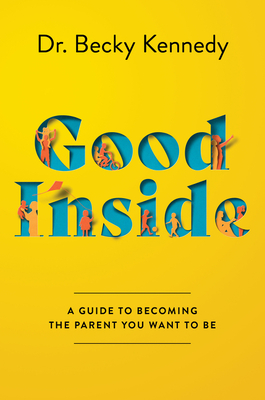
Now that I have become a grandparent, I have become interested in learning more about how to parent or grandparent, but also in what creates a good learning environment for children. This is a book that I wish that I had been able to read when I first became a parent in 1983. It’s not too late to learn, as the author advises. So I am giving a rather detailed summary of this book as I know that parents have little time to read books when they have a small child to raise in addition to a paid job. However, if you find the information in this blog interesting or exciting, I can recommend getting the book so that you can reference some of the author’s practical advice when you need it.
My Introduction
I have been reading several books recently about how we are affected by our early childhood years. The key to having a good childhood is in the relationship between the child and its primary caregivers. These caregivers need to give unconditional love as the basis of that relationship. The child is loved for just being. He/she does not need to do anything to “deserve” love. With this as a foundation, the child can develop and grow into a healthy individual.
Lots of things can go wrong to prevent a child from getting this unconditional love as all parents are affected by the way they were brought up. Reading these various books has made me think not only about my own childhood but also my mother’s childhood and the advice my mother would have been given when bringing me up. I feel that I had a good childhood, but I know there were things missing when I became a parent myself.
As one reads about parenting, it is also important to keep in mind the framework that the family lives in. I live in Norway, and parents get up to a year of paid leave of absence from work (usually divided between mother and father), but not all countries have such good conditions for a child’s first year of life. These things matter.
As I read the book, I am also reflecting about how I brought up my children, what I did right and, in particular, about what I wish I had know then. There was limited information available about the social and emotional development of children. There was some information available about the biological development of the baby in the womb, and some information about the stages of learning throughout childhood, but a lot of what I have been reading recently was neither spread to new parents nor particularly easily available. The Internet was not born yet, so one relied on printed books and magazines for information.
The Author’s Introduction
The author’s background is as a clinical psychologist who has worked with children and their families. To help children who are struggling, she often needs to help the whole family. The goal is to raise humans, not to shape behavior. The parents need to have self-compassion, self-regulation and self-confidence and to teach their children these too. The relationship between parents and children is critical to this learning process.
The book is divided into two parts. Part 1 is Dr. Becky’s Parenting Principles. In 10 chapters, she explains the principles that she bases her work on, both with clients and her own children. I will be explaining these principles in this blog. Many of the notes I have made, first on paper, and then here, are direct quotations from the text. Some notes are rewritten in my own words. If you find my comments here interesting, it may be wise to read the book and get the details and illustrations that the author has written. This blog is only a very short version of what I consider the main points.
Part 2 is Building Connection and Addressing Behaviors. In 19 chapters she explains in more detail about how to actually work with children. This will be written about in a second blog (Part 2) once I have finished reading the book, which goes slowly, in spite of me being retired. I can only read small amounts at a time and use quite a bit of time for reflection on what I have read.
Chapter 1 Good Inside
At our core, we are all good, compassionate, loving and generous. We need to trust kids, not to control them. We have to help them learn how to be good people. There are bad behaviors, but not bad kids. We have to separate the children from what they do.
Our experiences from our own childhood will influence how we perceive and react to our children’s behavior. Children’s behavior is a clue to what they need. In our early years, our body is learning under what conditions we receive love, affection, understanding and attention, and under what conditions we get rejected, punished and left alone. This early learning, before we even have words to express our thoughts and feelings, will influence the way we react when we are adults. Bad behavior is a sign that a child is struggling underneath and it is the parent’s job to help them through the struggle. Self-confidence comes from knowing one is good inside, even if there is a struggle on the outside.
Chapter 2 Two Things are True
As a parent, it is important to be able to accept that there are multiple realities at the same time. There isn’t just one correct interpretation of a set of facts. Each person involved will have a different interpretation of what is happening. Example: “I am a good parent (who we are) having a hard time (what we do).” Building strong connections with our children relies on us understanding what the other person is feeling or thinking. Small children “feel” without being able to put things into words. Part of a child’s learning process is learning what these feelings are and how to handle them.
Chapter 3 Know Your Job
The parents’ job is to establish a safe learning environment for their children, including having boundaries, validation and empathy. The children’s job is to explore and learn, through experiences and expression of their emotions.
Safety comes first, both physical safety and psychological safety. Boundaries are necessary to protect children and it is the parent’s job to set these boundaries. Children are more able to experience strong feelings that they are able to regulate these feelings. It is normal for children to be overwhelmed with emotion. The parents’ job is to teach their children how to manage all of their feelings, perceptions, thoughts and urges. The parents also have to stop the child’s inappropriate behavior, in part by staying calm and in control.
Validation is the process of seeing someone else’s emotional experience as real and true. Empathy is the parent’s ability to understand and relate to the feelings of another person. One of the primary goals of childhood is to build healthy emotion regulation skills: to develop ways of having feelings and managing them, to learn how to find oneself amid feelings, thoughts and urges rather than have them overtake you.
Children need to learn what they are capable of, what is safe, what their role in the family is, how much autonomy they have and what happens when they try new things.
Chapter 4 The Early Years Matter
The way parents interact with their children in their early years forms the blueprint they take with them into the world – how they think about themselves, what they learn to expect of others, what feels safe and good and what feels threatening and bad. This forms the foundation for emotional regulation, an important part of a child’s development.
A baby is born with an innate drive to “attach” to caregivers in order to get the comfort and security they need to survive. They learn what leads to closeness and what leads to distance.. They adjust their behavior accordingly, wanting a secure attachment. The more children can depend on a parent or caregiver, the more independent they can be. Children interpret their parents’ interaction with them as a message about who they should be. The work you put into parenting is always worth it.
Chapter 5 It’s Not Too Late
It is never too late to repair and reconnect with your kids and change the trajectory of their development, whether it is one day after a disagreement or ten years later. Parenting requires a huge amount of self-reflection, learning and evolving. Parents are not perfect and need to work with themselves as well as their children.
It is not the parents’ fault that a child is struggling, but it is the parents’ responsibility to change the environment, including their own behavior, so that the child can learn, grow and thrive.
Parents need to work on their own challenges, to improve their regulation and to learn parenting tricks and strategies. After moments of struggle, parents need to reconnect with their children and repair the rupture in the relationship. The parent needs to say, “I’m sorry” as well as allow the child to express their emotions in the situation. Good parents don’t get it right all the time, but good parents repair.
Chapter 6 Resilience > Happiness
Resilience is our ability to experience a wide range of emotions and still feel ourselves. Resilience helps us bounce back from the stress, failures, mistakes and adversity in our lives. Building resilience is not about outcomes, but about the ability to tolerate distress. Happiness comes after resilience.
Parents have to teach their children how to relate to all emotions. The things that matter most in life take hard work and time. Helping your child to build resilience isn’t easy, but it is worth it. Everyone needs to be able to cope with negative emotions such as disappointment, frustration, envy and sadness. The parent needs to name these emotions and tolerate a wide range of feelings in a child.
Parents help children build resilience with empathy, listening to them, accepting them for who they are, by providing a safe and consistent presence, helping them identify their strengths, allowing for mistakes, helping them develop responsibility and building problem-solving skills. Children need to learn to tolerate and work through distress, not avoid it. They feel good when they can solve their problems themselves. This is what leads to happiness.
Chapter 7 Behavior is a Window
Behavior is a clue, a window, into the feelings, thoughts, urges, sensations, perceptions and unmet needs of a person. If one only seeks to change behavior, one misses the core struggle that motivated the behavior. By understanding what motivates the behavior, we can help a child build resilience and regulate emotions. That will lead to changes in behavior. Bad behaviors are corrected by understanding what caused them, not by punishing the behaviors. This is a skill that takes time for a parent to learn.
Chapter 8 Reduce Shame, Increase Connection
Shame is a feeling that tells us we should not want to be seen as we are in the moment. Shame encourages us to avoid contact with others and activates the idea that “I am bad inside”. However, there is also a good side to shame which is to encourage the person to make changes so that they feel safe and secure again.
For a parent, detecting shame in a child is a critical skill so that the shame can be reduced and the parent can help the child feel safe and secure again. When a child is overwhelmed by shame (often caused by poor behavior), they may freeze and not be able to do what we ask them to. The best way to lessen shame is to help the child know that they are good inside, are lovable and have worth. Connection is the antidote to shame, but it does not mean approval of bad behavior. Connection comes first, everything else comes second.
Chapter 9 Tell the Truth
Always tell your children the truth, even in tricky situations and even if it is uncomfortable. Children need information to feel safe and secure. Watching a parent confront hard truths will help a child learn to regulate his feelings. Use real words, not euphemisms, to describe what is happening.
Children are keen observers, even if they don’t show that they have noticed. When giving information, start with the simplest, most straightforward version of events and add if there are more questions. If kids start asking questions, they are ready for the answers. Acknowledge what you don’t know. Sometimes the way we talk (pace, tone, pauses) is just as important as the words that are used.
Chapter 10 Self-Care
The final chapter in part 1 is about taking care of yourself. Being a parent does not mean losing yourself, it means helping your child develop and grow while you yourself are developing and growing at the same time. A parent has to have a good relationship with themselves to be a good parent. The author lists five strategies for self-care:
- Deep breathing lowers stress levels and blood pressure and helps us calm down.
- It is important to acknowledge your own feelings by labeling them, validating and respecting them by accepting that they aren’t lying to you and by permitting yourself to have feelings in whatever way they show up.
- Meet your own needs, even if you have to inconvenience others.
- Do things just for yourself, and learn to say “no” to others.
- Repair yourself – “You are a parent who is good inside and you are working on yourself at the same time as you are giving to your kids.” Be generous with yourself when you make mistakes.
My Conclusion
I am enjoying reading this book, but I need time to reflect on what I’ve been reading. These 10 principles are useful in many situations, not only in raising small children or teenagers. I recommend this book for anyone interested in working with other people or even working with themselves. Reflecting about one’s own childhood can help one repair damage from that time. We continue to learn all of our lives and there are always ways we can improve our own lives.
Part 2 of the book is about building connection and working with specific bad behaviors, including tantrums, sibling rivalry, rudeness, whining, lying, shyness, eating habits, tears, separation anxiety and building confidence. I will write a second blog about part 2 once I have read the rest of the book.