
Author: Georgia Ede, MD
Publisher: Balance, 2024
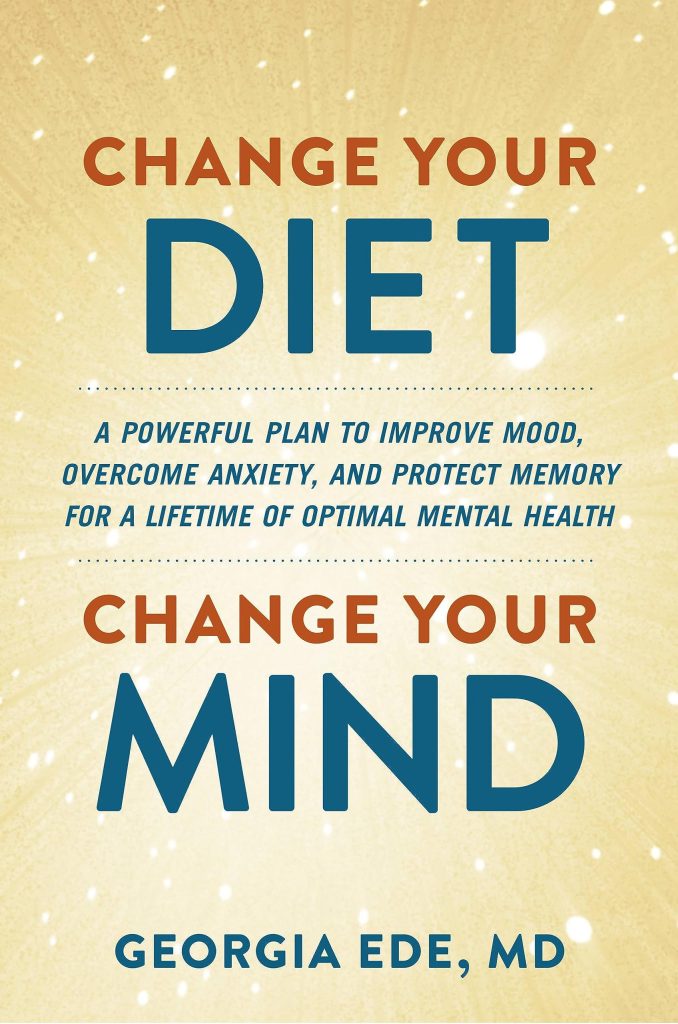
I am continuing to read more about health and reading about the same types of problems and solutions, though always from a slightly different angle. We are what we eat, and if we eat poorly, then our bodies and minds will not be optimal. This author thinks that by changing our diet we can improve our mental health. She is a psychiatrist and works with people with mental health issues.
There is lots of detail in this book about how the brain works and she is convinced that a keto diet (a high-fat, low carbohydrate diet) will improve things for many people. There is a lot of repetition from what I have been reading previously, but she is also helping me make decisions about what I want to eat and what I don’t want to eat. I may not be able to retell the science behind how the brain works, but I enjoy reading it and understanding at least some of it. I find it fascinating how much they have actually learned.
One thing that gets repeated in this book, and many others that I have read, is how false knowledge gets spread, even without proper research being done on the topic. Again, cholesterol in food is not bad for you, eggs are healthy and so is having fat in your diet. Sugar and carbohydrates are what give you insulin resistance and can lead to overweight and type 2 diabetes, as well as many other diseases.
If you are looking for ways to make your life better by changing the way you eat, this is a book that will give you a different perspective on how food influences the way we feel and work. I have made some changes to my diet while reading this book and my next blog will be about those changes and how they have affected us. If this is a topic you want to know more about, I can recommend this book but there is a lot of scientific detail and also some interesting examples.
My summary of the book is going to be much shorter than usual as this topic is not necessarily for everyone. In the edition that I am reading (an eBook), there are 1 384 pages so it is not a short book. The book is divided into four parts and I will summarize each part.
Part 1: Rethinking Brain Food
In this first part of the book, the author shows concern for what actually causes mental health problems. There is a new branch of psychiatry that is looking at how poor nutrition affects how the brain actually works. In the five chapters of this part we learn more about how the brain actually works. I find it fascinating what they have discovered so far, but I know there is still a long way to go to figure out what actually causes disorders of the brain. Certainly what we eat affects insulin production and metabolism not just in our bodies but also our brains.
Part 2: Our Descent into Dietary Madness
I have read about insulin resistance in many other books and this author also explains what it is and how it affects us. In short, when we eat carbohydrates, our body produces insulin to metabolize it. If we eat too many carbohydrates, our bodies have problems metabolizing it. So the author looks at the food we eat, which ones are very bad for us and how they affect the brain.
The author likes the ketogenic diet best realizing that by having a low-carbohydrate diet, with more protein and very much more fat, that our bodies can handle that balance much better. She relates several stories of people with mental health problems such as bi-polar and schizophrenia who have gotten a much better life by going over to a ketogenic diet.
Part 3: The Whole Truth about Whole Foods
This part of the book discusses what are good foods and what are not good foods. The author feels that meat (including fish and poultry) is good food, plants are less good and vegetable oils are not good at all. She discusses the term “superfood” and believes that there is none, that it is just a good marketing tactic. She feels that vegan and vegetarian diets are not as good as a diet with meat. Humans are omnivores and we are designed to eat animals for food and plant food as extra. Many plant foods have toxins in them that should be avoided. I didn’t always agree with the author’s conclusions about what is good and what should be avoided. But we all have to make up our own minds.
Part 4: Hope is on the Menu
The author promotes three types of diets which she calls Quiet Paleo, Quiet Keto and Quiet Carnivore. As she is a doctor, she is also suggesting that you test for all sorts of things to make sure you are within guidelines. In my opinion, if you are not sick, avoid testing yourself but eat nutritiously. If you want to find out more about what the author is promoting you will have to read the book yourself. She offers practical tips, meal plans and some recipes.
Appendices:
A – Recommended Tests
B – Selected Resources
C – Essential Micronutrients and Brain Metabolism